

Endometriosis, a 'stumbling block' in the slow progress of women's health
It still takes an average of seven years to diagnose the disease, which affects women of childbearing age, and despite recent regulatory protections the gaps in treatment and the impact on society are still profound

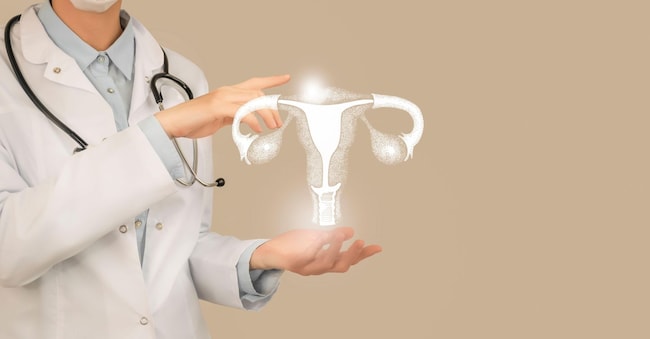
In the still largely unfinished path of women's health protection, endometriosis is a stumbling block. Because of the mix that makes it painful not only physically, for the 3 million women who are estimated to suffer from it in Italia - there are 190 million worldwide - but also because of the lack of awareness, the stigma that accompanies it, the lack of services distributed throughout the country and the acknowledged possibility of reconciling the disease with the affective, relational and work area.
L’identikit
In its latest 'spotlight' on endometriosis, the Istituto Superiore di Sanità takes a snapshot of the official figure of more than 1.8 million women of reproductive age affected by this condition. As the experts point out, it is due to the presence of endometrium, the mucous membrane that covers the uterus internally, outside the uterus. It has a considerable impact on quality of life, both in terms of symptoms (menstrual pain, chronic pelvic pain, pain during sexual intercourse, etc.) and potential effects on reproductive capacity: it is estimated that between 30-40% of women suffering from endometriosis may experience fertility problems or subfertility.
The Conquests
In 2023, the Italia Parliament passed a law to recognise endometriosis as a chronic disabling disease. A journey that had already begun with the 'new' Livelli essenziali di assistenza (Lea) of the now distant January 2017, when recognition as a chronic pathology had been limited to the most advanced stages. With the Lea price list that only came into force in 2024, the right to treatment within the National Health Service became truly enforceable and includes examinations, abdominal and gynaecological ultrasounds and specific tests to monitor the pathology. The latest act is the inclusion in the National Chronicity Plan, approved by the State-Regions Conference last autumn. A Plan that turns the spotlight on the Care Pact, called upon to involve patients and caregivers in the care process, including lifestyles and disease management. But which for endometriosis requires in particular the activation of regional reference centres dedicated to diagnosis and treatment and multidisciplinary pathways in which gynaecologists are joined by nutritionists and psychologists. This is a necessary step that all regions are called upon to take, to support women in this complex condition.
For diagnosis 7 years
The reality today is still far from these goals. First of all, as the Higher Institute of Health always reminds us, the disease is (despite the acceleration in recent years) largely under-diagnosed. So much so that the gap between ascertained cases and possible estimates fluctuates between 1.8 million and 3 million.
The statistics indicate that the average time for a correct diagnosis is about 7 years, due to the unspecific nature of the symptoms. But in the meantime, endometriosis, in particular the pain it causes, can have a huge impact on quality of life, physical functioning, everyday activities and social life, mental health and emotional well-being.
There is still much work to be done to bring endometriosis out of the invisibility to which both its nature as a long-silent disease and the 'gender gap' have condemned it. Yet the challenge concerns the whole of society. As recalled in the Report 'Women's Health, Future Growth' by Thea-The European House Ambrosetti, in Italia 10-15% of women of reproductive age are affected and this condition affects 30%-50% of women who are infertile or have difficulty conceiving, with a peak incidence between the ages of 25 and 35. Women in the midst of training and work, but also social and emotional activity. Conditions that are 'too often underestimated, poorly recognised and poorly understood, especially when it comes to quantifying the severity of the disability they can generate. This is also a significant limitation for research,' stresses Thea, 'and for the investments needed to better understand these pathologies and develop appropriate treatments'.

