
Enea and the start-up Prometheus: agreement on research into nuclear technologies
The agreement runs for five years and provides for joint activities to be carried out in the field of LENR models

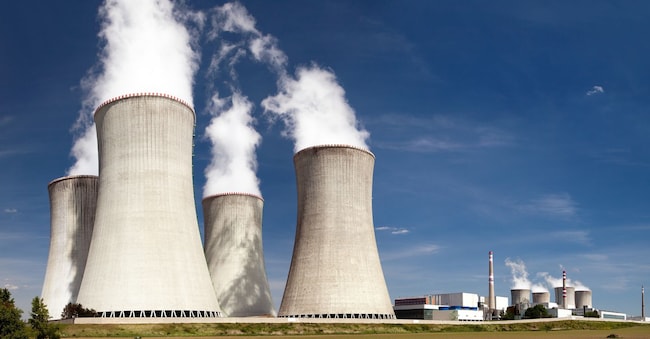
An agreement to develop new nuclear technologies and generate energy without resorting to fusion or fission. This is the central focus of the partnership between the research agency Enea and the start-up Prometheus, which operates in the field of innovative energy technologies. This scientific collaboration aims to explore new frontiers in sustainable energy based on low-energy nuclear reactions (LENR), which occur at much lower temperatures and pressures than conventional thermonuclear fusion.
5-year agreement
The agreement runs for five years and provides for joint activities in the field of LENR models, namely those ‘phenomena that stimulate matter in order to extract energy’. These activities, as the experts point out, ‘generate energy without using elements that produce radioactive waste and without the need for extremely high temperatures’. As highlighted by ENEA, this programme involves ‘the characterisation of advanced materials subjected to extreme chemical and physical conditions, the development of techniques for detecting low-intensity nuclear radiation – with a particular focus on neutrons – as well as the validation of measurements and computational models’.
Intesa strengthens its partnership
The agreement also provides for participation in national and international calls for proposals, as well as the consolidation of the collaboration, which ‘aims to integrate Prometheus’s technological expertise with the infrastructure and scientific know-how’ of the research agency’s Nuclear Department.
The focus on nuclear research
According to Alessandro Dodaro, director of ENEA’s Nuclear Department, the agreement demonstrates the research agency’s commitment ‘to maintaining a focus on all areas of nuclear research, including the most experimental ones’.
“Low-energy technologies require sound scientific approaches and reliable measuring instruments,” he adds, “and working alongside Prometheus will enable us to apply our expertise rigorously, helping to shed light on phenomena that are still poorly understood but could be significant for a zero-emission energy future.”

