
Enea study: Antarctic warming changes atmospheric stability
In particular, the effects of surface heating do not remain confined to the ground
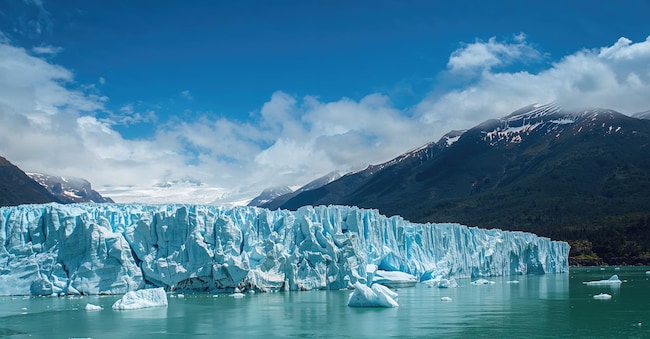
It is all related to the warming of the Antarctic surface. Which since 1950, particularly in the Antarctic Peninsula, has been significantly altering the stability of the lower layers of the atmosphere.
This was emphasised in a study carried out by researchers from the ENEA research agency in collaboration with a group of scientists from six countries. Specifically, researchers from the International Centre for Theoretical Physics in Trieste, Great Britain's British Antarctic Survey, The Met Office, University of Bath and European Centre for Medium-Range Weather Forecast; from France, Laboratoire de Météorologie Dynamique and Sorbonne Université École Polytechnique Paris.
The Antarctic Peninsula
"The progressive reduction in atmospheric stability near the ground, caused by the increase in surface temperatures," emphasises Maria Vittoria Guarino, first author of the study and a researcher at ENEA's Sustainability Department, "increases the formation of atmospheric gravity waves starting from the Antarctic Peninsula, one of the main 'factories' of these waves that play a crucial role in the dynamics of the terrestrial climate". The researcher - the study was published in the scientific journal Journal of Climate - points out that "a less stable atmosphere in fact facilitates the emergence and propagation of these wave signals travelling upwards, and the research highlights for the first time an increase in such waves, linking it to a change in surface atmospheric fluxes".
Local to global effects
There is another aspect that emerges from the study, and it concerns the fact that 'the effects of surface warming do not remain confined to the ground'. This shows how they are generating more waves that propagate up to the stratosphere and beyond, helping to reshape atmospheric circulation with effects that go from local to global. The results are based on data from weather stations, satellite observations, reanalysis products and modelling simulations, which show a marked and consistent increase in gravity waves.
"Atmospheric gravity waves are not just a local phenomenon but are able to influence the polar vortex, ozone processes and weather in the mid-latitudes," the researcher concludes. "And an increase in their presence in the skies indicates potentially profound changes in the dynamics of our planet's climate.

