
Viticulture, an ENEA guide to improve sustainability and productivity
Precise technical-economic indicators are provided for each solution: investment required, expected energy savings, payback time

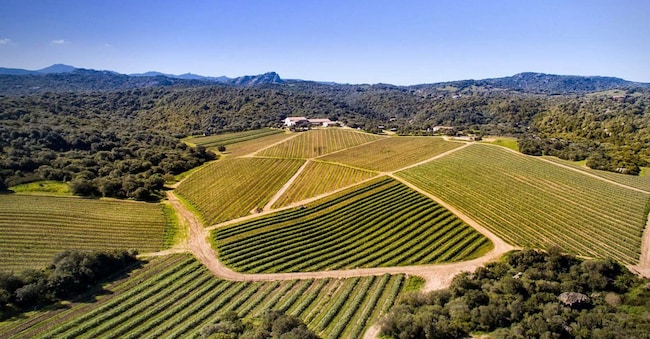
Less energy consumption and better productivity: these are the two strong points of the Guide to improve the efficiency of Italian wine-growing companies promoted by ENEA researchers. In 129 pages, the guide subdivides the interventions by degree of technological maturity, ranging from consolidated transversal technologies to systems for optimising the production process and emerging technologies. Precise technical-economic indicators are provided for each solution: investment required, expected energy savings, payback time.
"In a global market increasingly focused on sustainability, the adoption of responsible energy practices is a key competitive positioning factor," commented Ilaria Bertini, director of ENEA's Energy Efficiency Department. This guide shows how collaboration between the world of research and the production system is a key element in transforming technological innovation into a concrete and measurable advantage for companies'.
The guide was developed as part of thethree-year 2025-2027 Electricity System Research Programme, to support companies in reducing energy consumption, conceived as an operational 'roadmap' for integrating technological innovations and management optimisations throughout the entire production process.
Also thanks to the illustration of a few cases. Like that of a wine company in Central Italy. The project, the investment is 38 thousand euro, involves recovering heat from the compressors. In one year there is a saving of 16,500 Sm3 of gas and 6.6 thousand euro per year, with a payback time of 6 years. In addition, 32 tonnes of CO2 are avoided.
Then there is the case of the average company located in the north of Italia that produces 500,000 bottles of wine per year. The intervention concerns the optimisation of the cold generation system. With an investment of EUR 18,500,000, there are electricity savings of 32,000 kWh and economic savings of EUR 7,500 per year with a payback period of 2.5 years.

