
Energy saving, food industry's effort to reduce consumption increases
Amortisation times are increasing, but this means resorting to more impactful interventions: on average, a cost reduction of 30% can be achieved

3' min read
3' min read
It is not a question of size class. From small and medium-sized enterprises to large multinationals, the domestic (highly energy-intensive) food industry pays the price for energy costs that are now considered unsustainable. Hence the rush to equip themselves with heat recovery technologies or photovoltaic systems. With a difference from the past. Until a few years ago, companies discarded investments in energy efficiency that could not be amortised within a maximum of six to twelve months.
"Now," says Alessandro Brizzi, general manager of Renovis, an energy service company from Vabrio D'Agogna, in the province of Novara, "we focus on interventions that can be amortised in about three years, sometimes even in six or seven. This means that the degree of sensitivity towards sustainable production has also grown. Our goal is not only energy efficiency but also the recovery and utilisation of waste, with a view to the circular economy'.
But what is the payback time, the time it takes for a company to cover its expenditure thanks to the energy savings achieved? "Average cost reductions of 30% can be achieved,' Brizzi explains. 'For payback time there is no average value, as different interventions give different results. In any case, with heat recovery we usually oscillate between one and three years, with photovoltaics the range is two to six years".
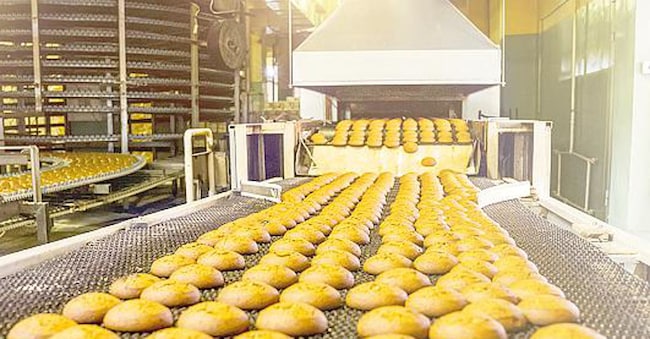
Thus in a bakery industry, the payback period for the cost of a heat recovery system can vary from 18 to 36 months; in a company in the canning industry it can be as much as 30 months. And it is worth mentioning that in the bakery industry alone - with 46,000 companies and a turnover of 13 billion - Renovis estimates energy waste at 25%.
Today, awareness of the need to reduce energy consumption is the common thread linking all food companies. The problem is generated by the country system. Not only because investments in energy efficiency are often blocked by an asphyxiating bureaucracy. "We pay four times more for electricity than Spain, twice as much as in France, 30-40% more than in Germany, recalls Antonio Feola, Head of Raw Materials and Sustainability at Unionfood, which includes 530 companies owning 900 brands, with a total turnover of 56 billion, of which 26 billion is generated by exports.

