
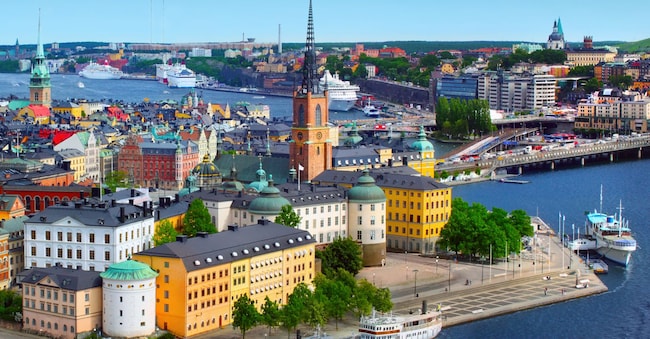
Energy transition: Stockholm is the most exemplary European capital
Paris and Vienna follow, according to the Greenpeace report. Rome is second from bottom in the ranking of the 15 capital cities monitored. Only Bucharest fares worse.

Key points
The energy transition is still a long way off. And in a study carried out by Greenpeace on 15 European capitals, Rome ranks second from last. Specifically, this finding is highlighted in the environmental organisation’s new report Greenpeace Central and Eastern Europe, which ranks the 15 capitals according to their progress towards phasing out fossil fuel-based heating systems.
“Families facing ever-higher bills and volatile energy prices due to international conflicts are not an unintended consequence – says Federico Spadini of Greenpeace Italia’s Climate Campaign – but are the direct consequence of an energy model based on fossil fuels that threatens not only the climate but also the stability of our societies.”
The most virtuous
Among the most exemplary cities – and therefore at the top of the rankings – are Stockholm, Paris and Vienna. As the report emphasises, this is ‘thanks to sound long-term planning, substantial investment in heating networks and significant social protection measures’. Atthe bottom of the rankings, on the other hand, are Athens, Rome and Bucharest, “which, despite their efforts, still have significant shortcomings: heavy reliance on fossil fuels, incomplete urban planning and weak implementation mechanisms”. Overall, the report shows that European cities are struggling to translate climate targets into a coordinated, concrete and credible action plan.
Rome’s position
Against this backdrop, Rome ranks fourteenth out of 15 capital cities. ‘Electrification is gaining ground, but gas remains essential for heating,’ the study further reveals. ‘In fact, there is no structured plan for the phase-out of fossil gas, which must instead be a priority for Rome, alongside the completion of a local heating plan. Added to this is the need to expand the use of heat pumps and heating from renewable sources, whilst ensuring that renovation programmes no longer involve the installation of new fossil-fuel boilers.”
These are situations which, as environmentalists point out, need to be addressed as a matter of urgency. And it is precisely for this reason that Greenpeace has launched the ‘Gas-Free Cities’, calling on mayors and local councillors to sign the Gas-Free Cities Declaration, asking them to commit to setting a date for phasing out fossil gas and to promoting the energy transition at a local level. The first cities to sign up were Chortkiv and Trostyanets in Ukraine and Vienna in Austria, the first European capital to sign the Declaration. However, local policies must be complemented by national ones.

