Second-quarter results

Eni’s adjusted net profit doubles to 2.3 billion in the quarter. Descalzi: “Excellent results”

Figures driven by growth in E&P, GGP and transition satellites. Forecasts for operating results and cash generation have been revised upwards. The share buyback programme rises to 3.4 billion

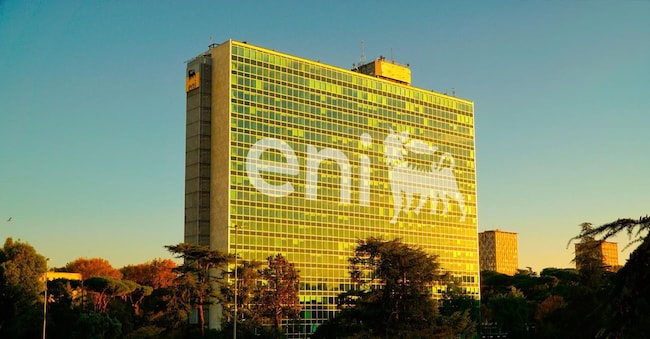
La sede dell'Eni a Roma

7' min read

Translated by AI
Versione italiana

7' min read

Translated by AI
Versione italiana

Despite a situation that remains particularly complex, Eni has reported solid and growing results, on the strength of which the group led by Claudio Descalzi has decided to revise its forecasts for operating results and cash generation upwards and, consequently, to increase shareholder returns following a further expansion of the share buyback programme to 3.4 billion. Thus, the second quarter closes with an adjusted pro forma profit of 5.4 billion euros, double that of the same period in 2025 (2.7 billion) thanks to the momentum provided by the group’s ‘engine’ (exploration and production), GGP (Global Gas & LNG Portfolio) and the transition-related subsidiaries (whilst for the half-year the increase stands at 40 per cent, to 8.9 billion euros).

Second-quarter figures

Adjusted net profit stood at €2.3 billion (+106%, representing a 43 per cent increase over the six-month period to €3.6 billion), taking into account the reduction in the Group’s adjusted tax rate to 37 per cent from 47 per cent, due to the improved geographical mix of pre-tax profit in E&P. Net cash flow from operating activities stood at €5.7 billion in the first six months and includes €868 million in dividends distributed by subsidiaries. Net cash flow before changes in working capital at adjusted replacement cost is restated at €7.3 billion. The increase in net debt before IFRS 16 (leases) was approximately 1.74 billion.

Loading...

Descalzi: excellent results

“Our determination in implementing our strategy,” commented the CEO, Claudio Descalzi – “has enabled us to achieve excellent results in the second quarter of 2026, underpinned by our diversified portfolio of activities, which offers us a wide range of strategic options and prospects for profitable growth across the various businesses in our energy mix. These results stem from effective industrial and financial management and are growing at a significantly faster rate than the trend in key commodity prices.”

The CEO: extraordinary growth in production

Descalzi then highlighted some of the initiatives the group is currently pursuing. “We are further strengthening our Exploration & Production business, which is entering a new phase of growth and value creation, thanks to the launch of the Searah joint venture between Indonesia and Malaysia, which will enable us to develop our significant gas discoveries in the Kutei basin, as well as the progress made on numerous projects and the expansion of our activities into new geographical areas. The strength of this business and our excellence in exploration and production have underpinned extraordinary production growth of 11 per cent on a like-for-like basis.”

The contribution of transition businesses

For the CEO, the contribution made by the transition-related businesses was also crucial, confirming the soundness of the strategy adopted by senior management to further enhance these segments. “The transition businesses are increasing their contribution to the group’s results, whilst at the same time fuelling their own self-financed growth,” adds Descalzi. Plenitude is on track to meet its target of increasing installed capacity by 6.5 GW by the end of the year, and already has a customer base of 11 million users. Enilive is developing new production capacity to capitalise on the opportunities offered by the rapid growth in demand for biofuels, and has succeeded in making the most of the conditions in this market phase.”

The expansion of the share buyback programme

According to Eni’s CEO, ‘the half-year results demonstrate that, year after year, we are building an increasingly robust company, thanks to the quality of our geographically diversified portfolio based on competitive assets, our distinctive expertise in exploration, our growing exposure to businesses linked to the energy transition, and opportunities for the early monetisation of assets’. All factors which, as Descalzi points out, “will underpin long-term recurring cash generation, enabling us to continue to provide shareholders with a significant return whilst sharing the benefits of more favourable market conditions, whilst maintaining an extremely robust capital structure, as demonstrated by the pro forma debt ratio at an all-time low of 10 per cent. Thanks to these results, the share buyback programme is being increased by a further €600 million to €3.4 billion.”

Operating results forecast revised upwards

With an eye to the rest of the year, Eni has, as mentioned, revised a number of parameters, starting with its forecasts for operating results. In particular, for 2026, the group forecasts growth in oil and gas production on a like-for-like basis, revised upwards to around 5 per cent compared with the previous target range of 3–4 per cent. GGP’s pro forma adjusted EBIT is up to over 1.4 billion, a 40% increase on the initial forecast As for the subsidiaries, Enilive’s adjusted pro forma EBITDA has been revised upwards to 1.3 billion (from 1.1 billion) under the current scenario, whilst Plenitude’s figure has been confirmed at 1.3 billion. Installed renewable capacity at the end of the financial year stood at 6.5 GW (Plenitude at 100%); biorefinery capacity stood at 2.1 Mtpa (million tonnes per annum), plus a further 1.5 Mtpa under construction (Enilive’s share).

Annual cash flow forecast revised upwards

As regards the consolidated results, the annual cash generation forecast has been revised upwards, as mentioned: adjusted CFFO (cash flow from operations) of 15 billion, based on an updated Brent scenario of $85 per barrel, a refining margin (SERM) (the Standard Eni Refining Margin, i.e. the indicator used by Eni to measure the theoretical profit margin from oil refining) of $14 per barrel and a TTF gas price of €50 per megawatt-hour at a euro/dollar exchange rate of 1.16, showing an improvement of 0.7 billion compared with the group’s sensitivity analysis. Gross capex is confirmed at 7 billion, whilst net capex has been revised downwards from previous guidance to below 5 billion. Meanwhile, pro forma gearing is expected to be at the lower end of the 10–15 per cent range, and reported gearing is expected to converge to the same level by the end of the year.

Share buyback programme expands

Shareholder returns are also being revised upwards in line with the growth in results. Eni has therefore increased its share buyback programme for 2026 to 3.4 billion, a 20 per cent increase on the previous first-quarter forecast of 2.8 billion, in line with the policy of distributing 60 per cent of earnings in excess of the budget (which forecast a cash flow of 11.5 billion) to shareholders in the form of increased share buybacks, up to a Brent price of 90 dollars per barrel. The new buyback figure represents an increase of more than double the initial forecast of 1.5 billion based on budgeted cash flow.

Decision on a possible special dividend to be made in October

In light of the significantly revised refining outlook, and provided that this level remains above 50 per cent of the benchmark refining margin (i.e. at least $9 per barrel compared with the $6.d budgeted figure), a decision will be taken in October on whether to pay the special dividend, in line with the remuneration policy communicated to the market, which stipulates that, in the event of scenarios exceeding $90 per barrel, or where there is an increase of more than 50 per cent in gas prices or refining margins, provides for 100 per cent of the increase in CFFO to be distributed as a special dividend in the final quarter, based on unit sensitivities (1 dollar SERM is equivalent to 0.08 billion). Finally, the forecast for the 2026 dividend of 1.1 euros per share (up 5 per cent on 2025) has been confirmed.

Loading...

Segment performance: E&P

Looking at business performance, in the exploration and production (E&P) sector, hydrocarbon production stood at 1.79 million barrels per day in the second quarter, up 7 per cent compared with the same period in 2025 (1.79 million in the first half of 2025, +8 per cent). Adjusted operating profit for E&P in the second quarter rose by 97% to 4.8 billion (+42% over the six-month period, to 8.1 billion). Adjusted net profit stood at 2.2 billion in the second quarter (compared with 1.05 billion in the same period of 2025), whilst for the first half of the year the increase was 57 per cent, to 3.7 billion.

The Gas Division

Turning to the performance of the Ggp business, adjusted pro forma operating profit stood at 468 million, an increase of 46 per cent, thanks to the benefits of portfolio optimisation as well as renegotiations and commercial agreements. In the first half of the year, however, pro forma adjusted operating profit stood at 783 million, up 24 per cent. In the second quarter of 2025, the Power business reported an adjusted pro forma operating profit of 35 million, down 47 per cent, whilst, for the half-year, the figure of 47 million represents a reduction of 182 million compared with the same period in 2025.

Satellites: Plenitude and Enilive

Turning to the business units linked to the energy transition, in the second quarter, Plenitude posted an adjusted pro forma operating profit of 226 million, up 70 per cent compared with the same period last year (for the first half of the year, the figure stands at 439 million, up 17 per cent). The business also posted an adjusted pro forma EBITDA of 233 million, down 9% compared with the second quarter of 2024 (for the first half of the year, the figure stood at 541 million, down 12% compared with the same period in 2025). Eni Live, on the other hand, recorded an adjusted pro forma operating profit of 295 million in the second quarter, more than double that of 2025 (433 million in the first half of the year, up 93 per cent), whilst pro forma adjusted EBITDA of 375 million is up by 79 per cent (+55 per cent in the first six months, to 592 million).

Refining and Chemicals

Finally, refining and chemicals. The refining segment posted an adjusted pro forma profit of 80 million in the second quarter, an improvement on the loss of 9 million recorded in the same period of 2025. In the first half of 2025, the business achieved an adjusted pro forma operating profit of 66 million, compared with a loss of 100 million in the same period of the previous year. In the second quarter, the chemicals business managed by Versalis reported an adjusted pro forma operating loss of 65 million, an improvement on the 184 million loss in the second quarter of 2025, thanks to the benefits of the restructuring plan launched by the group. In the first half of 2025, the adjusted pro forma loss of 223 million was higher than the loss of 427 million in the first half of 2025

Copyright reserved ©
Loading...

Brand connect

Loading...

Newsletter

Notizie e approfondimenti sugli avvenimenti politici, economici e finanziari.

Iscriviti