
Enriched products or for those with intolerances: online they sell 30% more
The comparison of the Immagino Observatory between digital and traditional shopping carts shows that ecommerce rewards emerging trends

4' min read
4' min read
Do online purchases replicate those made in physical shops? If not, how do consumer choices differ? This was asked by researchers at the Gs1 Italy's Immagino Observatory, which monitors large-scale retail sales through the lens of labels. That is, it calculates the variations in purchases in terms of quantity and euros spent based on what the claims on the packaging communicate.
Over the years, the Observatory has reported, for example, on how those who emphasise the Italian nature of the product sell more than those who do not, just as it has been able to intercept and quantify the success of consumer trends that reward"rich in" or "free from" formulations (i.e. rich or lacking in some particular element) or, again, the importance of attention to organic, sustainability or animal welfare. The latest monitoring just published shows precisely how these latter categories in online sales weigh about a third more in terms of euro spent on total purchases than the share they account for in traditional shopping. Italian products also stand out in ecommerce (especially PDOs) but less markedly (with a difference of about 3%). Other categories, on the other hand, carry less weight: regionality, texture and beneficial ingredients account for 3-4% less, processing method 21% less.
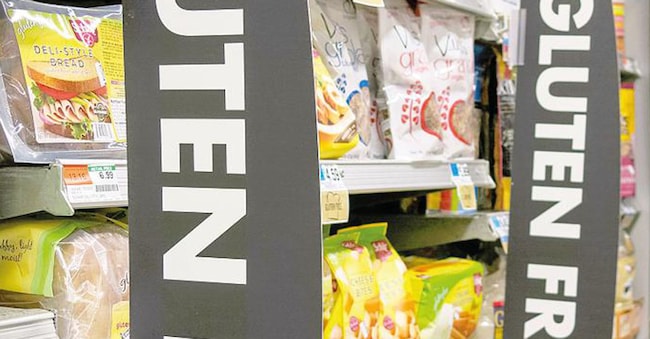
More in detail, in the digital shopping cart between June 2023 and June 2024, 'rich in' products (almost 8,300 references for a value sold of 148 million euros) and those dedicated to those suffering from intolerances (more than 8,500 products for 139 million) weigh 28% more than the traditional one; with record levels for products claiming to provide zinc (600% more), magnesium (double), potassium (+89%) and vitamins (+66%). More than twice as many purchases are made for the 187 products indicated on the label as 'yeast-free' and 35% more for those with the claim 'gluten-free', followed by 'egg-free' and 'lactose-free' (perhaps because the latter types of food have become much more popular in supermarkets in recent years). On the other hand, there are more than 10,000 products that the Observatory includes in the "Lifestyle" category, i.e. those that refer to "identity choices and dictated by precise lifestyles". These include 'organic' and 'vegan', which sell 65% and 34% more respectively. The same applies to the 'Csr' category (Corporate social responsibility, 230 million sales), which records higher incidences for products with certifications linked to the world of environmental sustainability, such as Ecolabel (+170%), Ecocert (+158%) or Sustainable cleaning (+77%). Even for Cruelty free and Fsc 'labels', the incidence of online sales is higher than that of super and hypermarkets.
Overall, between June 2023 and June 2024 the basket composed of 102,567 products collected EUR 1.2 billion in the e-commerce channel, i.e. 2.6% of the EUR 47.7 billion spent in super and hypermarkets.
The profile of households who buy online varies from basket to basket in the Gs1 analysis, but there tends to be a polarisation between young and mature buyers (less presence of the intermediate bracket then) and a greater spending capacity. The 71% of households that have made at least one purchase via e-commerce in the last year show a loyalty to the channel of less than 5% and develop only 13.3% of the total expenditure of the products monitored by Immagino. Households that make at least 5% of their total expenditure via the web account for almost 10% of households and instead contribute over 86% of the channel's expenditure.
With regard to an analysis of the more traditional trolley of those who go to hypermarkets and supermarkets to do their shopping, Italian style (i.e. labels highlighting words such as '100% made in Italy' or the Italian flag) remains the leading phenomenon in large-scale consumption (11.4 billion euro in sales) despite volumes still suffering (-2% per year), with a 'thud' of -7.7% for IGT references and with the exception of PDO products (+2.1% in volume).


