New rules

Environmental management is becoming stricter and more circular

Authorisations must be designed to mitigate damage. It will be necessary to put in place a system that is audited at least every three years

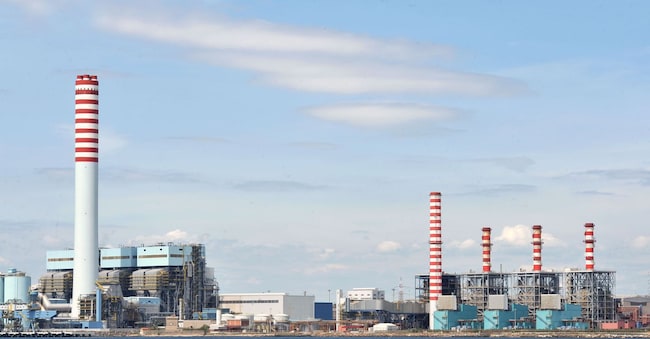
09/05/2011 Civitavecchia, nella foto la centrale Termoelettrica Enel di Torrevaldaliga Nord Maria Laura Antonelli / Pool / AGF

3' min read

Translated by AI
Versione italiana

3' min read

Translated by AI
Versione italiana

Revised environmental management of power stations, chemical plants, steelworks, cement works, paper mills, abattoirs and waste management (each with its own capacity thresholds) under new rules that pave the way for compensation in proven cases of damage to the health of citizens. And with a new role for the integrated environmental authorisation, which must not only curb pollution but also strengthen the circular economy.

Legislative Decree No. 197 of 28 September 2026 (Official Gazette No. 251 of 28 October 2026) transposes Directive (EU) 2024/1785 and largely rewrites the AIA, the Integrated Environmental Authorisation without which no large industrial or waste management facility may operate.

Loading...

For the first time, The Hague will also cater to manufacturers of batteries and hydrogen, extracts minerals such as lithium or smelts metals. Public health becomes a decision-making criterion: public health authorities have a seat at the table; those who repeatedly fail to comply risk having their operations halted; and damage to health explicitly paves the way for compensation. The decree also covers waste, atmospheric emissions and landfills. No facility is exempt: those in operation as at 4 August 2024 must comply by the first review and, in any case, by 1 September 2036.

The Hague is shifting its focus: as well as tackling pollution, it must drive progress towards a circular economy and decarbonisation. This has led to new definitions: environmental performance limit values, which also cover water consumption, emerging technologies and far-reaching industrial transformation.

New activities

The Hague has added the production of batteries of any technology, with cells totalling over 15,000 tonnes per year (excluding assembly only); the extraction of certain minerals, from bauxite to lithium; cold rolling and forging; pyrolysis; and the production of hydrogen by electrolysis in quantities exceeding 50 tonnes per day. Pig and poultry farms are subject to a separate regime, managed by the Regions (Title III-ter and Annex VIII-bis), with thresholds in LU (livestock units) and uniform rules set by the EU Commission; the requirements come into force between four and six years later, depending on the size of the farm. Large-scale intensive farms remain under the Hague regime.

Environmental management and climate

By 1 July 2030, the operator must have an environmental management system in place, verified by an audit carried out at least every three years and published online; ISO 14001:2015 and EMAS are recognised as equivalent. For energy, metals, mineral products, chemicals, paper, cardboard and wood-based panels, by 30 June 2030 the system must include a transition plan towards climate neutrality by 2050.

Limits

For each sector, the EU sets out the best available techniques (BAT) and the achievable emissions range (BAT-AEL): The Hague’s limits must fall within the most stringent part of this range. Limits are being introduced on water use and indicative targets on waste and resources. Exemptions are permitted only at the request of the company, justified in a public annex and reviewed at least every four years.

Health and check-ups

The Ministry of Health is permanently involved in the preliminary investigation; the health authority may request that an authorisation already granted be reviewed; and the new Article 33-bis provides for compensation for damage to health pursuant to Article 2043 of the Civil Code. Furthermore, in the event of persistent breaches or breaches occurring more than twice a year, suspension is triggered; false declarations regarding the restoration of compliance have no legal effect; and the frequency of monitoring for groundwater and soil is reduced from five to four years and from ten to nine, respectively.

Waste and incineration

Where necessary, the application must include the ‘end-of-waste’ declaration, certifying that a material is no longer waste and may be placed back on the market as a product; the authority carries out spot checks on this. The criteria for excluding gasification and pyrolysis plants from the regulations governing incineration (Article 237-quater) have changed, as have the monitoring requirements of emissions is extended to include start-up and shut-down phases, with estimates of dioxins, furans and dioxin-like PCBs (Article 237-quattuordecies).

Incineration and landfill sites

Large combustion plants in small isolated electricity systems may defer compliance with the limits for sulphur dioxide, nitrogen oxides and particulate matter until 1 January 2030; those complying with the Hague limits are also in compliance with Article 273. With regard to landfill sites, Article 1(2) of Legislative Decree 36/2003 is repealed, and any extension of the operating period requires prior updating of the Hague Convention at the operator’s request.

Copyright reserved ©

Brand connect

Loading...

Newsletter

Notizie e approfondimenti sugli avvenimenti politici, economici e finanziari.

Iscriviti