Enquiry / Pulse

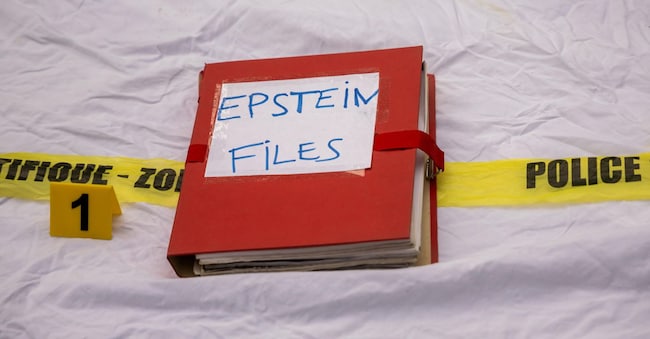
Epstein files, who are the European personalities mentioned in the documents

The publication of Jeffrey Epstein's files revealed references to politicians, entrepreneurs and celebrities in several European countries

by Angelica Migliorisi (Il Sole 24 Ore, Italia), Lola García-Ajofrín (El Confidencial, Spain), Petr Jedlička (Deník Referendum, Czech Republic/Slovakia), Kostas Zafeiropoulos (EfSyn, Greece)

5' min read

Translated by AI
Versione italiana

5' min read

Translated by AI
Versione italiana

In early 2026, the US Department of Justice (DoJ) released some 3.5 million documents related to Jeffrey Epstein, as well as thousands of videos and images. A part of the documents remains the subject of litigation and new requests to desecrate them in court as they contain sensitive material.

As far as Italy is concerned, a case that ended up in the international chronicles concerns the name 'Nicola Caputo', read in the House by a US congressman among those who, according to his reconstruction, were obscured in non-integral versions of the files; the former Italian MEP Nicola Caputo (who went from the Democratic Party to Italia Viva to Forza Italia) denied being the person to whom the documents allegedly referred. This denial also came from Republican MP Thomas Massie, who wrote on X: 'It is inevitable that there are instances of homonymy in the Epstein files. I have good reason to believe that the Nicola Caputo mentioned in one of the documents is NOT the same Nicola Capito who served as a Member of Parliament for Italia'. And again: 'The censored year of birth of the man in Epstein's files indicates that he is more than ten years older than the former MEP'.

Loading...

Other Italian names have emerged from the DoJ files. References appear to Matteo Salvini (who is mentioned 89 times in the documents), Silvio Berlusconi, Giuseppe Conte and Beppe Grillo within exchanges between third parties or contextual material in the dataset. The papers examined do not reveal a documented direct link between Epstein and the persons mentioned, but rather the favour of the latter and of Steve Bannon (former strategic advisor to US President Donald Trump, who had tried unsuccessfully to open a sovereignist-inspired organisation in Italia in the Lazio abbey of Trisulti) towards the Carroccio leader in particular.

In the dialogues between the two, a victory of the Lega Nord secretary in the 2019 European elections was hypothesised, with references also to the intention to collect electoral funds for him and the French Marine Le Pen, exponent of the far-right Ressemblement National party. With respect to Berlusconi, the files contain articles and references to the Forza Italia founder's judicial affairs, up to his conviction for tax fraud and his disqualification as a senator in November 2013. The papers circulated by the US government also mention possible meetings that people close to Epstein might have wanted to organise with Berlusconi or members of his staff. Meetings that reportedly never materialised.

Former Prime Minister Conte is mentioned in an email exchange between Bannon and Epstein in which the Trump adviser comments on a USA Today article about a promise by the US president to invite his Italian counterpart to the White House, a meeting that later took place in July 2018. The figure of Grillo, founder of the 5 Star Movement, appears in the documents in a context of international political analysis, without any particular comment.

On the business side, the name of Flavio Briatore was reported in articles linking his mention to communications and contacts in the public files, along with denials by the interested party in the same reports. Epstein allegedly met him at a party in Saint Tropez, France, without any relevant exchange between the two. Also mentioned are show business personalities such as the actress Chiara Baschetti who, like the politicians mentioned above, would have no direct connection with the affair and would even have rejected Epstein's advances during a stay in Paris.

Greece

Among the most significant cases on the political-institutional level is Greece. In an email of September 2012, in the midst of the eurozone crisis, Epstein proposed the organisation of 'small meetings' to discuss new solutions to the financial crisis, asking for suggestions on which personalities to involve: former prime ministers, central bankers, economists, International Monetary Fund officials.

In a confidential reply, New York Times journalistLandon Thomas Jr. suggested, among others, former Greek Prime Minister Lucas Papademos, former vice-president of the European Central Bank, along with leading figures in European and international economic debate. The email - part of some 1,500 files containing references to Greece - does not prove that such meetings actually took place, but documents the existence of an informal circuit of discussion between influential personalities, outside institutional venues.

In the documents also appear references to Epstein's trips to Greece, speculative attempts against the Greek economy, trafficking in antiquities and contacts with ecclesiastical circles. The name of the Vice-President of the European Commission Maroš Šefčovič appears three times in the declassified documents; the European figure has denied any involvement.

Particularly sensitive is the role of the press: Landon Thomas had professional and personal relationships with Epstein for years and was subsequently fired from The New York Times in 2019 for violating ethics rules after soliciting a donation to a cultural centre linked to him.

Spain

In Spain, the documents appear rather thin on the political level. The former prime minister José María Aznar appears by name in the files, but without any irregular elements or prominent profiles emerging.

The case of the Spanish celebrity Ana Obregón is different: previous revelations had spoken of several meetings between the actress and the US financier, in a context of social relationships and frequentations of international high society.

France

In France, the consequences were mainly political. The files revealed a dense network of contacts between Epstein and cultural and institutional circles even after his first conviction in 2008. At the centre of attention was the former Minister of Culture Jack Lang, a historical figure of the French left, whose name appears numerous times in the documents.

The revelations led to his resignation from the presidency of the Institut du Monde Arabe, while the French authorities are also investigating possible financial profiles linked to the affair.

Czech Republic and Slovakia

In the Czech Republic, the files made public by the United States Department of Justice so far contain marginal references. According to local press reports, the names of some women appear who were allegedly used by Epstein to approach other girls, but these are only a few cases and not an extensive picture.

The only name to emerge publicly is that of Zlata Rybářová, a pornographic actress known by the stage name Diana Gold. Profiles and photographs of several Czech supermodels are also filed in the documents; the only reported presence at one of Epstein's residences is that of the supermodel Veronika Vařeková. No names of Czech politicians or businessmen appear in the revelations.

The situation in Slovakia is different. The files contain several email exchanges between Epstein and Miroslav Lajčák, a prominent diplomat and former Slovakian foreign minister and former president of the UN General Assembly. In some of the emails, according to international press reports, the diplomat would express appreciation for Epstein's female companions and ask for meetings of a sexual nature.

In recent years Lajčák held the position of foreign and security policy advisor to the current Slovak Prime Minister, Robert Fico. After the publication of the files, he immediately resigned from the post, withdrawing from public life.

*This article is part of the g projectEuropean collaborative journalism "Pulse"

Copyright reserved ©

Brand connect

Loading...

Newsletter

Notizie e approfondimenti sugli avvenimenti politici, economici e finanziari.

Iscriviti