
The analysis

Essential care: dentist, chronic headache and psoriasis still outside the scope of public healthcare

The updating after nine years of the Levels of Care leaves pathologies with a high impact on the population uncovered, while the patchy implementation in the regions and 'uncertain' tariffs weaken the right to assistance: the analysis by Salutequità

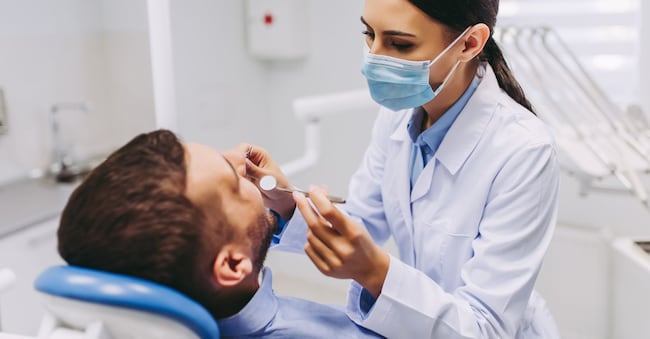
(Adobe Stock)

3' min read

Translated by AI
Versione italiana

3' min read

Translated by AI
Versione italiana

'The update of the Essential Levels of Care (Lea), arrived after nine years, is a positive step for the National Health Service, but it presents critical issues that should be addressed and overcome'. This was how Tonino Aceti, President of Salutequità, expressed himself during the hearing at the Chamber's Social Affairs Commission on the 'Draft decree of the President of the Council of Ministers containing amendments and additions to the decree of the President of the Council of Ministers of 12 January 2017 on essential levels of care (Lea)'.

The critical points

First of all, Aceti pointed out a problem of transparency in the process of selecting the services included: the technical report did not initially show how many proposals had been received by the Ministry. During the hearing, it emerged that out of 370 integration proposals submitted to the Ministry of Health, 91 were approved. This figure was considered essential for the quality of the decision-making process.

Loading...

Among the main critical issues, according to the president of Salutequità, are some regulatory inconsistencies. Primary chronic headache, recognised as a social disease by law 81/2020, is not included in the Lea with an exemption code. A similar situation exists for many patients with severe plaque psoriasis, who still cannot enjoy the exemption code 045, and for atopic dermatitis, a highly impacting chronic pathology still excluded from the exemption codes.

On the oncology front, Salutequità judges the inclusion of diagnostic tests for access to new drugs as positive, but points to a structural short-circuit: Aifa approves new drugs faster than the SSN updates the reimbursement of the tests necessary to access them, with the risk of compromising effective access to treatment.

There is also concern about the provision of only ten sessions of psycho-educational therapy for eating disorders, which is insufficient compared to the clinical complexity of these disorders.

The dentistry node

"Among the structural nodes," Aceti continued, "the issue of dentistry, which today is largely outside the perimeter of the National Health Service and charged to families' incomes, emerges strongly. It is necessary to start a serious reflection on the expansion of public provision, remembering that oral health is an integral part of the right to health".

Stalled tariffs

There is also concern about the concrete implementation of the Lea. "The current Lea and this new update," Aceti explained, "following the annulment of the Tariff Decree by the Lazio Regional Administrative Court, risk being cancelled if a new Tariff Decree is not drafted and approved by September 2026. For this reason, it is crucial to ensure the timely involvement of the Regions in this process, which, according to what has emerged, are not yet fully engaged on the text and financial coverage'.

Another critical element highlighted at the hearing concerns the financial impact and coverage of the Lea update, which was built on the basis of a tariff decree that was later annulled by the Regional Administrative Tribunal: 'When the tariffs are redefined,' added the president of Salutequità, 'the costs may no longer coincide with those estimated and reported in the technical report of the measure, opening up new margins of dispute.

"An Aifa for Lea"

Salutequità has also called for a reform of the mechanism for updating the Lea, which is deemed too slow and bureaucratic, and out of step with the needs of citizens and the technological, organisational and professional innovations of the NHS. The proposal is to set up a stable and independent authority, on the Aifa model, capable of guaranteeing continuous updating on the basis of the best and most up-to-date scientific evidence. Also because the rules provide for an annual update of the Lea and the allocation of substantial resources, which cannot be wasted.

Insufficient checks

Another stumbling block highlighted is the patchy application of the LEAs and the inadequacy of the monitoring system: 'In the face of more than 142 billion transferred to the regions for healthcare,' Aceti stressed, 'compliance with the LEAs is assessed with just 27 performance indicators, which are considered insufficient and too rigid.

Finally, the issue of financing: 'Today,' Aceti concluded, 'we lack both a robust methodology for calculating the real cost of the Lea and a strategic frame of reference. The last National Health Plan dates back to 2006, leaving the system without a long-term vision. It is also essential to revise the criteria for distributing the Health Fund and to go beyond reimbursement per performance, focusing instead on the financing of diagnostic-therapeutic-assistance pathways and on health outcomes, in order to guarantee real care for chronic patients and the rarely ill'.

Copyright reserved ©
Loading...

Brand connect

Loading...

Newsletter

Notizie e approfondimenti sugli avvenimenti politici, economici e finanziari.

Iscriviti