

Somali soldiers detained in Ethiopia. Mutual accusations: they were headed for Sudan with Saudi approval
A diplomatic incident has occurred in Jijiga, in the predominantly Somali region. According to local media, a convoy of recruits detained by the federal police is reportedly part of a network set up to support the SAF in Khartoum. Riyadh’s involvement has not been proven, but the scale of the network demonstrates the widening scope of the conflict

Key points
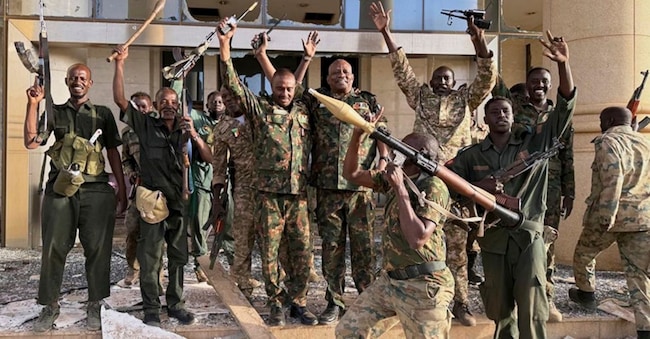
The detention of hundreds of Somali soldiers in Jijiga, the capital of Ethiopia’s Somali Region, may have lifted the veil on one of the most sensitive issues in the Horn of Africa: a military training programme that could ultimately lead to the battlefields of the war in Sudan. News of the diplomatic incident, which erupted between late August and early September 2026, has only just come to light and is not merely a case of an unauthorised border crossing: it shines a spotlight on recruits who, according to local media, have been trained with Saudi funding, and raises questions about their fate once the exercises are over. Estimates of the number of detainees vary considerably: from around 180 to 900 men, according to information circulating in the local and regional media. The soldiers belong to a contingent of around 3,000 recruits stationed at the Hanano camp in the state of Galmudug, in central Somalia. According to some accounts, the soldiers were travelling in a convoy of hired vehicles when they were intercepted and detained by the Ethiopian regional police, before being transferred to the regional capital, Jijiga. Neither Addis Ababa nor the Somali embassy in Ethiopia has, so far, provided a detailed account of the incident.
Mogadishu’s version: ‘They were on authorised leave’
The Somali federal government has confirmed the presence of soldiers in the Somali region of Ethiopia, but has offered an explanation based on logistical and internal security considerations. The National Security Adviser, Aways Haji Yusuf, stated that the soldiers were on authorised leave to visit their families and had chosen the route through Ethiopia to avoid the roads controlled by al-Shabaab in Somalia. This account would explain why they crossed the border, but it glosses over other aspects: the nature and scale of the military training programme, the source of the funding, and the intended future of its ‘graduates’. Furthermore, Yusuf’s statement does not clarify whether the recruits included citizens of the Somali Region of Ethiopia, a detail on which some local sources have emphasised.
The account “Voice of Horn”, active on X and monitored by regional observers, claims that Saudi Arabia is behind the group and that it comprises a total of over 5,000 Somali recruits. According to these accounts, the training, divided into 9-month cycles, is reportedly conducted by military contractors from Romania, Ukraine, South Africa and Colombia, within an increasingly international framework of cooperation. Some sources add that the instructors also include Sudanese military personnel, who were already present in the Galmudug camps prior to the Saudi agreement. The initiative is reportedly part of a military cooperation agreement signed in February 2026 between Riyadh and Mogadishu. A Saudi military delegation reportedly visited two training camps in the Guri El area of Galmudug at the end of June, confirming, according to local media, the country’s role as the programme’s financier and political supervisor.
The Sudan crisis: are recruits being prepared for the front lines in Khartoum?
The most sensitive aspect of the revelations concerning Jijiga relates to the possible deployment of these forces in Sudan. “Voice of Horn” and other regional media outlets, including “BML Daily” and Kenya’s “The Standard”, report that some of the recruits trained in Galmudug are intended, at a later stage, to be deployed in Sudan alongside the Sudanese Armed Forces. These allegations have not, as yet, been independently confirmed, and there is no evidence that the soldiers detained in Jijiga were on their way to Sudan. However, the incident raises once again a question that has been asked for months: where have the previous cohorts of recruits who left the training camps ended up? Some sources link the programme to cross-border recruitment networks said to be operating to bolster the Sudanese army. “The Sudan Times” has suggested that the ongoing fighting has allowed these networks to consolidate their presence, linking recruitment from abroad to Khartoum’s efforts to bolster the ranks of the Saf. None of the parties involved has officially commented on these allegations.
Recruitment is widening: even minors from Tigray
The issue of recruitment for the war in Sudan is not limited to Somalia. In Ethiopia, the ‘Addis Standard’ reported statements by Prime Minister Abiy Ahmed, who on 7 July had denounced before Parliament the existence of networks targeting young people from Tigray, including minors, to send them to fight in Sudan, by exploiting their humanitarian and economic circumstances. The detention in Jijiga, seen in this light, does not appear to be an isolated incident, but rather a piece of a broader regional dynamic. The incident in Jijiga has not proven the existence of a Saudi-Somali military ‘pipeline’ leading to Sudan, but it highlights a significant information gap: the mandate and final destination of thousands of recruits whose training is reportedly funded by a key regional actor such as Saudi Arabia. The presence of Sudanese instructors in the Galmudug camps, documented by a number of investigations, currently represents the most tangible link between the training in Somalia and the conflict in Sudan. Pending more detailed official statements from Addis Ababa, Mogadishu and Riyadh, Jijiga remains the symbol of an unresolved issue.

