
Meloni skips EU-Balkan summit in Tivat
Italia has on more than one occasion expressed strong support for accelerating the European course of the Western Balkans, considered a strategic investment for the stability, security and competitiveness of the entire European continent. This area, according to the Meloni government, must have priority over Ukraine

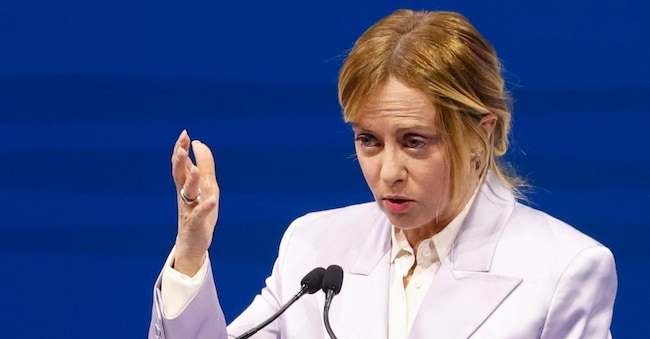
In the end, Prime Minister Giorgia Meloni will not be at the EU-Western Balkans summit in Tivat, the pearl of the Boka Kotorska Bay. The Montenegrin town, overlooking one of the most picturesque bays in the Adriatic, now known mainly for Porto Montenegro and its super yachts, wants to show itself at its best before the European leaders. The ambition is clear: to become the symbol of a Montenegro ready to join the EU and, more generally, the showcase of the European aspirations of the entire Balkan region.
Italia, in terms of foreign policy strategy, aims to keep the European focus on the Western Balkans (Albania, Bosnia-Herzegovina, Kosovo, Montenegro, North Macedonia and Serbia). On more than one occasion, the Meloni government has emphasised that the enlargement process cannot remain hostage to Brussels' hesitations.
The delay of the event in Reggio Calabria, and the decision not to go to the Montenegro Summit
It has been reported that the Prime Minister was unable to attend the Tivat summit due to the protracted duration of the ceremony celebrating the 212th anniversary of the founding of the Carabinieri Corps in Reggio Calabria. Meloni personally informed Montenegrin President Milatović and European Council President Costa, expressing her regret that she was unable to reach the meeting, scheduled to end at 3.30 p.m., in time.
The Tirana precedent
The extraordinary summit, promoted by European Council President António Costa together with Montenegrin President Jakov Milatović, brought together the leaders of the 27 member states, the representatives of the six Western Balkan countries, as well as European Commission President Ursula von der Leyen. The meeting in Tivat follows the previous one in Tirana on 6 December 2022, the first EU-Western Balkans summit ever organised in a country of the region. The work focused on the progress of the region's integration process, the implementation of the Western Balkans Growth Plan and the main geopolitical challenges affecting the continent.
The crux of EU membership
The topic of EU membership was also at the centre of the discussion, with a comparison on the opportunities but also on the difficulties that continue to slow down the progress of the six Balkan partners. On more than one occasion, Italia has expressed strong support for accelerating the European path of the Western Balkans, considered a strategic investment for the stability, security, and competitiveness of the entire European continent. "We are in favour of Ukraine's future accession to the European Union, but Ukraine must respect EU rules," the Minister of Foreign Affairs Antonio Tajani recently clarified. 'First of all,' he continued, 'it must defeat corruption, there must be a timeframe that is not very long but that allows this country to respect European rules. We are willing to help' and to President Zelensky 'I offered the possibility of the Finance Police contributing to the fight against Ukrainian corruption, perhaps by training the police. But we must also remember,' Tajani stressed, 'that there are countries, and I'm referring to the Western Balkans, starting with Albania and Montenegro, that have been waiting a long time to be part of the European Union. So I think it is right to give confidence to the Balkans, so first the Balkans and then Ukraine'.

