
EU Commission presents roadmap for a common defence by 2030
The programme will be discussed next week by the Heads of State and Government. Understanding between EU institutions on the defence industrial plan
From our correspondent Beda Romano
 Aggiungi Il Sole 24 Ore
ai preferiti su Google
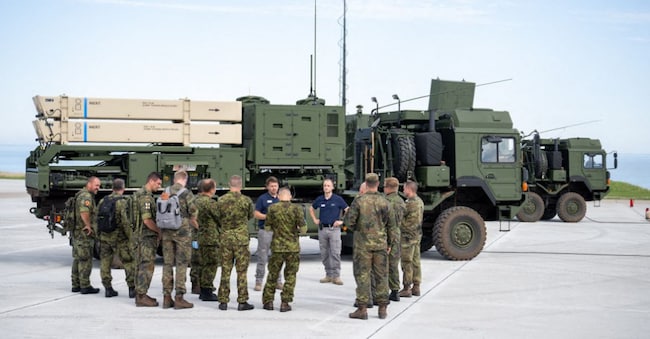
BRUSSELS - After weeks of negotiations with member states, the European Commission presented today, Thursday 16 October, a roadmap to structure European rearmament as collaboratively as possible. The programme will be discussed next week by the heads of state and government. In the background remain tensions between member states, seeking a balance between national competence and the Community's driving force in the defence sector. The programme to be implemented between now and 2030 will be discussed next week by the heads of state and government. In the background remain tensions between member states, seeking a balance between national competence and the Community's driving force in the defence sector.
The roadmap presented today proposes four major joint projects: a drone shield, surveillance of the EU's eastern flank, aair shield, and a space defence shield. 'These initiatives,' the EU executive explained in a statement, 'will strengthen Europe's deterrence and defence capability on space, land, air, sea, and cyberspace, contributing directly to NATO's capability goals.
The programme presented in Brussels envisages that two of the four projects - the anti-drone wall and the surveillance of the eastern flank - will be launched by the end of 2026. The former is expected to be operational in 2027, and the latter in 2028. "In the next ten years we will spend around EUR 6.8 trillion on security," Defence Commissioner Andrius Kubilius estimated in broad strokes, speaking to some international media, including the Afp and Ansa news agencies.
The European Commission envisages member states creating coalitions between states in nine areas to promote joint research and joint procurement. The areas are air and missile defence; so-called strategic enablers; military mobility; artillery systems; cybernetics, artificial intelligence, and electronic warfare; missiles and munitions; drones and counter-drones; land combat; and finally maritime surveillance.
The member states are already expressing their interest in collaborating in the various fields. According to preliminary work, Germany, Denmark, Sweden, France, Croatia, Latvia, Belgium, the Netherlands, and Spain have already expressed their willingness to be lead countries in each field. As mentioned, no decision has yet been made, negotiations are still ongoing, and there is still time for a redistribution of roles in the various fields.


