Europe

EU Council, Von der Leyen: the humanitarian situation in Gaza is abominable

The Commission President: 'Asian countries want to have a structured cooperation with the EU, and I said that we can think of this as a redefinition of the WTO'. Would the US be invited? "They have left this group"

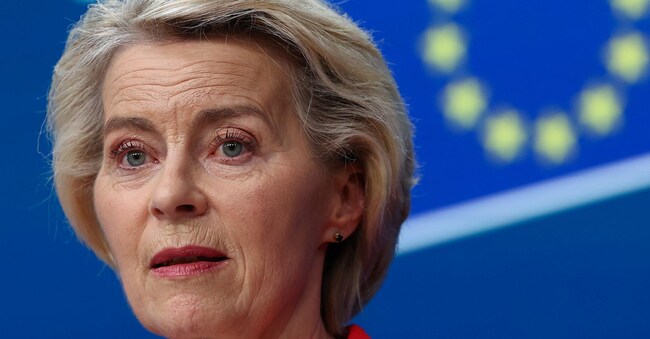
La presidente della Commissione europea Ursula von der Leyen. REUTERS/Yves Herman

4' min read

4' min read

"We cannot lose sight of the humanitarian situation in Gaza, which remains abominable and unsustainable. Humanitarian aid must reach Gaza immediately, unimpeded, quickly and in adequate quantities. We will continue to call for a sustainable ceasefire and the release of hostages in order to achieve a final cessation of hostilities". This was said by European Commission President Ursula von der Leyen at the end of the EU summit.

"We can think about a redefinition of the WTO"

.

"I presented at the summit the different options we have, with many other countries wanting to have free trade agreements. But I also presented the Cptpp (the Trans-Pacific Partnership): the Asian countries want to have structured cooperation with the EU, and I said that we can think of this as a redefinition of the WTO. Avoiding repeating past mistakes and showing the world that free trade is possible'. This was said by EU Commission President Ursula von der Leyen at a press conference. Would the US be invited? "They have left this group," she said.

Loading...

The Summit

On paper - the conclusions of the European Council - it remains more or less as expected on the eve of the summit: an invitation "to continue the discussion on the follow-up to be given" to the conclusions of the dossier on human rights violations perpetrated by Israel in Gaza and the West Bank. That is, the light option, given the divisions that remain among the 27. The novelty, however, is that President Antonio Costa, on the basis of the debate that took place at Justus Lipsius, instructed High Commissioner Kaja Kallas to "propose possible measures" at the next Foreign Affairs Council in July.

In short, it is fine to stand still, but immobile no. The broad majority that led Kallas to trigger the review of the Association Council with Israel - 17 countries out of 27, with one abstention - remains essentially the same even at the leaders' table, although it cannot be called a homogeneous bloc. Spanish Prime Minister Pedro Sanchez reiterated his position vehemently ("In Gaza there is a catastrophic situation of genocide") and announced that he would ask his peers for "the immediate suspension of this agreement". Rhetoric, because there is not the necessary consensus in the Council to proceed. The fact remains that exasperation mounts among the 17, especially among some (Belgium, Ireland and Sweden, for example).

Madrid summons Israel's chargé d'affaires in Spain

The Spanish Foreign Ministry has summoned Israel's chargé d'affaires in Madrid, Dan Poraz, in protest at an "unacceptable communiqué" issued by the Israeli embassy in the Iberian country: Efe news agency reports. The note referred to statements on Gaza made by Pedro Sánchez, upon his arrival at the European Council. The Spanish prime minister had called for the "immediate suspension" of the EU-Israel association agreement due to "flagrant violations" of human rights in Gaza by the Jewish state. The Israeli embassy had responded by accusing Madrid of having 'embarked on an anti-Israel crusade'.

The Kallas mandate

Even among the nine countries that did not vote for the revision - Germany, Hungary, Italy, the Czech Republic, Croatia, Cyprus, Lithuania, Greece and Bulgaria - there are, however, distinct positions: only Budapest, by now, opposes applying sanctions to violent settlers. And from one distinction to another, there is a risk of paralysis. This is why Costa, using his prerogatives, has asked Kallas to go ahead. Then we will see what solutions will be proposed (doing nothing is also an option) and how the capitals will be put to the Council. Meanwhile, the 27 reiterate their demand for an 'immediate ceasefire in Gaza' and the unconditional release of all hostages, leading to a permanent end to hostilities; they also 'deplore the appalling humanitarian situation in Gaza, the unacceptable number of civilian casualties and the levels of hunger. It calls on Israel to completely lift the blockade' against the Strip. Kallas - we learn - will now attempt yet another manoeuvre of pressure on the Israeli authorities to see if he can get results, using as a goad precisely the discussion on the review, which is considered in itself "an instrument of leverage".

The Ukraine Node

.

The other big topic, as always, is Ukraine. President Volodymyr Zelensky connected via video conference as he was returning home from Strasbourg. The leaders agreed to the conclusions at 26, given Viktor Orban's continued opposition to cooperation. When it comes to Ukraine, he will block if he can (unless, selectively, he gets something in return for not doing so). The latest hold-up is over the opening of the key negotiating chapter - the first - in Kiev's EU accession process. All the more so since it can now flaunt the results of the highly dubious referendum in which 95% of Hungarians opposed Ukraine's entry. No one expects the issue to be unblocked before the elections, scheduled for spring 2026. That is why, for both Ukraine and Moldova, there are plans in the works to 'hack' the procedure: the technical working tables will go on as if the chapters had been opened and then, when Budapest is ready, they can be opened and closed simultaneously thanks to its vote. And no time will be lost.

New Sanctions on Moscow

In its conclusions to 26, the European Council 'calls on member states to further intensify their efforts to meet Ukraine's urgent military and defence needs'. And it "reaffirms its commitment, also within the framework of the accession path, to support the repair, recovery and reconstruction of the country", looking in this regard "with interest" at the conference on reconstruction to be held in Rome "on 10 and 11 July". Finally, the EU says it is ready "to increase the pressure" on Moscow, "also with a new robust package of sanctions". Which should be examined tomorrow by the ambassadors. All in line by now with the EU's motto in this regard: if there is the will, a way can be found.

A Roadmap for Common Defence

The 27 EU leaders instructed the Commission and High Representative Kaja Kallas to present 'a roadmap' by October to achieve the goal of common readiness - i.e. the European Armament Plan, ed. - on defence by 2030. The 27 then stressed the need to urgently address 'critical capability shortfalls, the financing of increased defence spending and the promotion of partnerships with like-minded partners'.

Copyright reserved ©
Loading...

Brand connect

Loading...

Newsletter

Notizie e approfondimenti sugli avvenimenti politici, economici e finanziari.

Iscriviti