
EU Court, indicating a false foundation date in a brand name is unlawful and misleading
There is a risk of bypassing the consumer, selling them a bogus narrative and propagating a non-existent historical legacy

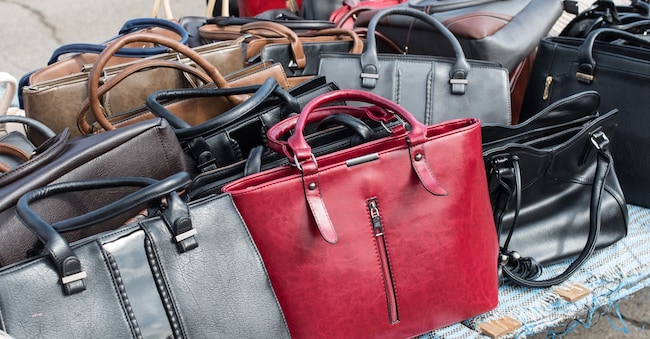
Beware of the founding date of a fashion house or furniture brand because it may not correspond to the truth. This is the case of a French leather goods brand at the centre of a recent ruling by the EU Court of Justice (case C-412/24), which led the judges to reaffirm the illegitimacy of including, in the company name, numbers that evoke a year of birth extraneous to its actual genealogy. Thus ending up by disappointing consumers, who often assess product standards and quality by the springs of those who produce and market them.
The affair
A French company, founded in 2009, had acquired one historical trade mark and had filed as many - for a line of leather goods - that bore a precise date next to the name: 1717. A competitor company active in the same sector had challenged them before the French courts, explaining that in its opinion the indication of that date wrongly suggested that it had been founded in the 18th century and that it was, therefore, the repository of secular expertise. Two pieces of information that the evidence immediately showed to be false: the company, in fact, had been founded in the 2000s and the historic maison it had acquired - once specialised in the sale of arms and accessories - and from which it had borrowed the name, updating it, had ceased trading in 1992.
The orientation of the EU Court
Once the dispute had reached the Court of Cassation, the French judges of legitimacy questioned the Court of Justice on whether a brand can be considered deceptive - according to EU law - if it includes a number that may be perceived by the relevant public as indicating a remote foundation year, somehow propagating a long-standing tradition that, in fact, does not exist.
The answer was, of course, in the affirmative: according to Union rules, claiming an untruthful date of birth gives the company (and thus its products) an aura of authority and anauthority and savoir fairewhich do not exist. Thus, it sells the target audience an unreliable narrative.
In this regard, the EU Court recalled that European law prohibits trademarks "which are likely to mislead the public" only in cases where the brand in question is likely to deceive potential customers, by convincing them of a characteristic of the product or service it sells (e.g. its nature, its quality or its geographical origin) that, in practice, is nothing more than a hoax. A circumstance that frequently occurs, for instance with luxury articles, for which quality is often closely linked to style or prestige image.

