
Former Ilva: European Court of Justice denies the company the right to receive energy subsidies
Decision of the Luxembourg judges to whom the matter was referred in 2025 by the Lombardy Regional Administrative Court, to which the company had lodged an appeal

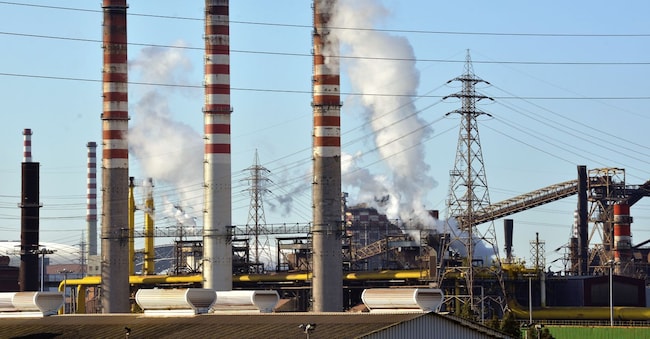
The European Court of Justice has denied Acciaierie d’Italia, formerly Ilva, the right to benefit from the concessions provided for energy-intensive companies, i.e. those with high electricity or gas consumption. The Court, which is based in Luxembourg, notes that, in matters of rescue aid, the European Commission has voluntarily restricted its own discretion regarding the compatibility of State aid. Consequently, any derogation from these rules would constitute a breach of the general principles of law, in particular those of equal treatment and the protection of legitimate expectations.
No to tax breaks – there is already financial assistance available for the rescue
The Court therefore notes that Italia has merely brought its legislation on State aid for the energy sector into line with the requirements of the European Commission’s guidelines on State aid for climate, the environment and energy. Under those guidelines, energy aid must not be granted to firms in difficulty in accordance with the rescue aid guidelines. In the Court’s view, an undertaking under special administration – and Acciaierie has been in this position since February 2024, whilst Ilva was also placed under special administration earlier, in January 2015 – is an ‘undertaking in difficulty’ under European Union law, and this triggers insolvency proceedings subject to the preliminary determination of the undertaking’s state of insolvency, a situation which it is for the referring court (in this case, the Lombardy Regional Administrative Court) to verify. Furthermore, in the Court of Justice’s view, the fact that the insolvency proceedings provided for by the legislation of the Member States are aimed at restoring the economic viability of the undertakings concerned does not call into question the fact that those undertakings are undertakings in difficulty under the guidelines on rescue aid. Furthermore, aid for the energy sector must not be confused with rescue aid, as the latter has different objectives. The Court of Justice therefore points out that neither the Court itself nor the General Court resolves the national dispute. It is instead for the national court to resolve the case in accordance with the decision of the Court or the General Court.
AdI has never received the energy subsidies
Sources close to Acciaierie d’Italia report that the appeal on which the Court in Luxembourg has now ruled was lodged in February 2025 with the Lombardy Regional Administrative Court to determine whether AdI could secure energy subsidies. The case was subsequently referred by the Regional Administrative Court to the European Court to assess the compatibility of the company’s request with the general rules on State aid. The Court has now ruled against the company. Moreover, AdI never actually received these concessions. It had sought to obtain them on the basis of an interpretation of European rules in the light of Italian legislation.
The appeal lodged against CSEA
Last year’s appeal was lodged against the Fund for Energy and Environmental Services (CSEA). Before the Regional Administrative Court (TAR), AdI requested the annulment of the CSEA decision of 17 December 2024: “Final rejection of the application to participate in the scheme for energy-intensive enterprises submitted on 14 November 2024 – financial year 2025”. According to the CSEA, Acciaierie must be regarded as an “enterprise in difficulty” within the meaning of the relevant state aid guidelines. In turn, AdI responded by stating that the guidelines on aid to firms in difficulty are intended solely to “prevent subsidies from benefiting firms whose ability to continue business operations is highly uncertain” and that “the interpretation proposed by the CSEA is not supported by case law, which has consistently allowed companies under extraordinary administration to receive various forms of support (for example, in relation to tax credits)”. Furthermore, the appeal states that a 2024 ruling by the Lombardy Regional Administrative Court “did not rule out the legitimacy of the incentives for energy-intensive firms granted in previous years to Ilva S.p.A., which was also under special administration, despite the fact that the regulatory framework in force at the time was essentially the same as the current one”.
But for AdI, the stakes are now quite different
The ruling by the European Court of Justice does not, however, change anything for Acciaierie d’Italia, as the company faces other, far more complex problems. The continuation of its operations is, in fact, contingent upon the rulings of the Milan Court of Appeal on 30 September and the Court of Cassation on 20 October. Ilva and AdI have in fact submitted a new application to the Milan judges for a stay of the decree ordering the shutdown of the hot-work area (a decree adopted by the Court of Appeal itself on 27 July, valid for 90 days, i.e. 26 October) in light of the fact that the Supreme Court has already scheduled a hearing on the case. The Court of Cassation will, in fact, have to rule on the two companies’ requests to set aside the July decree. However, even if the Court of Appeal were to suspend the shutdown decree – an initial rejection of the companies’ applications was already issued by the same court on 11 September – the hot area’s facilities will still have to shut down. And this time not because the courts have ordered it, but because the raw materials for production have run out. The trade unions have indicated a specific date in this regard: 8 October. That is the day on which the ore supplies will run out. AdI has not placed any further orders since the shutdown decree was issued. After that, the plants still in operation – only one blast furnace, No. 2, is currently active – will have to be put into pre-heating mode. In other words, they will not be producing but will be kept at the bare minimum. This will continue until new raw materials arrive, which are shipped in from abroad. However, whether purchase orders can be placed will only become clear after the next two court proceedings.

