
Energy: the EU grants broad-ranging flexibility in spending
Eligible measures include incentives for renewables, nuclear power, green building refurbishments and biofuels. Italia, with a budget of 14 billion, is considering a possible ‘Made in Europe’ clause
by Carmine Fotina
 Aggiungi Il Sole 24 Ore
ai preferiti su Google
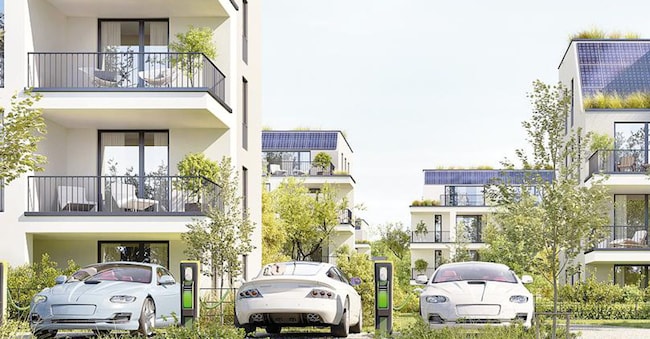
The final list comprises over 20 categories of measures eligible for the budgetary flexibility granted by the EU for energy security, an option which, for Italia, amounts to approximately 14.4 billion over a three-year period.
The document drawn up by the Commission also sets out investments in nuclear power stations and, for both businesses and households, potential grants or subsidised loans for building refurbishment and for electric vehicle charging infrastructure. Households could also access grants for solar panels and for replacing gas boilers with heat pumps.
However, the refusal to invoke the clause for reducing excise duties or other taxes on fossil fuels, or for income-based support or other subsidies to mitigate energy prices, has been confirmed. So, no direct aid to tackle high fuel prices or to reduce energy bills. If anything, the focus appears to be on energy efficiency and, as far as businesses are concerned – not least by virtue of the reference to the annex to the Net Zero Industry Act – the final framework for decarbonisation investments is wide-ranging. Brussels, however, urges that the list of measures (see the table on this page) be regarded as illustrative and not exhaustive.
The Italian government has been working on an action plan for several weeks now, making use of the extension of the defence safeguard clause to cover security and the energy transition. “A number of potential measures that meet the requirements have already been identified, and the necessary in-depth analysis of the technical aspects and eligibility is currently underway,” says Gilberto Pichetto, Minister for the Environment and Energy Security, emphasising in particular the importance of Brussels’ decision to include nuclear power as well. At the forefront could be measures to boost energy efficiency (incentives for heat pumps and a possible new ‘Conto Termico’ scheme) and for energy storage (both battery and pumped-storage systems). Support for the installation of solar panels in public buildings is also being considered, as well as, more generally, a further boost for renewable energy installations. The situation is different for nuclear power: Italia is too far behind to incentivise the construction of power stations, but there may be scope for progress on the research front.
The measures presented will be assessed by the Commission, which will decide in September whether to recommend them to the Council for approval. Adoption by the Council could then take place at the October Ecofin meeting. The Meloni government, however, appears intent on making full use of the flexibility allowed during this period – namely 0.6 per cent of GDP – spreading it over 2027 and 2028, whilst retaining the option, should the EU excessive deficit procedure be closed, to bring forward a small portion of the measures as early as this year. The Ministries for Enterprise and ‘Made in Italy’ and for the Environment and Energy Security have already drawn up initial drafts of measures for the Ministry of the Economy to review. One of the options reportedly under consideration is to introduce, at least for some of the incentives under review, a ‘Made in Europe’ clause to give preference to products manufactured in European Union facilities. This is a delicate decision, however, given the very bumpy track record of the ‘Transition 5.0’ plan, for which a clause of this kind – initially envisaged – was subsequently removed due to implementation issues and the severe restrictions on products that would have constrained purchasing.

