Cohesion

Foti: EU funds could provide scope for action on energy bills

“Measures to support renewables” are also on the table for discussion

by Carmine Fotina

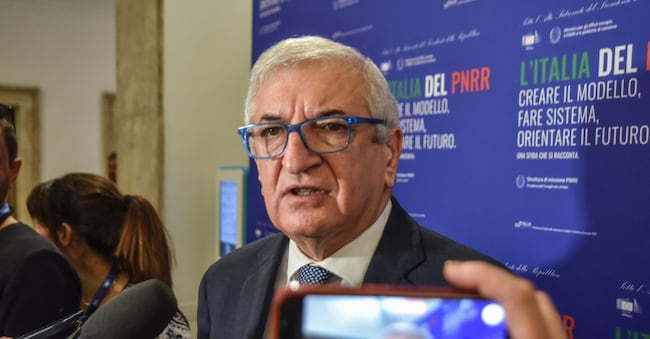
Il ministro per gli affari europei Tommaso Foti  ANSA

2' min read

Translated by AI
Versione italiana

2' min read

Translated by AI
Versione italiana

ROME - The authorities responsible for managing European funds have received official notification regarding a possible new reallocation of funds to finance measures to tackle the energy crisis.

And so a match that is not expected to be straightforward gets underway, with several regions making no secret of their reservations about the operation.

Loading...

There are two main reasons for this. Firstly, given the limited level of resources in the 2021–2027 programming period that are, in effect, free from legally binding commitments. And because, unlike the previous reallocation approved by the Commission in March to coincide with the mid-term review – which was also optional – this time the regions have no incentives.

The mid-term review, in fact, with almost €7.1 billion reallocated by Italia across the various priorities set by the Commission (out of a total of €34.6 billion for the EU), had found a significant boost in the benefits available to the regions for the projects involved, such as 100% co-financing and an extra year for expenditure and reporting.

The new proposal, which was formally announced in recent weeks by Commission Vice-President Raffaele Fitto, cannot, however, rely on this lever.

However, Tommaso Foti, Minister for EU Affairs, the NRRP and Cohesion, is not pessimistic. “The regions received a letter today and we need to discuss this with the managing authorities, although Vice-President Fitto has made it clear that this is an opportunity, not an obligation. Clearly, I would point out that it is not the case that the regions have nothing to say on the matter, as they also have 20 regional energy plans that need to be taken into account. So I think there may be scope to identify areas that can address this issue.” The European Social Fund (ESF), the minister continues, could be the instrument used to tackle household energy bills. The European Regional Development Fund (ERDF) could be used for policies promoting renewables.

The new rescheduling, however, could ultimately prove to be even less onerous than initially anticipated, given that in the meantime – and perhaps even beyond initial expectations – the Commission has also signalled its willingness to allow the use, again in the energy sector, up to 0.3% of GDP this year and up to a cumulative 0.6% in 2026–2028 within the fiscal space hitherto reserved for security and rearmament.

Copyright reserved ©
Loading...

Brand connect

Loading...

Newsletter

Notizie e approfondimenti sugli avvenimenti politici, economici e finanziari.

Iscriviti