
EU-India agreement, opportunity for Italian apples and kiwis. But garlic is a 'sensitive' product
For fruit and vegetables, tariffs will fall from 33% to 10%, while garlic cannot be imported despite India being the world's second largest producer

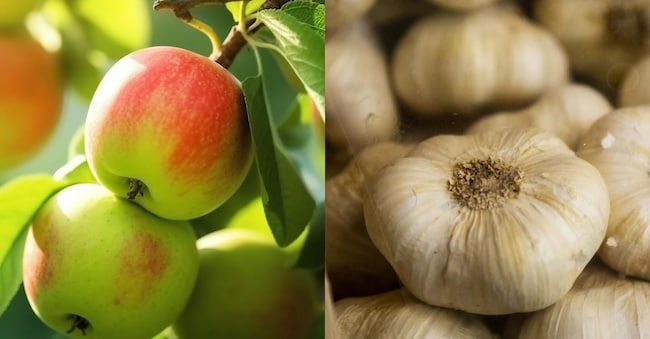
Pears, kiwis and apples: these are the products on which the fruit and vegetable segment has the highest export expectations within the EU-India agreement. Italian delicacies that were previously subject to a 33% tariff, are now being cut to 10%.
'There is no doubt that the margin for improvement is considerable and that these are three products of which Italy is a major producer,' commented Paolo Bruni, president of Cso-Italy, who has always been at the forefront in defining the strategic dossiers that guide bilateral agreements with foreign countries on this supply chain, to Il Sole 24 Ore Radiocor.
'It is obviously a question of how many years it will take to reach full regime and what the modalities will be,' he adds, 'but we are confident. And certainly, when this agreement is in place, EU exports of goods to India could perhaps double, if we consider that we are talking about a country of 1.5 billion inhabitants among which there is a segment of citizens with high spending power'.
Scrolling down the list of products defined as 'sensitive', thus excluded from the agreement, next to giants such as meat, rice, chicken, the eye falls on garlic.
As Fruitimprese explains, 'European garlic has always been a very sensitive product, even greatly regulated. From China, a leading global producer, there is a quota subject to import licences, and from that country only those with a long commercial tradition in this regard can import. A closed system, in practice, built at the behest of Spain, occupies a leading position on the European market.

