
EU-Mercosur, Macron: 'Does not respect our conditions'. Germany tries to 'convince partners'
The EU prepares to decide on signing the Mercosur agreement with mixed reactions among member states

Key points
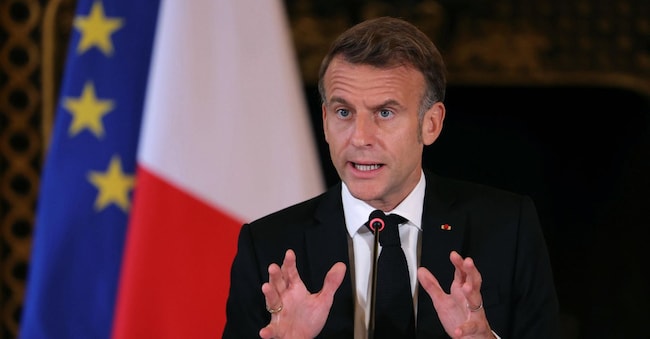
While the Italian government maintains an ambiguous position on the trade agreement between the European Union and the Mercosur, with Prime Minister Giorgia Meloni "not intending to block it" but calling for "more protections for farmers", French President Emmanuel Macron reiterates his country's position:"strongly opposed"
France demands three conditions: 'Not enough clarity'
Macron reiterated this during a meeting of the French government, making it clear that he will not accept forcing from the EU. At the moment, explained spokeswoman Maud Bregeon, "there is still not enough clarity on the three conditions" imposed by France, namely "reciprocity, safeguard clause and controls" for Mercosur producers.
What the agreement provides for
The Mercosur is the Common Market of the South, a South American trading bloc established in 1991 to which Argentina, Brazil, Paraguay and Uruguay belong. The agreement aims to achieve free trade between the EU and those countries. The signing could come just before Christmas, but first there is the decisive passage of the European Council, scheduled for 18 and 19 December, where it will be decided whether to proceed or postpone the signing.
The positions of EU members
France, where agriculture is a very influential sector and farmers have already made themselves heard, is calling for a postponement of the vote at the European Council. Austria and Ireland take a similar position, while Poland and Hungary are against the pact.
The position of Italy was outlined by Prime Minister Meloni in the Chamber. "In the past months we have therefore worked very intensively with the Commission and achieved significant steps forward. In particular with the introduction of a specific safeguard mechanism of an adequate compensation fund to be drawn on in case of need, and more recently of a significant strengthening of phytosanitary entry controls. All these measures, although presented, are not yet fully finalised'. Therefore, 'signing the agreement in the coming days is still premature'.

