Biennial

Russia at the Biennale, Buttafuoco: space for dissidents. Giuli asks Mic representative to step back

Brussels may withdraw funds from the Veneto cultural institution, but Moscow has owned a pavilion since 1914 and does not need permission to participate

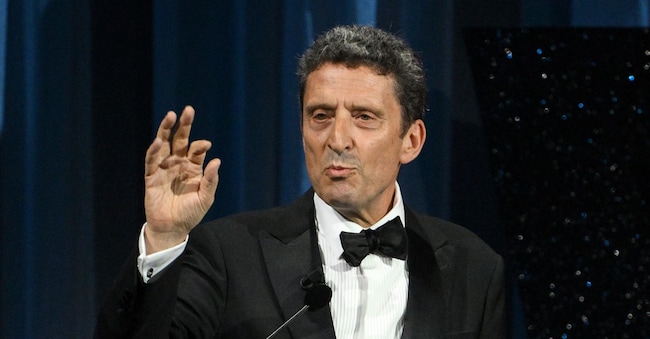
Pietrangelo Buttafuoco, presidente della Biennale di Venezia  ANSA/ETTORE FERRARI

4' min read

Translated by AI
Versione italiana

4' min read

Translated by AI
Versione italiana

A new chapter on the presence of a Russian pavilion at the Venice Biennale has split the government and attracted criticism from the European Union. The president Pietrangelo Buttafuoco, in a letter to the Foglio, wrote: "With regard to a space in Venice dedicated to dissidents, I inform you that this is already imminent with no less than two construction sites". The first initiative will serve to 'commemorate the 50th anniversary of Carlo Ripa di Meana's Biennale del Dissenso by inviting five leading figures of today who are disliked by their governments, respectively of the US, Israel, China, Russia and even the EU. I am not naming names for obvious reasons'. The other site is "'The column and the foundation of truth', five evenings by and about Pavel Florensky".

The announcement comes a day after the decision by the Minister of Culture, Alessandro Giuli, to ask "the Mic's representative on the Biennale's Board of Directors, Tamara Gregoretti, to resign her mandate as the relationship of trust has ceased". Gregoretti, a note from the Mic read, "appointed to the Venice Foundation's Board of Directors on 13 March 2024, did not consider advising either of the possible presence of the Russian Federation at the next Biennial or, subsequently, of her participation despite being aware of the international sensitivity of the issue," the ministry note explained.

Loading...

Representative Mic: 'I am calm and have no intention of resigning'

"I am serene and I have no intention of resigning, as I am certain that I am acting in compliance with the Statute of the Venice Biennale and the institution's autonomy, according to which the members of the Board of Directors do not represent those who appointed them, nor do they answer to them (Legislative Decree 19/98, art. 7, paragraph 2)". This is what Tamara Gregoretti says about the resignation request addressed to her by Culture Minister Alessandro Giuli.

Salvini on the Biennale case: "From culture a message of unity, no one excluded"

"Culture - like sport - expresses a universal message of unity. As it was for the Paralympics, everyone must be involved, no one excluded. This is why in May I will be happy to return to the splendid Venice Biennale'. Thus Matteo Salvini.

The EU condemnation

In the past few days, the European Commission had condemned the FBiennial Foundation's decision to allow Russia to participate in the 2026 edition of the Venice Art Biennale: 'In Europe, culture must promote and safeguard democratic values, foster open dialogue, diversity and freedom of expression, values that are not respected in today's Russia'.

On the condemnation from 22 EU countries and the EU executive itself of the Biennale's decision to allow Russia to reopen its National Pavilion at this year's exhibition, EU Commission spokesperson Thomas Regnier recalled that "The Biennale Foundation receives support under the European programme 'Creative Europe Media' for film production, film markets and training. It is a subsidy of two million euro for a period of three years, intended to support film producers, immersive technologies and training activities". And there is the possibility of further actions being considered, including the suspension or termination of an ongoing EU grant to the Foundation.

The Replication

"The Biennale is an independent and free institution. We are in a democracy, not a dictatorship. We are for Ukraine without ifs and buts. There is Ukraine, an aggressed state, and there is an aggressor state. Another thing is the Russian people, with whom we are not at war'. This was said on Wednesday by the Mayor of Venice, during the presentation of the collaboration agreement for the 'Polo del Mare' at the Arsenale, regarding the presence of the Russian pavilion at the Art Biennale. Recalling that 'with my family we hosted Ukrainian refugees, we twinned with Odessa, where I also went personally in 2023', Brugnaro added that 'we are a place of diplomacy, Venice is a place of freedom. We cannot move as dictatorships do, because we are a democracy. In a place of culture we must listen and dialogue. They say that 'whoever touches the sea, touches the world'. Ours is absolutely not a partisan political choice, but one that we claim as a defence of democracy, of our democracy,' he concluded.

The Right of Russia

Russia has not been invited to the61st International Art Exhibition of the Venice Biennale, which will take place from Saturday 9 May to Sunday 22 November 2026 with the participation of 99 countries and 31 collateral events. The presence of the Russian Federation derives from an ordinary procedure laid down in the event regulations for countries that have their own pavilion at the Giardini. Russia has owned a pavilion at the Giardini since 1914. A total of 29 countries own a national pavilion at the Biennale, to which Qatar will be added as of this year. As the Venetian Institution, chaired by Pietrangelo Buttafuoco, has repeatedly clarified, it is the countries recognised by the Italian Republic that autonomously request to participate in the Biennale exhibitions. In the case of states owning a pavilion at the Giardini - such as Russia - the procedure consists of a simple communication of the desire to participate.

Copyright reserved ©
Loading...

Brand connect

Loading...

Newsletter

Notizie e approfondimenti sugli avvenimenti politici, economici e finanziari.

Iscriviti