

Europe is making up for the loss of Nigerien uranium with Russia
Whilst Orano continues its legal dispute with Niamey, which nationalised SOMAÏR, a thousand tonnes of material have been illegally removed from the expropriated mine. Meanwhile, European countries have replaced the African supplier, whose market share has fallen from 25 per cent (2022) to 0.23 per cent. Canada stands to benefit from this. So does Moscow, contrary to the EU’s energy policy.

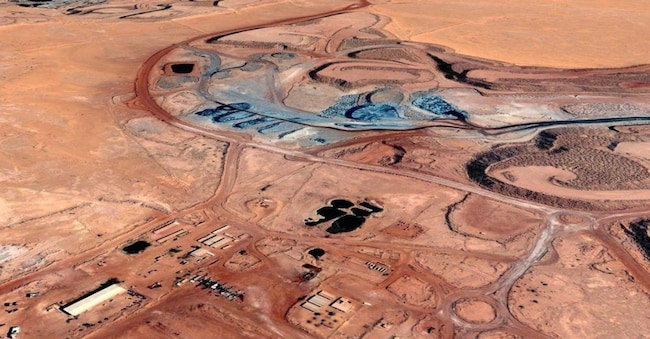
With Niger’s departure from the Western sphere of influence and following the breakdown in relations between Niamey and its long-standing French partner, Europe has swiftly replaced Nigerien uranium, but has done so by concentrating its supplies on Canada, Kazakhstan, Uzbekistan and Russia. A significant proportion of the conversion and enrichment process remains dependent on Rosatom. The case of Niger demonstrates that the value of uranium does not depend solely on who controls the mine, but on who owns the supply chain and is capable of certifying, transporting, converting, enriching, financing and transforming it into nuclear fuel.
SOMAÏR, Société des Mines de l’Aïr, was 63.4 per cent owned by the French nuclear group Orano and 36.6 per cent by the Nigerien state-owned company SOPAMIN. At the end of 2024, the Nigerien authorities took operational control of the company. Orano subsequently launched a series of arbitration proceedings: on 20 December 2024, it announced proceedings concerning the revocation of the Imouraren mining licence; on 21 January 2025, it announced a second arbitration proceeding against the State of Niger in relation to the loss of operational control of SOMAÏR. On 19 June 2025, the Government of Niger announced its intention to nationalise SOMAÏR. At the end of 2024, SOMAÏR still held 40,108 tonnes of uranium classified as reserves, of which 21,334 tonnes were attributable to Orano’s stake. In addition to these, there were 30,609 tonnes of indicated resources and 28,757 tonnes of inferred resources. On 23 September 2025, the tribunal established at the International Centre for Settlement of Investment Disputes ordered Niger not to sell, transfer or facilitate the transfer to third parties of the uranium produced by SOMAÏR and retained in breach of the rights claimed by Orano. Niger may exercise physical control over the consignment, but a buyer must assess the risk that the payment, the material or other commercial assets may subsequently be subject to enforcement proceedings.
The disputed shipment of uranium
On 27 November 2025, Orano reported that a shipment of uranium had left Arlit, a town in central Niger, without authorisation. The group stated that it had not received any official communication regarding the quantity, destination or security arrangements, and reserved the right to take action against all parties involved. According to local media reports, approximately 1,000–1,050 tonnes of uranium concentrate are believed to have been located in the Niamey area, near Air Base 101, with an estimated value of over 170 million euros. The dispute over the stock transferred from Arlit therefore represents only the first stage of a dispute involving a total of almost 100,000 tonnes.
European nuclear powers
In 2024, nuclear reactors were in operation in the European Union in Belgium, Bulgaria, the Czech Republic, Finland, France, Hungary, the Netherlands, Romania, Slovakia, Slovenia, Spain and Sweden. Nuclear power generation accounts for a particularly large share in France and Slovakia: in 2024, it accounted for approximately 68 per cent and 62 per cent respectively of national electricity generation, not of primary energy production.
In 2022, Niger supplied EU utilities with 2,975 tonnes of uranium (accounting for around 25 per cent of the total), reaffirming its status as one of the main pillars of the EU’s diversification strategy. By 2025, supplies from Niger had fallen to 33 tonnes, accounting for 0.23 per cent of the European total. In the same year, European utilities received a total of 14,678 tonnes of natural uranium. Europe has therefore almost entirely replaced Niger. However, this shift has led to a new concentration: Canada and Kazakhstan alone account for around 57 per cent of supplies; Russia, Australia and Uzbekistan together account for 46.66 per cent. With Moscow’s share on the rise compared with 2022. The problem is not an absolute shortage of ore, but rather the growing dependence on a handful of producers and on Eurasian supply routes that are vulnerable to relations with Moscow.

