
Europe’s first rare-earth recovery plant opens in Frosinone
Deputy Minister for the Environment Gava: “Ensuring the supply of critical raw materials today means strengthening our industrial, energy and technological autonomy”
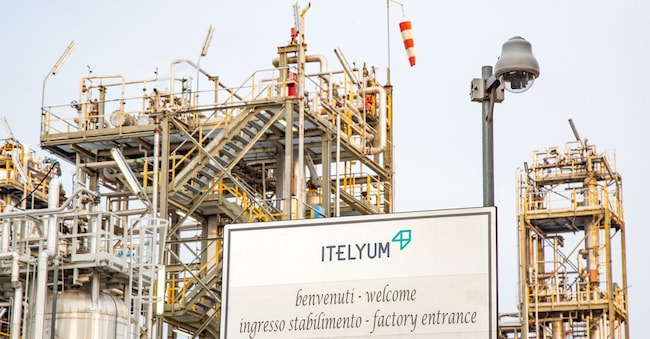
Europe’s first industrial-scale plant for the recovery of rare earths from permanent magnets sourced from WEEE (waste electrical and electronic equipment) is to be built in Italia. The project – known as LIFE 22ENV-IT-INSPIREE – has been authorised by the Ministry of the Environment and Energy Security by means of a directorate decree issued by the Directorate-General for the Circular Economy and Remediation.
According to Mase, ‘the project is a key step towards strengthening the national and European supply chain for the recycling of critical raw materials, reducing dependence on external suppliers and contributing to the achievement of the targets set by the EU in the areas of security of supply, the circular economy and industrial transition’.
The project
The plant will be built at the Ceccano site, in the province of Frosinone, and is one of 47 strategic projects selected by the European Commission under the Critical Raw Materials Act, the EU regulation aimed at ensuring that member states have secure and sustainable supply chains for critical raw materials, which are essential for the energy transition and the development of advanced technologies.
The project – which aims to reduce the EU’s dependence on imports of rare earths and other strategic minerals from third countries – is being led by the Italian company Itelyum in partnership with EIT Raw Materials, a consortium operating in the raw materials sector, Erion, a non-profit multi-consortium system active in the management of various types of waste; Glob Eco, a company specialising in the collection and treatment of WEEE; and the University of L’Aquila.
The process for recovering rare earth elements (REEs) takes place in two stages. The first stage involves dismantling the magnets, whilst the second involves recovering REE oxalates through hydrometallurgy. The dismantling plant will be capable of processing 1,000 tonnes of electric rotors per year, whilst the hydrometallurgical plant will be able to process 2,000 tonnes per year of permanent magnets from various sources, such as hard discs and small and large electric motors. In total, it is estimated that around 500 tonnes of rare-earth oxalates will be recovered annually – a volume sufficient to power one million hard disks and laptops and 10 million permanent magnets for electric vehicles.

