
Eurovo: three new factories to meet the surge in demand
53 million in investments – part of the 120-million three-year plan – are already almost up and running: a livestock farm, a packing centre and a feed mill are all ready

Three new plants and 53 million euros already invested in the first year of a three-year plan totalling 120 million. Eurovo is stepping up a gear to keep pace with the booming Italian egg market. The group, based in Imola and with €1.54 billion in revenue in 2025, aims to increase production capacity, supply chain integration and sustainability, just as consumption continues to rise: according to Circana, between January and August 2026, egg sales in Italia grew by 8 per cent.
The most significant project is in Imola, where the group’s seventh packaging centre is due to become operational at the end of November. This represents an investment of 25 million euros in a facility capable of packaging up to 5 million eggs a day and set to employ around 150 people.
“It is an investment that enables us to keep pace with rapidly growing demand whilst, at the same time, increasing efficiency and automation,” explains Federico Lionello, the group’s commercial director. The new hub forms part of a national supply chain which, in 2025, produced over 12.5 billion eggs – more than 34 million a day – with an estimated value of 3.73 billion euros.
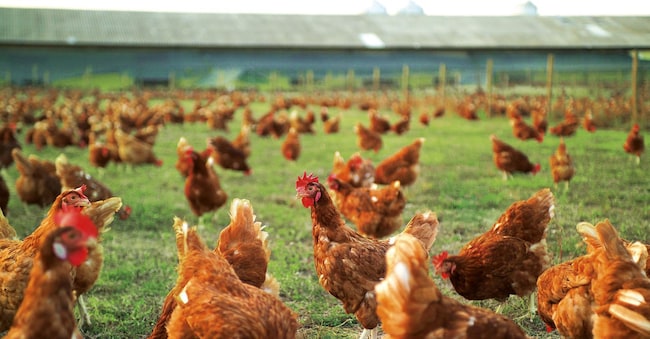
The second phase will take place in January in Amelia, Umbria: a new free-range farm housing 500,000 hens, at a cost of 18 million euros. “We are investing to strengthen Italy’s production base and ensure continuity of supply at a time when demand is growing faster than supply,” adds Lionello. This is no minor issue: in 2025, the national self-sufficiency rate stood at 92 per cent, whilst imports of shell eggs for consumption rose by 82.6 per cent to 87,600 tonnes. These figures illustrate a sector that has once again become strategic.
The third investment shifts the focus back to Romagna. In Bagnara di Romagna, in the Ravenna area, Eurovo will build a new €10 million feed mill by 2027, which will also produce organic feed. “The aim is to have increasingly precise control over the supply chain, from animal nutrition right through to the finished product, reducing inefficiencies and environmental impact,” emphasises Silvia Lionello, marketing director. The feed sector is, after all, a crucial component, particularly when one considers that almost 40 per cent of the feed produced in Italia is intended for the poultry industry.

