Groceries

Eggs: here’s why consumption, prices and imports are all on the rise

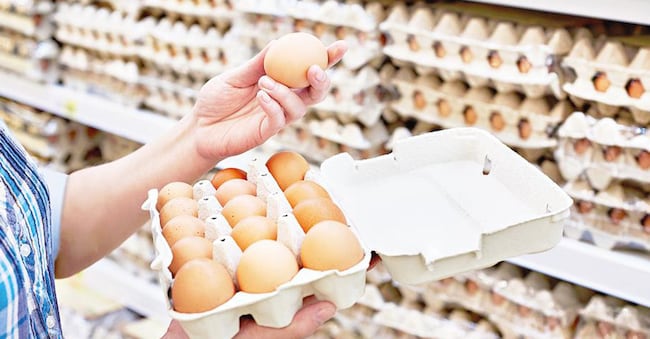
According to Ismea, they were the best-performing product in 2025, recording the highest growth in both value (+15%) and volume (+7.4%) despite the surge in prices, which was partly caused by avian influenza on poultry farms. And the trend continues

by Silvia Marzialetti

4' min read

Translated by AI
Versione italiana

Key points

4' min read

Translated by AI
Versione italiana

Some call it a ‘boom’, others speak hyperbolically of a ‘renaissance of the sector’, whilst others refer to a ‘structural shift in consumption’.

The fact is that the egg sector continues to thrive – both in Italia and globally – gaining market share and building consumer loyalty, despite the fact that the average price of eggs for consumption continues to rise sharply, in a context where supply has consistently fallen short of demand and against a European backdrop hampered by avian influenza. And egg products (frozen, pasteurised and powdered egg whites and yolks, ready-to-use), which account for 40% of production, are delivering strong performance for the sector.

Loading...

Records certified by Ismea

According to the latest Ismea report – – average prices have risen steadily since 2022: +13% in 2025 compared to 2024, a year in which prices had already risen by 10% compared to 2023. In addition to avian influenza, which is decimating poultry farms, the final shelf price is being driven up by rising production costs (energy, feed and transport) and mandatory sustainability and animal welfare targets.

In times of inflation, being able to serve a high-quality protein at a reasonably affordable price is a more than valid argument for explaining the product’s appeal. But there is more. “Perceptions have changed compared to the past – explains Ruggero Moretti, president of the Unaitalia Eggs Committee (the association representing white meat producers, ed.) –. Eggs are not only considered nutritious and economical, but also healthy, and furthermore they are one of the most sustainable animal proteins in terms of feed used, water consumption and land area required.”

The Eurovo case

This is confirmed by Federico Lionello, sales and marketing director at Eurovo (turnover of 1.2 billion, 15 million eggs produced daily, exported to 40 countries), noting that with the latest LARNs – the reference intake levels for nutrients and energy published in 2024 by the Italian Society of Human Nutrition – ‘the last taboo has also fallen, namely the supposed link between eggs and cholesterol’.

“The latest Circana figures (January–April 2026) show an 8.7% increase in consumption within the large-scale retail sector – he adds – despite an average price increase of 8.4% compared to the same period last year, but this amounts to three cents more per egg for the consumer; figures that also put recent price-related alarmism into perspective».

Last year – according to Ismea – eggs were the best-performing product of the year, recording the highest percentage increase in both value (+15%) and volume. The quantities purchased in modern retail outlets grew by 7.4% compared to 2024, driven by free-range eggs, which now account for over 70% of the total on the shelves.

Most of the production is sold as fresh produce (around 60%), whilst the remainder is processed into egg products for the food industry (egg pasta, confectionery, sauces, catering, and canteens). We are the country that allocates the largest share of production to this segment. Produced using techniques that allow the egg white to be concentrated by removing over 70% of the water, making them more suitable for transport and with a longer shelf life, these products are exported to 90 countries. The potential has, of course, also been recognised by large-scale retailers, as evidenced by the growth in the product range (+40 per cent).

Is Italia no longer self-sufficient?

Italia is Europe’s fourth-largest egg producer, with over 12.5 billion eggs, equivalent to approximately 789,000 tonnes (produced by over 43 million laying hens), representing a business worth around two billion.

In general, for the egg sector, the rise in domestic demand (consumption rose to 230 eggs per capita per year, including both fresh and processed eggs) and production declines due to avian influenza have necessitated higher import volumes (+80%), which have reduced the self-sufficiency rate from 98% to 92%.

According to Istat data, between January and December 2025, over 91,000 tonnes of shelled eggs are estimated to have arrived in Italia, mainly from Romania and Poland, which together account for almost 50% of the total, followed by Ukraine (12%).

“Even the transition from the traditional (cage) system to the alternative free-range system, which we are implementing to improve animal welfare, increases costs and reduces the number of birds,” explains Moretti. Furthermore, it is very difficult to obtain permits for new farms, because we need to limit the potential risk of avian influenza spreading, which is now a normal part of our world.” The EU is a major producer of eggs, with over 360 million laying hens producing around 6.9 million tonnes per year. In 2025, production stood at around 6.63 million tonnes (+2.6% on 2024).

The World Egg Organisation (WEO) still expects global imbalances, given that growth prospects in Europe are very modest and demand continues to drive the market. The US egg crisis last year, which prompted President Trump to request supplies (never granted) from Italia as well, raises a question: are we at risk of stock shortages? “At European level, there is tension in the market, because some of the countries hardest hit by avian influenza have seen production fall dramatically,” explains Moretti, who also chairs the EEPA (European Egg Processors Association), the organisation representing egg processors across the EU-27. “In Italia, we are confident that the situation will stabilise: we have reorganised ourselves to better meet demand,” he concludes.

Copyright reserved ©
Loading...

Brand connect

Loading...

Newsletter

Notizie e approfondimenti sugli avvenimenti politici, economici e finanziari.

Iscriviti