

Meat, fish or eggs? The microbiota decides the menu, not the throat
The choice of protein may not be the palate but rather the indications coming from the megalopolis of gut bacteria

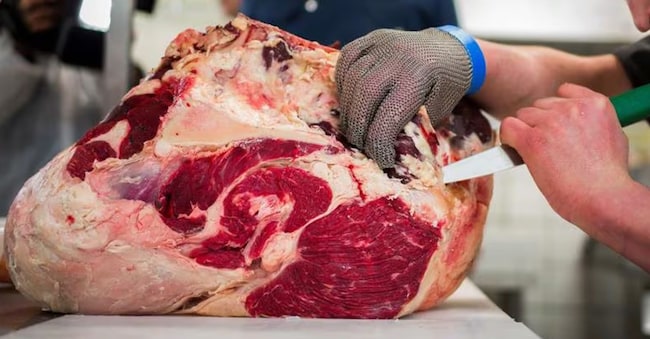
Are you irresistibly attracted to a T-bone steak? Can't resist a fillet of sea bream or sea bass? Do you feel your mouth water when faced with a plate of beans with olive oil? Whatever your taste, you should know that it may not be your palate but rather the indications coming from the megalopolis of bacteria (and more) that dwells in your digestive tract that you choose your proteins. Because in the end, the gut-brain axis also dominates over eating habits, in a qualitative sense. Nutrition, in fact, is not just about targeting the calories you need. The body that needs protein, in fact, sometimes realises that it needs 'bricks' that it cannot build itself. So it must look for essential amino acids, i.e. the constituents of protein that cannot be synthesised internally and must therefore come from food. Foods of animal origin are particularly rich in them, and among those of vegetable origin, legumes. What happens? Like true 'detectors', the bacteria that make up the intestinal microbiota first become aware of the need, then lead the body to respond accordingly, favouring foods such as meat, fish, milk and dairy products, and eggs. Demonstrating this reality, not in humans but in various organisms of the animal world, is a truly original research study that appeared in Science, carried out by a team coordinated by Greg Seong-Bae Suh of the Centre for the Physiology of the Microbiome, Body and Brain at the Institute of Basic Sciences, in collaboration with researchers from Seoul National University and Ewha Womans University. "The study suggests how, under conditions of protein deficiency, neural and hormonal signals are activated that selectively push for essential amino acids, while reducing interest in other nutrients such as sugars,' comments Daniela Martini, Professor of Human Nutrition at the Department of Food Science and Nutrition at the University of Milan. 'In a nutshell, this is an "elegant" example of how nutritional priorities can be dynamically adjusted.
The gut governs the brain
The study, we are still in basic research, discovered how the gut detects protein deficiency and directs the brain to search for essential nutrients. All through a coordinated signalling system between the two structures, which leads to rapid changes in food-synthesising behaviour through coordinated neuronal and hormonal pathways. Above all, this research explains what is behind the biological mechanisms that link nutrient deficiency to selective feeding behaviour by animals. According to the investigation, two perfectly integrated pathways 'govern' protein choices: a fast neural circuit quickly informs the brain of the lack of essential amino acids, while a slower hormonal signal sustains the protein-seeking behaviour over time. This was first demonstrated in fruit flies through a series of experiments and findings. In particular, it was seen that in the absence of dietary protein, specific specialised gut cells produced a hormone called CNMa. This signal first activates gut-associated enteric neurons, which rapidly transmit information about amino acid deficiency to the brain via a direct gut-brain neural circuit. At the same time, CNMa enters the bloodstream as a hormone and reaches the brain more slowly, reinforcing and sustaining the appetite for essential amino acids over time.
The role of the microbiota
In short: the gut is not just an organ of the digestive system but a true sensory system. And it is able to guide animal behaviour, not only by increasing appetite but also on the qualitative front. Even this integrated system of the gut-brain axis can selectively alter food priorities: animals become more attracted to protein nutrients, losing interest in sugars. CNMa signalling inhibits the activity of sugar-sensitive neurons themselves, effectively shifting food preference from carbohydrates to protein nutrients. And in this, the gut microbiota would play a major role. Indeed, flies lacking intestinal commensal bacteria showed increased activation of the brain neurons deputed to search for amino acids. And this mechanism would also be preserved in mammals. Similar experiments conducted on mice revealed that protein-deprived animals developed a strong preference for essential amino acids. This was also observed in mice deprived of FGF21, a hormone long thought to play a central role in appetite for protein. Thus, the animals may have additional nutrient sensing systems, hitherto unknown. 'Although the microbiota does not autonomously decide what we eat, it can make an important contribution to the regulation of appetite and food preferences,' Martini concludes. 'In fact, we know that gut bacteria produce metabolites and modulate nerve and hormonal signals that influence hunger, satiety and the search for specific nutrients. This study adds that the microbiota may also participate in the mechanisms that regulate the need for proteins and essential amino acids. It may not 'choose for us', but it appears to establish an ongoing dialogue with the body to adapt dietary behaviour to nutritional status'.
Future Perspectives
The study shows that animals do not simply eat more when they lack nutrients. The brain selectively adjusts food priorities to favour specifically deficient nutrients. These observations could open up important perspectives in research on obesity and metabolic disorders, as well as on eating-related problems. According to Seong-Bae Suh, "most of the drugs currently used to treat obesity and control appetite rely on gut hormone signalling, yet we still know relatively little about how naturally produced gut signals influence brain and behaviour -" 'The gut-brain axis is now considered to be one of the main control systems of eating behaviour,' Martini concludes. 'The gut, wrongly considered for a long time to be just a digestive organ, appears to actually be a true sensory system capable of rapidly informing the brain about the availability of nutrients. And this, in the future, could open up new avenues for science. All of this starts from the role of the microbiota and the vision of the human being as an aggregate of eukaryotic and prokaryotic cells and archaebacteria or archaea, confirming that, at least on the numerical front, we are destined to be 'dominated' by the inhabitants of our bodies. Not for nothing, the census of microbial cells inhabiting the human body is ten times higher than that of eukaryotic cells. Most of these prokaryotic cells are found in the human gut, and even genetically speaking, the genomes of these bacteria contain more than a hundred times as many genes as those of humans.

