
Eurozone manufacturing PMI index rises to 50.5: highest in four years
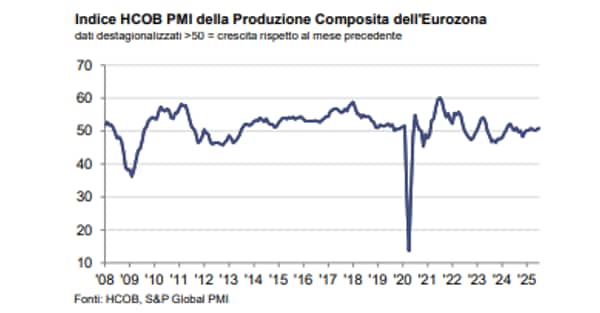
According to the flash estimate, the August Composite PMI index increased to 51.1 from 50.9 in July, reaching its highest level in 15 months.
2' min read
2' min read
The composite Pmi index in August, according to the flash estimate, rose to 51.1 from 50.9 in July, reaching the highest level in 15 months. in August, according to the flash estimate, it rose to 50.5 from 49.8 in July, topping the highest level in 48 months. The Pmi services index, on the other hand, fell to 50.7 from 51 in the previous month.
A reading above 50 indicates an expansion of economic activity, while one below 50 signals a contraction.
Down to 50.7 Services Index
"The situation is improving. Economic activity has picked up in both the manufacturing and service sectors. Overall, we have seen a slight acceleration in growth over the last three months. Despite headwinds such as US tariffs and general uncertainty, Eurozone companies seem to be reacting quite well.
The EU single market is probably playing a useful role in this regard, especially since most export and tourism revenues are generated within the EU,' commented Cyrus de la Rubia, chief economist at Hamburg commercial bank.
"The ECB does not fully appreciate the growing cost pressures in the service sector. After all, it is counting on slower wage growth to help reduce inflation in this crucial sector of the economy. That said, there is some relief that services sector selling price inflation has remained broadly stable," he continued, adding that "manufacturing output has risen for six consecutive months, with Germany leading the way.

