Europe

Uk and EU, how the new agreement works and why Farage is against it

British PM Starmer and EU Commission President von der Leyen present the understanding on trade and defence. Which, for some, is a return to before Brexit
by Nicol Degli Innocenti

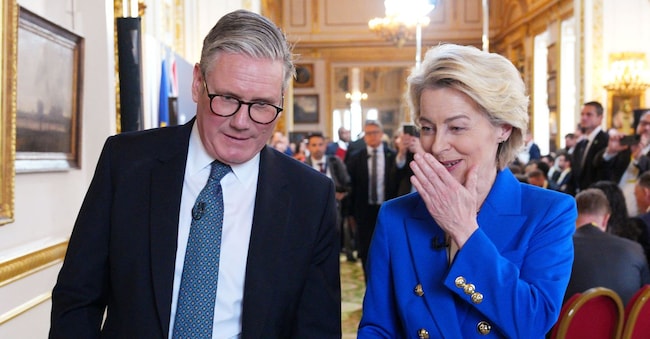
Il premier britannico Keir Starmer e la presidente della Commissione europea Ursula von der Leyen presentano l’accordo Uk-Ue a Londra

3' min read

3' min read

Done deal between the UK and the EU: today in London, at the first summit since Brexit, substantial steps forward in bilateral relations were announced.

"This is a historic moment," said Ursula von der Leyen, President of the EU Commission, who described the UK and the EU as "historic and natural partners, standing side by side to face common challenges". Equally positive was British Prime Minister Keir Starmer, who heralded the UK's 'return to the global stage' and emphasised the benefits of the new strategic partnership with the EU for British businesses and citizens.

Loading...

The security and defence node

.

The most important and least controversial agreement is on security and defence. For Brussels it is important to cooperate with the UK, which is the biggest power in the sector in Europe, while for London it opens the door to access for British companies to the EUR 150 billion EU rearmament fund. The agreement could also open the door to the participation of British forces in joint civil and military operations with the EU and may, as von der Leyen pointed out, 'help us to better support Ukraine, including with direct defence investments in that country'.

Between fishing and energy

.

The other area on which an agreement has been reached is fishing, a very controversial issue due to the resistance of British fishermen, particularly from Scotland, who would like to block access to their territorial waters for European, especially French, fishing vessels. Former Prime Minister Boris Johnson in 2021 had accepted access for EU fishing boats until June 2026. The agreement announced today extends this right of access for another 12 years, until 2038. The long-term agreement avoids uncertainty and the obligation to renegotiate quotas every year, according to London, but the Edinburgh autonomous government this morning complained that it had not been consulted on the matter.

Agreement was also reached on the energy front, with Britain's return to the European energy market, and on steel, with an agreement that, Starmer said, 'will shelter British steel producers from EU duties'.

Import/export dynamics

.

On two other more complex fronts, however, it was decided to continue negotiations to work out the details of agreements reached in principle. Firstly on the need to simplify and speed up import/export procedures, in particular with phytosanitary and agri-food agreements. This benefits both consumers and businesses on both sides, but it remains to be seen to what extent London will accept the principle of 'dynamic alignment' to EU rules, which has so far been considered a taboo by Brexit supporters, according to whom it would mean returning Britain to the status of a 'vassal' of Brussels.

Youth Mobility

.

Agreement still to be defined also on the mobility of young people under 30. Brussels had asked for the possibility of transfer for four years and a lowering of university fees, equating them to those paid by British students, but London said no. The agreement will be there, Starmer assured today, but it will be limited in the numbers of visas granted and in time. The EU, on the other hand, agreed to facilitate tourism by allowing British citizens to use electronic gates at airports, avoiding long queues at European borders.

London has resisted, under pressure from the Conservative Party and especially from Reform, which is soaring in the polls. The leader of Reform and former leader of the Brexit Party, Nigel Farage, has already accused the Labour government of wanting to bring the free movement of people, blocked by Brexit, 'back in through the window' with this new deal, which he called 'a betrayal'. Tory leader Kemi Banedoch has also harshly criticised the EU deal, saying it puts the UK 'back to square one' before Brexit.

Yearly Uk-Ue Summits

The agreements, both reached and in the process of being finalised, are part of a very important joint decision to continue to cooperate and negotiate. As EU Council President António Costa emphasised, there is mutual trust between the two partners and a willingness to make further progress. That is why bilateral summits like today's will be held annually, Costa said.

Starmer, who at the time of the 2016 referendum had come out against leaving the EU, promised as soon as he was elected premier last July to revive relations with the EU and enter into a more constructive dialogue with the 'neighbours' who remain Britain's largest trading partner. The alliance with the EU on support for Ukraine and the turmoil caused by President Donald Trump's arrival in Washington have brought London and Brussels closer together, but Starmer remains very cautious for domestic political reasons.

Today, however, the premier was able to announce with great pride that he had concluded three important agreements in a fortnight: the trade agreement with India, the more limited agreement with the United States and now a concrete rapprochement with the EU.

Copyright reserved ©
Loading...

Brand connect

Loading...

Newsletter

Notizie e approfondimenti sugli avvenimenti politici, economici e finanziari.

Iscriviti