
Variable geometries

Even with a technocratic government, Israel will look increasingly towards the East

Whilst keeping the door open to talks with Likud, Eisenkot has already outlined his Plan B: to form a national emergency government comprising the four parties in his bloc, with external support from Arab parties. However, the drift away from the US and Russia is becoming more pronounced, whilst attention is increasingly turning towards the Gulf and India.

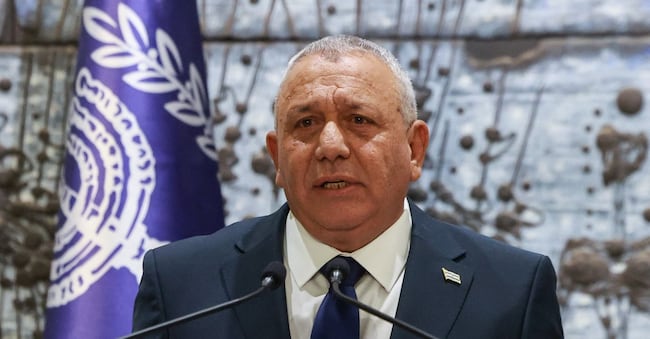
Gadi Eisenkot, premier incaricato di formare un nuovo governo in Israele  REUTERS/Ronen Zvulun

4' min read

Translated by AI
Versione italiana

4' min read

Translated by AI
Versione italiana

Whether you like it or not, Benjamin Netanyahu is still the deciding factor in the delicate and complex political negotiations in Israel. It will still take some time to finalise the structure of a new government, which, in any case, is set to have a rather short parliamentary lifespan. The outgoing Prime Minister is undoubtedly banking on this, whilst continuing to govern on a day-to-day basis. But the clearest sign of his influence is the role he has assumed as chief negotiator for a far-right political bloc, which includes the religious parties and which has effectively delegated Netanyahu to negotiate with the prime minister-designate Eisenkot.

Ben Gvir and Smodrich, the most controversial and divisive ministers, have placed their fate in the sole hands of the leader of Likud. The Israeli right, without Netanyahu, effectively does not exist. Staying with the political news, the figures are still struggling to take off. Obviously, the support of the Arab parties is being considered and appreciated, but it cannot become, at least at this stage in history, an integral part of the government’s proposal, not only because of opposition from centrist movements – which are themselves in favour of Eisenkot taking office – but also because of the fundamental incompatibility of political projects and programmes.

Loading...

The election results

After all, the results of the 27 October election leave no room for doubt. Netanyahu’s bloc has 53 seats, the bloc led by Eisenkot has 48, whilst the Arab parties have secured a record-breaking 19 MPs: 61 out of 120 are needed to secure a vote of confidence in the Knesset. President Herzog conferred the mandate on 8 November and time is running out: the deadline is 6 December, with the possibility of a 14-day extension until 20 December, though this is not automatic.
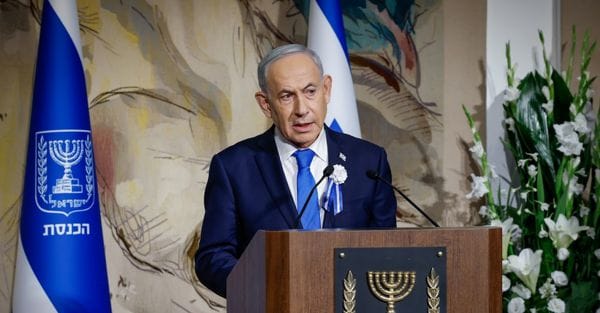
Benjamin Netanyahu

Meanwhile, talks between Yashar and Likud, the two largest delegations, are progressing with difficulty. On Sunday evening, after more than four hours of talks at a hotel in Herzliya, the second round concluded without any agreement on the substantive issues, apart from a joint statement promising a further meeting, already scheduled for the coming hours. Netanyahu insists on a government of national unity, perhaps with a rotation of the premiership that would provide him with political protection against the corruption trials and allow him to continue opposing a commission of inquiry into the events of 7 October.

Ongoing negotiations

Eisenkot, however, has built his election campaign around the Prime Minister’s departure from the political scene and refuses to serve in a government led by him, whilst Bennett has reiterated his refusal to enter into any agreement with Netanyahu or his bloc. Complicating the picture are the conditions set by Likud: no Arab parties, no Palestinian state, a compromise on conscription for the ultra-Orthodox, and the retention of Ben Gvir in the government – a move which Yashar considers unacceptable.

That is why Eisenkot, whilst keeping the door open to talks with Likud, has already outlined his Plan B: should attempts to form a broad coalition fail, he will establish a national emergency government, comprising the four parties in his bloc and with external support from the Arab parties, and then attempt to expand it. According to the public broadcaster Kan, he might even make a surprise announcement of a coalition and call for a vote in the Knesset within a day or two, in the hope that reluctant partners will at least choose not to vote against it. But not everyone in his camp is convinced: Yair Golan is urging him to end the ‘farce of negotiations’ with Likud, whilst Lieberman opposes a government that depends on Arab parties, and the issue of military conscription with the Haredi parties remains unresolved.

That is why the prevailing view remains that a minority government will be formed, with external support from the Arab parties and the political challenge of securing variable majorities for each piece of legislation.

A solution that would allow a new government to be formed but would by no means bring the events of the past period to a close. Quite the contrary. Such a government would face an uphill struggle and would likely be short-lived. This would allow Netanyahu to endure a temporary – and not even particularly painful – period of purgatory, before presenting himself once more to the electorate as the only bulwark against chaos.

The new geopolitical balance

Whatever the short-term outcome of this shift may be, Israel is already a country that is moving ever further eastwards. This is due to its geopolitical connections, now that its privileged relationship with the US has become too uncertain, can no longer be taken for granted, and is in any case too dependent on the whims of individuals. Due to the rapid evolution of its demographics and the ‘golden share’ now held by the ultra-Orthodox, both in Israeli society and in politics.

And why can’t the country turn back, given that it has been at war for three years without having achieved any of its strategic objectives, other than the partial elimination of the long-standing leaders of Hamas?

Loading...

Israel is therefore poised for a complete overhaul of its positioning and the most significant transformation of its geostrategic identity since its foundation. The nature and consequences of this remain unknown. American Jews and Russia are no longer a source of stability. Turkey is the new threat on its doorstep, alongside, of course, the danger posed by Iran’s nuclear programme.

It is therefore better to opt for variable, Machiavellian yet pragmatic arrangements, involving certain monarchies in the Gulf, India and a number of African countries, ready to provide Tel Aviv with an ideal platform for its operations outside the region or for gathering intelligence or critical raw materials.

The Western connection is therefore a nostalgic memory that Israel seems ready to abandon, in the name of its survival rather than its identity. Or rather, an identity that is undergoing profound change and which will also force us Europeans to rethink many of the preconceptions and characteristics that have, for decades, characterised a historic relationship – one that is strong but which needs to be completely re-examined.

Copyright reserved ©
Loading...

Brand connect

Loading...

Newsletter

Notizie e approfondimenti sugli avvenimenti politici, economici e finanziari.

Iscriviti