Luxury Food

Every island has its own culinary identity: here are four unique hotels that have managed to showcase it to the full

There are exemplary cases which, through their cuisine, capture the very essence of the Italian islands, telling a story unlike any other and becoming successful business ventures

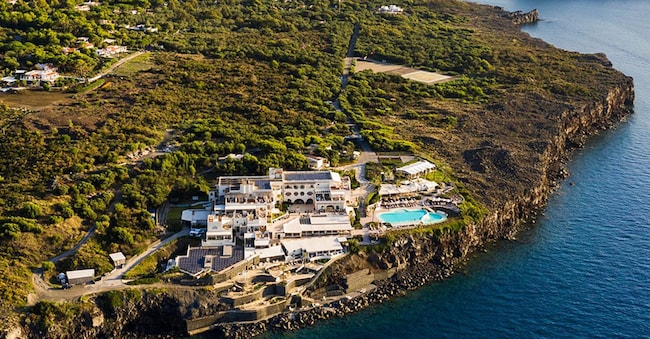
Therasia resort

12' min read

Translated by AI
Versione italiana

12' min read

Translated by AI
Versione italiana

In high-end tourism, gastronomy has taken on a role that goes far beyond mere catering. For an international clientele with high spending power, who are increasingly seeking authentic, exclusive and personalised experiences, the quality of the culinary offering is now one of the key factors influencing their choice of destination, the length of their stay and their loyalty.

Furthermore, the luxury hotel sector has, for many years, changed its approach to its high-spending target audience: whilst in the past the aim was to offer an ‘inclusive and international’ experience with dishes that would ‘appeal to tourists’, today the approach has changed completely. In fact, the point of travelling is not to experience a standardised cuisine – which the guest could find anywhere else in the world – but a unique, distinctive cuisine with a strong sense of identity that reflects a specific region.

Loading...

This is the essence of travel: a cultural discovery that encompasses outstanding local produce, crafted and presented with respect and creativity. The establishments that made this choice years ago – staking everything on local ingredients and a distinct identity – are now reaping the rewards with rising turnover. Here are three outstanding examples of luxury hotels that elevate an island’s cuisine, telling a story unlike any other.

7Pines in Baja Sardinia: following its Michelin star, fine dining turnover soars by 80%

In recent years, the Costa Smeralda has been undergoing a significant transformation. Alongside the most iconic and international luxury, there is a growing demand for authentic experiences that capture Sardinia’s identity through its landscape, craftsmanship, gastronomy and connection to the local area. This is the direction taken from the very beginning by the 7Pines Resort Sardinia in Baja Sardinia, a 75-room boutique resort nestled within 14 hectares of Mediterranean scrub, where the concept of ‘quiet luxury’, a “‘relaxed luxury’ that does not constrain the guest with rigid rules.
From the Orosei marble floors to the pieces crafted by Sardinian artisans, right through to the welcome products selected from small local producers, every element helps to build a recognisable and consistent identity that speaks of ‘the real Sardinia’.

With a total turnover of around 17 million euros, the 7Pines Resort Sardinia generates approximately 5 million euros through its Food & Beverage division, equivalent to almost 30 per cent of total revenue.
The dining offering is organised into four complementary concepts: Capogiro, a Michelin-starred restaurant led by executive chef Pasquale D’Ambrosio; Spazio by Franco Pepe, born out of a collaboration with one of the world’s most renowned master pizza chefs; the Cone Club, a beach club combining dining, mixology and entertainment; and the Bollinger Terrace, a terrace dedicated to aperitifs and champagne. Added to these is the events and banqueting division. In detail, Spazio by Franco Pepe generates €1.7 million, the Cone Club €1.3 million, Capogiro €1 million, events and banqueting €800,000 and the Bollinger Terrace €200,000.
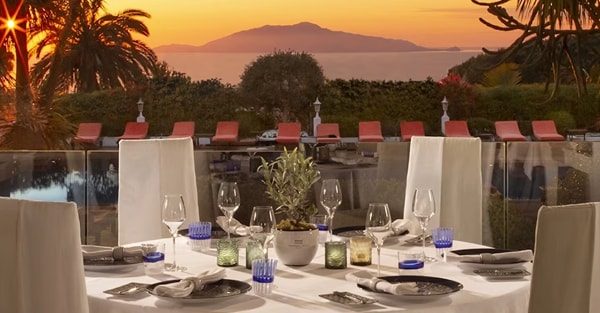
“Catering is one of the strategic pillars of the 7Pines Resort Sardinia experience and is a defining feature of our hospitality concept,” explains the managing director Vito Spalluto. “More than just a service for resort guests, the Food & Beverage sector has been developed as a genuine gastronomic destination, capable of attracting both international and local clientele. For this reason, we describe the resort as a genuine gastronomic hub, where culinary experiences of the highest quality make a decisive contribution to the brand’s positioning.”

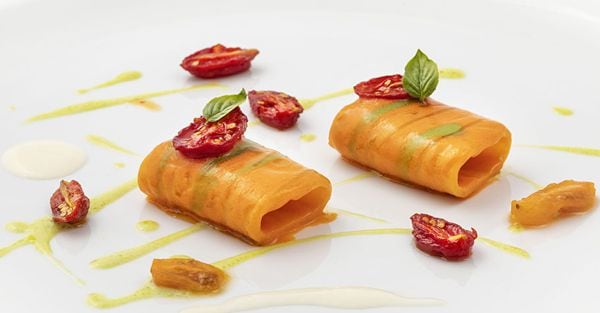
Pasta Capogiro

One statistic illustrates the strength of the positioning achieved: around 70 per cent of guests who choose the resort’s restaurants are not staying at the resort, but visit 7Pines solely to enjoy one of the dining experiences on offer. At the same time, Food & Beverage is also a key deciding factor for the hotel sector. ‘Many guests decide to book their stay at 7Pines Resort Sardinia precisely to enjoy the culinary journey offered by the resort, recognising the quality of the dining experience as one of the distinctive elements of the overall experience. Cuisine is therefore not merely an ancillary service, but a key factor both in attracting new guests and in building customer loyalty.”

Particularly noteworthy is the performance of Capogiro, which following the award of a Michelin star has recorded an 80 per cent increase compared with the previous year. Bookings suggest that turnover will exceed one million euros by the end of the financial year, confirming the restaurant’s strategic value both economically and in terms of its international reputation. This demonstrates how investment in the quality of the culinary offering can simultaneously strengthen the resort’s financial results and its positioning amongst the leading luxury destinations in the Mediterranean.

The tasting menus weave a contemporary narrative of Sardinia through the work of small-scale producers and a reinterpretation of local tradition. Among the most representative dishes are *Il Riccio che non ti aspetti* (The Sea Urchin You Don’t Expect), where Gavoi potatoes meet sea urchin and sea fennel harvested along the island’s coastline; *Maialino al mare*, which reinterprets one of the symbols of Sardinian cuisine by pairing it with a thin slice of raw tuna, and ‘Esperienza’ – pasta mixed with twelve varieties of tomato, the chef’s signature dish that transforms a personal memory into a tribute to the biodiversity of local and Italian tomatoes.

“The concept of luxury has evolved: today, our guests are looking for a relaxed atmosphere, authentic experiences and a warm welcome that makes them feel truly at ease. Luxury is no longer about ostentation, but about quality time, wellbeing and attention to detail – continues managing director Vito Spalluto – . In recent years, 7Pines has chosen to invest in building a network of small Sardinian producers, eschewing the easier route of international cuisine to make the local area the key distinguishing feature of the guest experience. A choice that reflects one of the most evident trends in contemporary luxury hospitality: using food & beverage as a lever for positioning and enhancing the destination.”

Loading...

Rounding off the resort’s culinary offering is Spazio by Franco Pepe, where one of the world’s most influential pizza chefs has chosen not simply to replicate his iconic pizzas, but to reinterpret Sardinia through his own dough. Alongside great classics such as the ‘Margherita Sbagliata’ and ‘Scarpetta’, the menu features creations developed in collaboration with chef Pasquale D’Ambrosio that showcase local ingredients and produce. The Senti-Menti di Gallura, featuring smoked fiordilatte, Sardinian spiny artichoke, red beef carpaccio, scabecciu olives, sea fennel oil and a hint of Pecorino Sardo PDO, pays homage to the Gallura region. More recent is Essenza, born from a dialogue with the resort’s vegetable garden and built around Mediterranean aromatic herbs, demonstrating how pizza can become yet another language for telling the story of the region. “Through my dough, I want to tell the stories of the regions. In Sardinia, I’m interested in working with ingredients that speak of the sea and the hinterland, highlighting the value of local produce,” explained Franco Pepe. This project confirms that even one of the iconic products of Italian cuisine can become a tool for promoting a region when it engages with the destination’s identity.

Jumeirah Capri Palace: high customer loyalty thanks to food outlets

Capri needs no introduction; it is already a ‘brand’ in its own right, evoking images of the sea, boats bobbing lazily on the waves, aperitifs at sunset and the scent of yellow lemons. Among the luxury resorts most loved by tourists is undoubtedly the Jumeirah Capri Palace, which, over the years, has expanded its culinary offering to become a veritable “playground” for gourmets. The aim of the Jumeirah management, in collaboration with director Ermanno Zanini, has been to capture the true essence of Capri, with a range of dining options designed to build customer loyalty. Put simply: you could stay at this hotel for over a week without ever getting bored, sampling a variety of cuisines, from Asian to the sophistication of the two-Michelin-starred ‘L’Olivo’. And catering is one of the hotel’s strategic assets: accounting for 55 per cent of total turnover, it transforms the hotel into a gastronomic destination that has a positive impact on its competitiveness.

The Jumeirah Capri Palace is a small ‘town’ in its own right: with its 430 staff members, the resort is one of the island’s major employers. Of these, 70 are local Capri residents, whose contribution enriches the hospitality experience with first-hand knowledge of the area, its traditions and its culture, combining international expertise with deep local roots.

The 72 rooms and suites at the Jumeirah Capri Palace reflect a strategy that makes design one of the defining features of the guest experience. Alongside outdoor spaces, gardens and private swimming pools, the project highlights collaborations with renowned names in contemporary architecture. The Mariorita Suites, designed by Patricia Urquiola, reinterpret Capri’s identity through a colour palette inspired by terracotta, stone and the sea, alongside innovative materials and artisanal craftsmanship. These are complemented by the suites designed by Giuliano Andrea Dell’Uva, which reinterpret Capri’s tradition with hand-painted ceramics, majolica and furnishings crafted by local artisans. This approach combines design, craftsmanship and local identity as a key differentiating factor in the luxury hospitality sector.

L’Olivo, due stelle Michelin

The Jumeirah Capri Palace’s food ecosystem serves as a model for diversifying the gastronomic offering in the luxury segment, capable of catering to different target audiences and dining occasions within the same destination. Alongside L’Olivo, a two-Michelin-starred restaurant and a benchmark for contemporary Mediterranean haute cuisine, the group is developing concepts with clearly defined identities: Il Riccio, dedicated to fresh catch and seafood cuisine in one of Capri’s most iconic locations; a-Ma-Re Capri, which celebrates Italian tradition through a high-quality, informal dining experience; Zuma Capri, an expression of contemporary Japanese cuisine and the growing interest among luxury clientele in major international brands; Il Bar degli Artisti, offering refined Italian all-day dining designed to accompany guests throughout the day; and Nox Capri, a new venue dedicated to evening and nightlife entertainment that expands the property’s range of experiences.

The flagship restaurant remains the two-Michelin-starred L’Olivo, which showcases an authentic and elegant side of Capri, thanks to the vision of chefs Andrea Migliaccio (Jumeirah corporate), executive chef Salvatore Elefante, head chef Vincenzo Tedeschi, restaurant manager Christopher Morcet and sommelier Vincenzo Riccio. Here cuisine becomes a means of celebrating the Mediterranean as a cultural heritage. The ‘Mediterraneo’ menu focuses on locally caught fish and sustainable fishing, with dishes such as matured pezzogna with white asparagus, caper leaves and a citrus sauce; red mullet with artichokes and lemon; and cappelletti with scampi, courgette and Provolone del Monaco – exemplifying the dialogue between the sea and local produce. La Recherche, on the other hand, reinterprets Campania’s culinary heritage through a contemporary lens: from tagliolini with red prawns, burrata, sea asparagus and oyster leaves to Genovese-style pork cheek with candele pasta and red onion sauce, right through to the ‘Carezza della buonanotte’, an iconic dessert that evokes the value of memory. Two menus that convey a vision of luxury rooted in local identity, creativity and the ability to transform ingredients, traditions and the landscape into a gastronomic experience recognised internationally, with one constant: Capri.

“Gastronomy is now one of the main reasons for travelling. More and more guests are choosing a destination not just for the scenery or the hotel, but for the experiences they can enjoy around the table,” explains director Ermanno Zanini. Over the years, we have invested in building a comprehensive and complementary gastronomic ecosystem, capable of interpreting different culinary styles: from the haute cuisine of L’Olivo to the seaside ambience of Il Riccio, from the international flair of Zuma to the Mediterranean conviviality of A-Ma-Re Capri. The results demonstrate that catering can represent not just a hotel service, but a genuine driving force behind the destination’s appeal, reputation and economic value. In some establishments, the revenue generated by our restaurants has matched and sometimes exceeded that of the accommodation department – a figure that demonstrates how gastronomic excellence can make a decisive contribution to the success of a contemporary hospitality project. For us, gastronomic luxury does not equate to opulence or complexity. It is about authenticity,’ continues Zanini. ‘It is the privilege of being able to savour a product in the place where it originates, of getting to know the people who grow or catch it, of experiencing attentive yet unpretentious service, and of feeling welcomed without unnecessary formalities. True excellence arises from the interplay between territory, culture, creativity and human relationships. A great restaurant does not merely serve dishes: it tells a story, preserves a memory and forges connections between people from different places and cultures. In this sense, Capri continues to be an extraordinary source of inspiration. For centuries, it has welcomed travellers, artists and thinkers from all over the world. Our cuisine seeks to do the same: to remain deeply rooted in the Mediterranean whilst remaining open to dialogue with the world.”

Total privacy at the Vedura Resort with Fulvio Pierangelini

The Verdura Resort, part of the Rocco Forte Hotels Group, on the southern coast of Sicily, redefines luxury by integrating hospitality, wellness, golf and dining into a single ecosystem. The 230 hectares overlooking the Mediterranean, set amongst olive groves, citrus orchards, a private beach and golf courses designed by Kyle Phillips, create an experience tailored to a clientele seeking space, privacy and highly personalised services. Around 200 rooms, including junior suites and sea-view suites, plus 20 Private Villas with infinity pools, cater precisely to this growing demand for privacy in the hotel experience. As we have already told you about the luxury brunch, privacy is now an invaluable asset for luxury clients.

In this model, cuisine becomes a factor of competitive differentiation, a positioning tool capable of strengthening the resort’s identity and enhancing its appeal on international markets. The culinary direction is entrusted to Fulvio Pierangelini, one of the world’s most refined chefs in his approach to ingredients, capable of interpreting them with a respect that only a noble spirit can guarantee. The dining offering is spread across eight restaurants, each with its own identity and a specific target audience. It is a strategy that broadens the range of dining experiences within the resort and allows it to cater to different needs without compromising the project’s overall coherence.

At the heart of the concept lies Sicily’s agricultural heritage. Fresh pasta, locally caught fish, artisanal meats, vegetables from the resort’s organic garden, extra virgin olive oil produced on the estate and a selection of seasonal ingredients form the basis of a cuisine that showcases the region without resorting to artificiality. The identity of each individual restaurant follows this approach. Nagori explores the dialogue between Sicily and Japan through dishes such as tuna and wasabi cannoli, Mazara red prawn ravioli with shiitake, and Sciacca scallops with yuzu, whilst maintaining the quality of Mediterranean ingredients as its guiding principle. Zagara, the resort’s fine-dining restaurant led by Fulvio Pierangelini and Emmanuele Riccobono, offers cuisine deeply rooted in the local area, featuring dishes such as spaghettoni with red prawns from Sciacca, the catch of the day with braised fennel and citrus fruits, ricotta and truffle ravioli and other dishes that showcase produce from the organic vegetable garden, ‘Verdura’ olive oil and a selection of Sicilian and Italian wines. Chef Pierangelini’s philosophy is emblematic: ‘Simplicity is the ultimate goal. I have been seeking this for over forty years.” A principle that perfectly encapsulates one of the key developments in contemporary luxury, which is increasingly less associated with ostentation and increasingly more with the quality of the raw ingredients, balance and the ability to subtract rather than add.

Therasia Resort: wellbeing is (also) plant-based

The Therasia Resort Sea & Spa, on the island of Vulcano, is one of the most established names in the Italian luxury hospitality sector. A member of The Leading Hotels of the World and awarded Two Michelin Keys , the resort has built its international reputation by combining hospitality, wellness and a gastronomic offering that is now one of the property’s key distinguishing features.

In 2025, the resort recorded a turnover of 7 million euros and employs 130 staff. Catering accounts for approximately 22 per cent of total revenue, through four complementary offerings: Il Cappero (8 per cent), I Tenerumi (4 per cent), I Grusoni (8 per cent) and L’Arcipelago (2 per cent). These figures confirm that the development of a gastronomic destination represents a strategic marketing lever, capable of strengthening the brand’s positioning and building customer loyalty within the luxury segment. The resort is also one of the very few Italian hotels to bring together, within the same property, a total of three Michelin stars (Il Cappero, 1 Michelin star, and Tenerumi, 2 Michelin stars), as well as two Michelin Green Stars.

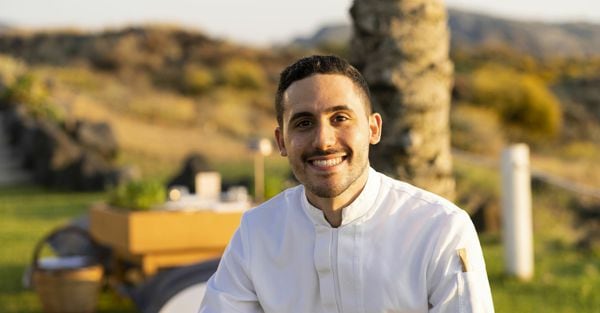
Executive chef Davide Guidara

“At the Therasia Resort, luxury stems from the combination of a truly unique setting and deeply personalised hospitality,” explains Francesca Polito, owner of the resort. Being surrounded by the sea, with a view that takes in all the Aeolian Islands and the chance to experience both sunrise and sunset in the same place, means offering an experience that cannot be replicated. Our culinary offering also follows this philosophy: Michelin-starred cuisine is not merely an exercise in style, but the most authentic way of showcasing the region through creativity, research and respect for the ingredients.”

The gastronomic project is centred around two Michelin-starred restaurants with complementary identities. I Tenerumi, led by executive chef Davide Guidara, is now one of the leading names in contemporary plant-based cuisine:it has built its identity around the ‘Cook More Plants’ manifesto, which places the plant world at the heart of haute cuisine. Rather than simply a vegetarian offering, Guidara’s cuisine is ‘plant-based’, showcasing vegetables, aromatic herbs and garden produce through fermentation, drying and preservation techniques that enhance their flavour and complexity. Among his most iconic dishes are the courgette with garlic and mint – the result of a lengthy preparation process that concentrates its flavours and textures – and the Datterino, which encapsulates all the intensity of the Mediterranean in a single ingredient.

Alongside this offering, Il Cappero – a Michelin-starred restaurant with a Green Star – is led by chef Davide Perna, under the supervision of Guidara. Here, the cuisine interprets the Mediterranean through a contemporary approach that focuses on locally caught fish, produce from the Aeolian Islands and Sicily, and a ‘single-protein’ philosophy, in which each dish highlights one or two main ingredients to express their identity and purity. Responsible sourcing, developed in collaboration with local fishermen, farmers and small-scale producers, becomes an integral part of the dining experience, making the supply chain one of the project’s defining features.

The offering is rounded off by I Grusoni, dedicated to casual Mediterranean cuisine by the pool, and the pizzeria L’Arcipelago, which further expands the dining options within the resort.
For us, true luxury dining is about time, tranquillity, extraordinary views, bespoke service and cuisine that stirs the emotions without being over the top. A discreet luxury that leaves room for nature and people, and makes every stay a memory destined to last a lifetime,” concludes Francesca Polito. A vision that demonstrates how gastronomy today represents a strategic asset, not only for increasing the economic value of the resort, but also for strengthening the Aeolian Islands’ international standing as a high-end tourist destination.

Copyright reserved ©
Loading...

Brand connect

Loading...

Newsletter

Notizie e approfondimenti sugli avvenimenti politici, economici e finanziari.

Iscriviti