
Former Ilva: ‘We’ve halted production due to the court order and because we’ve run out of raw materials’
The company: the magistrates have set conditions that cannot be met within 90 days. Purchases for production are no longer being made in the face of the prospect of plant shutdowns

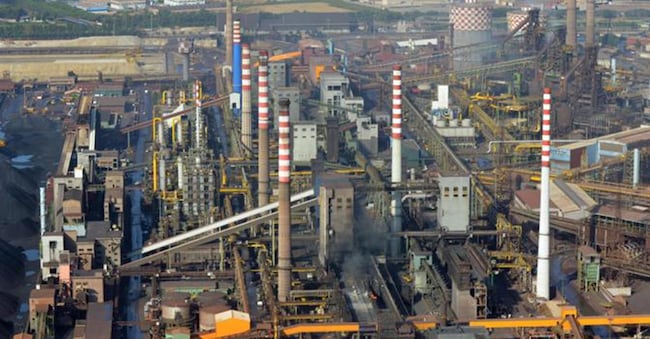
The plants at Acciaierie d’Italia, formerly Ilva, are being shut down as a ‘logical consequence of a course of action dictated by the legal constraints arising from the decree of 27 July issued by the Court of Milan and the need to manage production in accordance with the deadlines imposed by the Milan Court of Appeal’.
The company under special administration explains why, in Taranto, it has halted operations at the ore processing plant, Blast Furnace 2 – placing it in pre-heating mode – and Steelworks 2; and now, by mid-November, it will be the turn of the plants in Liguria that source their raw materials from Taranto.
Referring to the conditions set by the Milan Court of Appeal in the order requiring the hot area to be shut down within 90 days – a deadline which is now drawing to a close – namely to reduce emissions of PM10 and PM2.5 particulate matter, without, however, specifying the new limits, and to remove the asbestos contained in the cowpers of the blast furnaces, AdI states that ‘the requirements imposed were not achievable within the time allowed’. However, it explains, “the company has worked to ensure production continuity for as long as possible, operating within the 90-day limit set by the Court of Appeal”. Thus, it is noted, “two appeals were lodged with the aim of identifying solutions that would allow operations to continue”.
Two appeals dismissed by the Milan Court of Appeal
The first appeal, however, was dismissed on 11 September by the judges in Milan, and “the second application, seeking to keep the furnaces operational at least until the Court of Cassation had handed down its ruling, was also dismissed on 5 October”. A hearing at the Court of Cassation has been scheduled for 20 October regarding the extraordinary appeals against the shutdown order lodged by Ilva and AdI.
It is therefore emphasised that ‘in the absence of any further scope for action, the Special Administration has had to take a painful but inevitable decision, in accordance with the instructions received and the constraints governing the management of the procedure’. Hence, in fact, the gradual shutdown of the plants.

