
Seniors are the spenders: more than half of the food expenditure is made by the over-55s
When it comes to shopping for home and family, the over-55s shell out EUR 4,700 in one year compared to EUR 3,900 for younger families

3' min read
3' min read
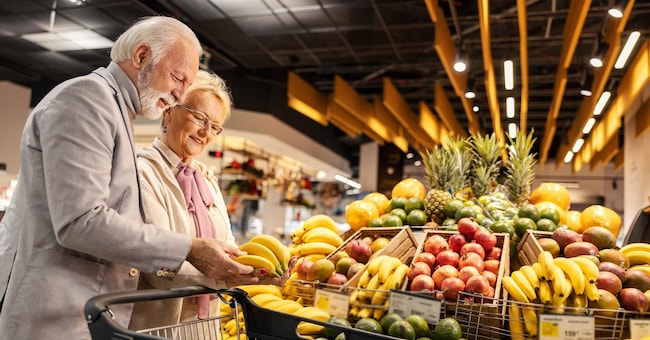
The pillars of FMCG in Italy? They are the households with purchasing managers over 55 years old. And not only because they represent 51% of Italian households, but also because they spend more than the average (54% incidence on the total), and much more than young people. What is more, in over 40% of cases they also buy for their children and grandchildren. Turning the spotlight on the role of mature citizens in the wide world of the mass market is research conducted on the consumer panel of YouGov, a leader in consumer surveys.
This analysis gives a very detailed picture of the baby boomers and seniors of Generation X: men and women focused on home and family but with an intense social life (85% go out to meet friends) and engaged in many non-domestic activities, such as eating out (57%) and exercising or playing sports (47%).
When it comes to shopping for home and family, the over-55s are high spenders: in one year they shell out an average of EUR 4,700 compared to EUR 3,900 for younger families, not least because 42% also shop for their grandchildren (an average of five times a month) and 13% for their adult children (four times a month), even if they do not live under the same roof.
When shopping, the over-55s turn out to be much more quality-oriented than price-oriented, with 52% and 41% of respondents respectively indicating this as their criterion of choice. Indirect confirmation of the fact that mature parents and grandparents have greater spending power than the younger generations, who in 55% of cases are driven by the search for savings tout court. And it is also among the over-55s that the largest purchasers of Italian products (81% vs. 70% of the younger generation) and locally sourced products (73% vs. 64%) are concentrated, as well as the most sustainability-conscious consumers. Only 18.8% declare little or no interest in the environment compared to 20.5% of those under 35 and 23% of those aged 36-55.
When it comes to shopping for children and grandchildren, the values that guide shopping change and the certainty of responding to the tastes and preferences of children and young people, the absence of additives or preservatives, and the (Italian) origin of the ingredients become priorities. The brand, the presence of organic ingredients, the tasty flavour and the nutritional profile are also evaluated, while factors related to convenience, such as promotions or low prices, are less relevant. Among the most purchased categories for grandchildren are biscuits and industrial confectionery, fruit juices, yoghurt and fresh desserts, chocolate, and packaged ice cream, while for non-cohabiting children, the choices fall on fresh (such as cheese and cold cuts) and fruit and vegetables.

