
Expo Osaka, 80 events at the Italian Pavilion in the first month
Around 120 Italian and Japanese companies took part in the proposed meetings, bearing witness and signing business agreements
2' min read
2' min read
A month after the opening of the Italian Pavilion at Expo 2025 Osaka, it is already time for a first balance. Following a programming focused on territories, the Italian Pavilion has worked as a tool for 'growth diplomacy'. At the centre of the story are the regions and territories of Italy: 18 out of 20 regions have chosen to join the Expo 2025 Osaka project.
In the first month, more than 80 institutional and cultural events took place, involving more than 120 Italian and Japanese companies, which facilitated the signing of contracts and supplies. One example, among all, was that of the Danieli group, which signed contracts worth over 40 million euro. Again, during the working tables at the Italian Pavilion, the Japanese company Ebara announced an investment agreement for over 6 million euros in Gambellara, in the province of Vicenza. Worthy of mention is the example of Kagome, a historic Japanese company and leader in the agrifood market, which produces in Calabria most of the vegetables destined for large-scale distribution in Japan. Calabria is also a protagonist thanks to major investments by Ntt Data, a historic Japanese company in the It sector.
The Italian Pavilion was the stage for B2B meetings between Italian and Japanese companies this month, with more than 30 meetings. Thanks to the synergy with Mimit and Invitalia, the Italian Pavilion hosted one event per week, one for each territory, dedicated to foreign investments. From Selecting Italy, organised under the patronage of the Conference of Regions and the Friuli Venezia Giulia region, to the events to celebrate Made in Italy Day, including one organised by the Altagamma foundation in collaboration with Confartigianato.
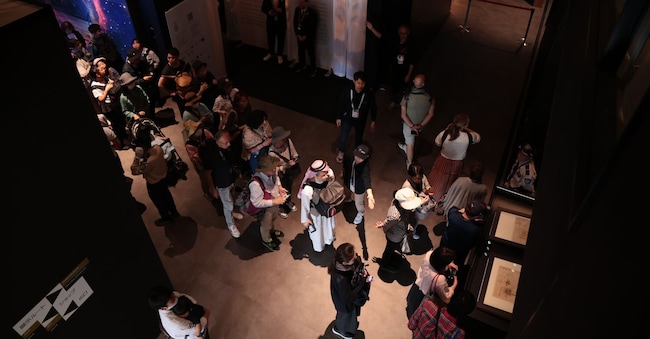
In addition to the economy, the star of the Italian pavilion is also art and culture: the Japanese public was thus able to admire timeless works such as the Farnese Atlas, Tintoretto's portrait of Itō Mancio and Leonardo Da Vinci's Atlantic Codex, alternating with more contemporary works by artists of the calibre of Mimmo Paladino, Jago, Oriana Persico, Francesca Leone, Giulio Cinti and Matteo Ceccarini.

