Made in Italy

Extra virgin olive oil crisis, why is Italy afraid to innovate?

The contradictions of the national olive-growing system highlighted by Luigi Caricato, director of Olio Officina Festival (in Milan from 22 to 24 January)

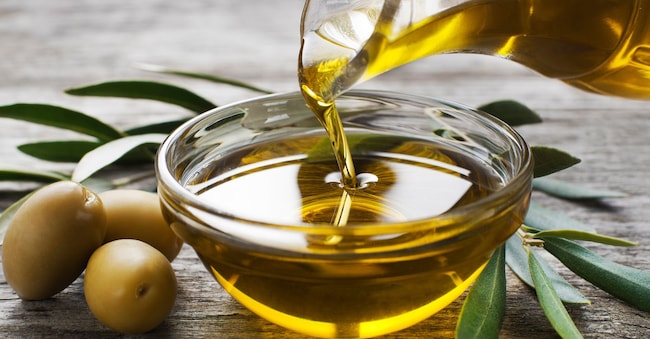
by Giambattista Marchetto

(Adobe Stock)

4' min read

Translated by AI
Versione italiana

4' min read

Translated by AI
Versione italiana

Olive oil has never been so good, thanks to technology that allows virtually faultless extraction, yet Italy - the cradle of olive oil production and home to over 530 cultivars, as well as some 50 GIs - risks falling behind. Certainly not in terms of quality, because the excellences are truly extraordinary, but production is shrinking amid climatic difficulties and poor planning.

"A forerunner in the past, Italy is lagging far behind," observes Luigi Caricato, director of Olio Officina Festival, a think tank on green gold that returns to Milan from 22 to 24 January. "We are no longer planting olive trees and we are abandoning existing olive groves," the expert concludes, "an enormous paradox, if we think that in China and Japan, where the olive tree was unknown, they are investing massively in the development of production. At Olio Officina this year we are also hosting an Englishman who has planted 20 thousand olive trees in Spalding. In short, everyone wants olive trees in the world and we are putting the brakes on'.

Loading...

Olive-growing plan delayed

It is true that the 2025/26 campaign saw a partial realignment, with an estimated increase of 21% compared to the previous year - about 300 thousand tonnes of oil compared to 2024/25, which had not reached 250 thousand tonnes (Veronafiere-SOL Expo Observatory on Sian data). And national stocks at the end of 2025 marked +38% compared to the end of 2024 (Masaf report), with the south pulling ahead while the centre and north showed significant drops.

So if the numbers still place Italy in second place among world producers (behind Spain), for Caricato the launch of a supply chain table and the government's announcement of the olive-growing plan come too late. "Spain has been planning for decades with farsightedness," he concludes, "while we have been sitting on our laurels, because the olive-growing plan that is being discussed today (albeit with good intentions) should have been made 25 years ago.

How to enhance quality

On the other hand, quality remains undisputed, because there is more awareness. "Today, technology makes it possible to obtain great oils,' Caricato points out, 'overcoming the processing limitations of the past, which reduced the life of the product.

However, there is a problem: 'it is hard to make the consumer understand a fair price,' points out the expert, 'spoilt by continuous promotions that have proposed extra virgin as a shelf commodity, debasing its identity. If it is nutraceutical and functional, with precious antioxidants and biophenols, it is contradictory that it costs little'.

Not to mention the compulsory wording on the label: 'Oil of superior category obtained directly from olives and solely by mechanical means', the same for a 50 or 5 euro per litre bottle.

The situation is improving outside Italy, 'in fact, small producers sell mainly abroad,' he adds, 'where they are paid well and in advance. The sector has not been able to manage and plan the market'. In particular, this has been seen with the use of generous funding from the European Union: 'Spain has invested in communication and planning, but also planted a lot of olive trees. We, on the other hand, used the aid not as an investment, but by supplementing the income of producers who were able to lower prices on the distribution chain. Thus we debased the product'.

Dop and PGI, a missed opportunity

Italy must then design. "We seem to be afraid of the future," attacks Caricato, "and there is an attitude of resistance to change. The big brands that in a century have invaded all continents, increasing consumption, are segmenting their offer and focusing on niches of excellence, but only because they were losing market share to small producers. Here, we do not accept the plurality of olive cultivation: it is right that family and hobby farming exist to safeguard the landscape, but to produce quantity we need modernity and vision'.

Italy therefore retreats 'because itrefuses the modernisation of the olive grove. It has accepted ultrasound in the olive mill, but the olive grove wants to be traditional. It makes sense if we talk about Liguria or the heights between Maremma and Veneto, but in the plains it is uneconomical. Italy invented the high density technique, but it has been adopted in Spain and other countries'.

That then the idea of excellence could be reflected in the push for PDO and PGI, protagonists at events (such as the new, valuable Sol in Verona). Instead, 'we have 50, but they weigh less than 2% of production and this means that there has been no wise use of the instrument'. Even in the restaurant industry 'there is the greatest ignorance. There are price oils that are decent in quality. By learning to select, you can save for cooking, where fat retention counts, while for finishing the dish you need the excellent Evoo (Extra Virgin Olive Oil, ed.) to enhance the flavours'.

Copyright reserved ©
Loading...

Brand connect

Loading...

Newsletter

Notizie e approfondimenti sugli avvenimenti politici, economici e finanziari.

Iscriviti