Fabergé, a tortuous history of czar eggs, perfumes and household cleaning products
The fashion house, which has just been sold for $50 million to a US fund, has experienced glories and tragedies, changing hands and even ending up appearing on detergents
5' min read
5' min read
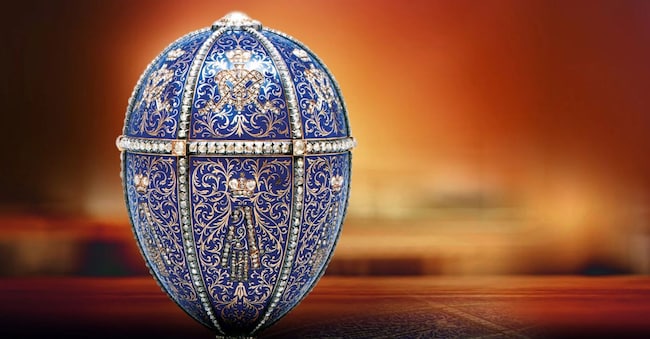
Imagine household cleaning products signed Cartier or an aloe vera shampoo with the Boucheron logo. What might be a dream for some would certainly be a nightmare for the maisons, which would see their heritage and history associated with categories that are not exactly exclusive. Yet, this is exactly what happened in the second half of the last century to Fabergé, the jewellery brand famous for the precious eggs loved by the tsars, and which was recently sold for $50 million by the last of its many owners, the mining company Gemfields, to a US venture capital fund , just the latest episode in its long, mostly glorious, at times sad and in some ways bizarre history.
Not all the great jewellery houses have had a linear and coherent history: Cartier, Bulgari, Damiani, but also Chaumet and Van Cleef & Arpels have often remained in the hands of the founding family for a long time - some still are, as in the case of the maison of Valencia - and then passed on to the large luxury groups such as Lvmh, Richemont (which with jewellery and watches has built the beating heart of its portfolio) and to a lesser extent Kering.
Fabergé's story is different, especially because at the height of its international success, when even the royal and imperial families of Europe were vying for its creations, it was interrupted and in some ways devastated by the Bolshevik Revolution of 1917, which confiscated its assets and activities. Thus ended a glorious parabola that had brought glory to Peter Carl Fabergé, son of the founder Gustav, himself a descendant of the goldsmith Pierre, who had moved from Germany to the Baltic province of Livonia, at the time part of the Russian empire, and then opened his own boutique in 1842 at 12 Bolshaya Morskaya in opulent St Petersburg. You could say that the Fabergés had travel, displacement, in their DNA, ever since the original Huguenot family was forced to leave France at the end of the 17th century after the revocation of the Edict of Nantes by which Henry IV had granted freedom of worship to Protestants.
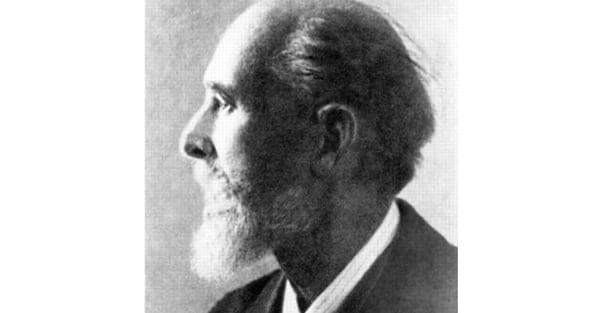
In St. Petersburg, between 1882 when Carl Fabergé took over his father's business and 1917, it is estimated that the maison produced at least 200,000 gold and jewellery creations. With 500 employees and shops in Moscow, Odessa, Kiev and London, it was among the largest Russian companies. Let's go back to the Revolution: by a mocking fate, just as it happened to his ancestors, and after seeing the management of his company pass to a committee of employees, Carl Fabergé finally had to hand over ownership to the state and flee to Europe, where he died in Lausanne in 1924. Two of his sons, who managed to escape from Russia, re-founded the company in Paris with Fabergé & Cie, which traded and restored objects made by Fabergé, marking them with the Fabergé Paris hallmark so as not to confuse them with those still being made in Russia.
It is out of this confusion that by very circuitous routes another branch, and the most bizarre chapter, of Fabergé is generated. In the 1920s an American oil tycoon, Armand Hammer, bought many Fabergé objects in Russia, including some of the famous imperial eggs. In 1937 a friend of his, Samuel Rubin, who owned the Spanish Trading Company, a cosmetics import company in Spain, was forced to close its doors by the Civil War. It was Hammer who then suggested that he found a new cosmetics brand: why not call it Fabergé? Of 'Fabergé Inc', the name of the new company, the Fabergé expatriates knew nothing until the end of the Second World War, by which time the brand had had time to consolidate and expand. With a legal settlement that brought them a refund of around 300,000 today, they gave Rubin permission to use their surname only to associate it with a rather luxurious perfume line.