
Fairtrade, from an EU directive opportunity for development
EU standard for corporate social responsibility in force, now obliged to assess impact on workers' rights and the environment

3' min read
3' min read
There are cloves and cinnamon, black pepper and ginger. They are produced in Sri Lanka, organically grown but above all respecting workers' rights and environmental protection. In all, the Fairtrade Bio bottle line comprises seven spices, and it is produced by Cannamela, the historic Emilia-based industrial grocery brand. In 2019, the company participated in a project funded by the Italian Agency for Development Cooperation, in which the ong Icei and Fairtrade Italia were also partners. With the help of cooperation funds, in Sri Lanka Cannamela thus acquired a new supply chain, made up of a local Fairtrade-certified producer - the cooperative Mopa - and a distributor (Biofoods).
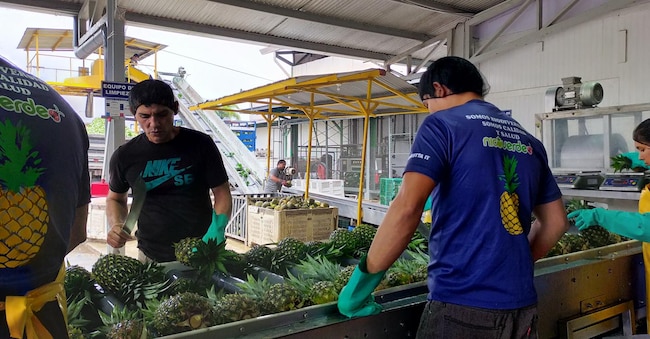
The Veronese Nicofrutta, which imports and distributes pineapples, has instead gone through Giz, the German Development Cooperation Agency. With its financial backing it set up the Italian-Costa Rican-owned Nicoverde company in Costa Rica, which now processes the fruit directly on site and in a sustainable manner: it pays the right price to the farmers and employs advanced plant cultivation practices, from the use of drones for precision irrigation to the recovery of leaf waste, with which it produces fertilisers and textile fibres. Again, the pineapples are Fairtrade certified, which ensures that the right social, economic and environmental standards are met.
Nicofrutta and Cannamela are just two examples of how companies, with the economic support of international cooperation and together with a partner such as Fairtrade, can contribute to a fairer development of communities, without forgetting the objective of their own profit.
'Doing international cooperation does not mean doing welfarism,' explains Paolo Pastore, general director of Fairtrade Italia, 'it means transferring know-how and skills from another part of the world with a common goal. We want to make companies understand that doing things sustainably is not doing charity, but showing responsibility towards those who work the land and presenting themselves to consumers as bearers of these values'.
The philosophy that Faitrade proposes to companies is therefore a Copernican revolution: 'In the past,' says Pastore, 'companies that did well would donate a portion of their earnings to philanthropic works. It was an act of goodness. Today instead it must become an act of responsibility, towards people and the environment'.


