
The incoming decree

Family doctors to fill community homes and paediatricians until the age of 18

In two months, more than a thousand facilities will open and Europe will have to verify their operation, but Schillaci's decree gets off to an uphill start: no from the white chambers and cracks in the majority

by Marzio Bartoloni

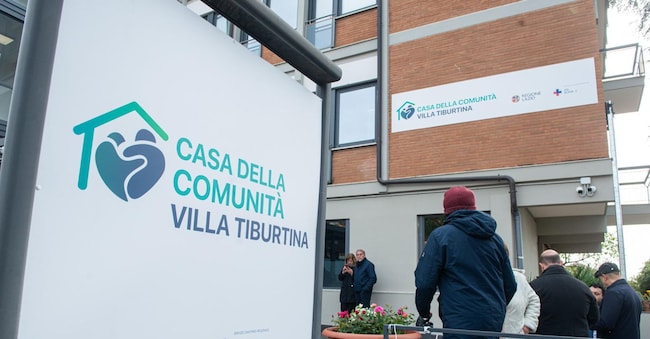
Inaugurazione della Casa della Comunità Villa Tiburtina. Lunedì 16 Febbraio, 2026.  (Photo by Valentina Stefanelli/Lapresse)

4' min read

Translated by AI
Versione italiana

4' min read

Translated by AI
Versione italiana

The spectre of 'empty boxes' is approaching. In a little over 60 days in Italia, over one thousand Case di comunità, the new maxi outpatient clinics financed with 2 billion lire from the NRP, which will have to provide services such as medical examinations (including specialist ones), first diagnostic examinations and prevention (from vaccinations to lifestyles) and also telemedicine, should be fully operational - if all goes well.

And if we take for granted the latest Agenas data dating from last December, at the moment only 4% of these structures created to ensure a health service closer to the citizen, burnt by the Covid years, provides all the services required by law.

Loading...

Services with dropper drops that see their main vulnerability in the skimpy presence of doctors and nurses who should be the prime movers of these new territorial health structures.

A horror vacui against which Health Minister Orazio Schillaci has decided to intervene in extremis, practically in extra time, with a buffer solution that could, however, secure the result. Because Europe, which will have to check whether we have spent the NRP funds well, will not only have to verify that the new facilities (the walls) are there, but also that they are functioning, i.e. with health personnel working inside.

The solution proposed in recent days by Schillaci to the Regions is a decree-law expected in mid-May in the Council of Ministers to reform family doctors, a category today with ever-diminishing numbers - there are about 38,000 left in Italy - that the minister wants to 'draw on' to try if not to fill at least to populate as much as possible the new Community Homes that should be the pivot of territorial medicine.

The announcement has, however, triggered a deluge of noes from the medical world, which has so far been united, but dissent is growing even within the majority - yesterday Stefania Craxi, president of the Forza Italia senators, spoke of a "patch worse than the hole" - and there are those, such as Codacons, who are preparing a civic mobilisation to save family doctors.

Even among some regions, the first criticism is spreading.

An uphill start that risks scuppering any reform project. But what kind of revolution are we talking about? In actual fact, the draft decree circulating in these hours and shared with the Regions actually proposes a dual channel: the ordinary channel remains the main channel and maintains the current convention of family doctors, who thus remain free professionals in their own surgeries, albeit with a constraint of a certain number of hours to be worked in Community Homes, which would become one of the objectives through which to 'pay' the doctor (no longer based only on the number of patients). The decree introduces a 'national minimum organisational debt' to populate Community Homes, which can be modulated on the basis of regional planning, and which includes the obligation of a certain number of hours to be spent in the new facilities.

And then the second channel, the new one, i.e. the transition to dependency for all those family doctors who 'voluntarily' choose it and who have a specialisation, which is a requirement to be a doctor in the SSN.

On balance, the 'transmigration' towards dependency - at least in the first phase of the reform - would be limited to very small quotas decided on the basis of the needs of the regions, but it could lend a hand in making the new Community Homes work, especially those 'Hubs' that would have to ensure services seven days a week at least 12 hours a day.

Among the last-minute innovations included in the draft is the fact that the age to register as a paediatrician will be extended to eighteen years of age with the maximum number of patients becoming identical for doctors and paediatricians, i.e. a maximum of 1,500.

The detractors, however, speak of a first hole in the dam that will open up more and more dependence in the future.

Article 6 of the draft decree regulates the first implementation of the employee channel. Local health authorities and hospitals will be able to hire on a permanent basis, on a voluntary basis and within the limits of the programmed quotas, white-collar doctors who already work as family doctors, provided they have a specialisation diploma and freely chosen paediatricians. Recruitment will be prioritised for Community Hubs or others considered strategic.

In the last paragraph of the same article it is then provided that six months after the approval of the new reformed convention, the contracted physician and paediatrician who meet the requirements will have to decide for the relationship of dependency or to remain freelancers in convention

What is certain is that the alternative to the decree remains that of the current national convention, which sets the rules between the NHS and family doctors, but which marches very slowly: the convention for 2022-2024 only came into force last January and very few regions are applying it, such as the Emilia Romagna region, which has set rules of engagement for associated family doctors to work within the new structures.

The new convention 2025-2027 that is supposed to get to the heart of these issues is still a long way off (there is not even a deed of address). And we are back to square one: who will the Italians find visiting them inside the more than one thousand Community Houses?

Copyright reserved ©
Loading...

Brand connect

Loading...

Newsletter

Notizie e approfondimenti sugli avvenimenti politici, economici e finanziari.

Iscriviti