Climate

FAO alarm on extreme heat in the fields. But in Italia avocados and mangoes boom in Sicily and olive groves in Veneto and Trentino

FAO report: one billion people at risk of famine due to high temperatures. Coldiretti: Italy can grow tropical fruit in Sicily and olive oil in Veneto

by Giorgio dell'Orefice

 (AdobeStock)

4' min read

Translated by AI
Versione italiana

4' min read

Translated by AI
Versione italiana

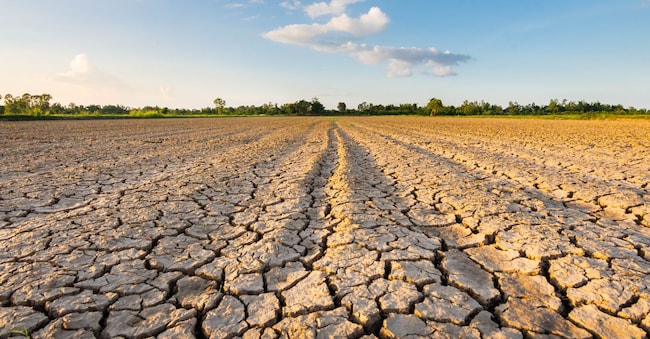
Extreme heat puts global agricultural production at risk Extreme heat events threaten the livelihoods and health of more than a billion people, cause the loss of half a million working hours a year, damage to livestock herds and crop yields. A difficult climatic scenario, but one that farmers in Italia are coping with in a virtuous manner, as shown by the positive results recorded by the new tropical fruit productions in Sicily or by the increasing number of olive groves planted in northern regions, from Veneto to Trentino, which until not so many years ago were off limits for the production of extra virgin olive oil.

The alarming picture drawn by the FAO

But let's start with the alarming picture painted in recent days by the report drawn up by the FAO and the WMO (World Meteorological Organisation) 'Extreme Heat and Agriculture', according to which the frequency, intensity and duration of extreme heat events have increased significantly over the last half-century, with worrying effects on agri-food systems.

Loading...

Extreme heat refers to situations where day and night temperatures exceed their usual ranges for a prolonged period, causing physiological stress and direct physical damage to food crops, livestock, fish, trees and humans.

Qu Dongyu (FAO): Extreme heat a risk multiplier

"Extreme heat," commented FAO Director-General Qu Dongyu, "is also a major risk multiplier, putting increasing pressure on crops, livestock, fisheries and forests, as well as the communities and economies that depend on them. "It now defines," added WMO Secretary-General Celeste Saulo, "the conditions under which agri-food systems operate. It acts as a combined risk factor that amplifies existing weaknesses in agricultural systems'.

The Hot Spring in Kyrgyzstan

The report mentions how in the spring of 2025 a part of the Fergana mountain range in Kyrgyzstan endured a prolonged stretch of 30.8 degrees, 10 degrees more than usual. This caused a heat shock on fruit and wheat crops, contributing to a locust epidemic, evaporation that reduced irrigation capacity, and finally a 25 per cent drop in grain yields.

Heavy effects on livestock, livestock and fish

For the most common livestock species, stress begins at over 25 degrees, and a little lower for chickens and pigs, species that cannot cool themselves by sweating. Above this threshold, animals begin to suffer, initially by seeking shade, drinking more water, eating and moving less. Even when it is not lethal, extreme heat reduces the production of dairy products and the content of fat and protein, which, among other things, worsens the carbon footprint of food of animal origin.

Fish, too, can suffer from heart failure in hot weather as they struggle to maintain high respiration rates in waters where extreme heat events lower dissolved oxygen levels.

Yields are falling for the main crops

For most major agricultural crops, yield decline begins to occur above 30 degrees, and even less so for crops such as potatoes and barley. But extreme heat also affects humans, especially agricultural workers, for whom it can be fatal. According to the Fao-Omm report, the number of days per year when it is too hot to work could rise to 250 in much of South Asia, sub-Saharan tropical Africa and parts of Central and South America.

Coldiretti: but in Italia the heat also brings new opportunities

The FAO report analyses the impact of extreme heat events on agriculture, particularly in certain areas of the world that are highly exposed to such phenomena. But global warming brings with it not only constraints but also opportunities. Coldiretti's environment manager is convinced of this. Stefano Masini. 'If we look at Italia,' he explains, 'extreme heat may be causing problems for viticulture in Sicily, but at the same time, and in the same region, it favours the development of more profitable tropical fruit. A group of Sicilian mango and avocado producers achieved a turnover of EUR 3 million in the local supermarket chain this year from scratch. While in the north of the country, between Veneto and Trentino Alto Adige, olive groves are spreading. In an area that has always been considered off limits for olive cultivation in the past'.

Faced with climate change we need to equip ourselves

More generally, according to Coldiretti, in the face of prospects such as those outlined in the FAO report, we must first of all equip ourselves. 'For this,' Masini continued, 'the new Tea frontier, the techniques of assisted evolution, is fundamental for us. We need new cultivars that are resistant to the new climatic conditions. While Brussels is belatedly coming to terms with the need to accompany the suffering of some sectors with new technological solutions'.

Increasing adaptability to new conditions

'While instead Brussels,' adds Masini, 'makes fertilisers unusable on the basis of a regulation from the 1990s on nitrates. Or again, faced with the difficulties of finding the same technical means (first because of the Russian-Ukrainian war and now because of tensions in the Strait of Hormuz), it does not unblock the use of livestock digestate as fertiliser. We need more digital technologies and we are still waiting for the decree that will give the green light to the use of drones in the fields. Not forgetting the fundamental frontier of insurance. We need a completely different set of insurance tools from those traditionally used. We have climate change risks on the one hand and uninsurable diseases such as bird flu on the other. We need to include management policies that allow us to arrive at policies capable of covering new types of risks with costs that are sustainable on the market'.

Copyright reserved ©
Loading...

Brand connect

Loading...

Newsletter

Notizie e approfondimenti sugli avvenimenti politici, economici e finanziari.

Iscriviti