
Farmcraft: how Coldiretti is using the video game Minecraft for food education
“Growing a vegetable garden, rearing animals, discovering biodiversity, learning to read labels and distinguishing fresh food from highly processed food”: these are some of the initiatives the association aims to bring into schools

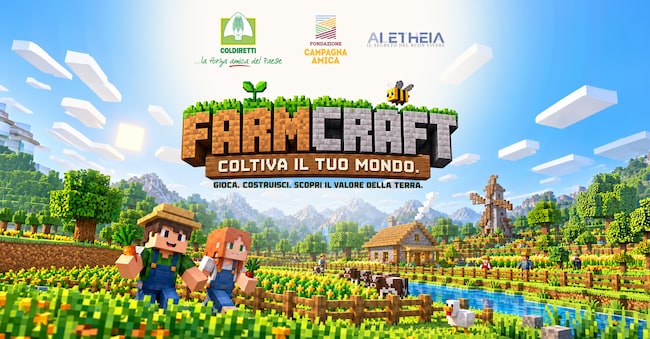
Minecraft is one of the best-selling (and most-played) video games in history: millions of boys and girls (across a wide age range, from childhood to adolescence) enjoy building virtual worlds that are more or less similar to the real one, using their imagination to great effect – an activity that also helps them to understand the world better. It’s a game that can be educational. Even when it comes to agriculture, thought Coldiretti.
“Tending a vegetable patch, rearing animals, discovering biodiversity, learning to read labels and distinguishing fresh food from highly processed food”: these are some of the missions of “Farmcraft – Grow Your World, the new project by Coldiretti, with technical support from Maker Camp, which “brings food education into the world of Minecraft”.
“The aim,” explains Coldiretti, “is to use one of the most popular forms of entertainment amongst the younger generation to build a bridge between the digital and real worlds, transforming a video game into a tool for shaping the future of food.” With Farmcraft, Coldiretti does not merely introduce young people to agriculture through a competition set to launch in schools; rather, it chooses to bring it to life through a language they are already familiar with, making them active participants in an experience rather than passive recipients of a message.
‘In this way, health protection efforts extend beyond the traditional arenas of political and trade union debate, reaching children, families and teachers directly. Aimed at children aged 8 to 14, Farmcraft – according to Coldiretti – turns play into an educational experience. In a virtual world dedicated to agriculture, participants will be able to run a farm, follow the rhythm of the seasons, learn about agricultural production and take their produce to a virtual Campagna Amica farmers’ market.”
The project was presented on the opening day of the International Forum on Agriculture and Food, organised in collaboration with The European House Ambrosetti.

