
Farmers from all over the world in Rome for the World Farmers' Organisation
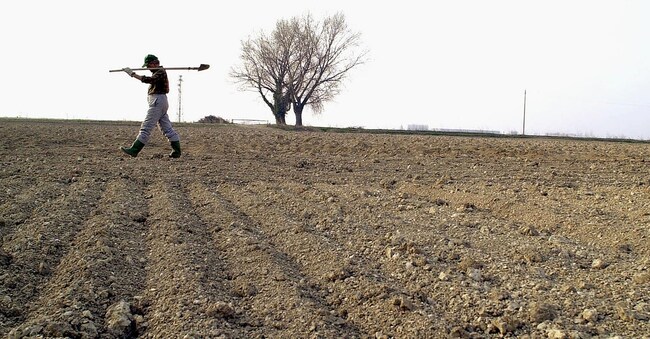
17-21 June at FAO headquarters. There are some 570 million family farmers in the world, cultivating 75 per cent of the land area
2' min read
2' min read
The short-circuit staged in Europe with the green transition that put agriculture in the dock and considered farmers as enemies rather than allies of the environment is something that must not be repeated. All the more so in lagging areas where an approach based on constraints and production limits would quickly lead to agricultural desertification.
This will be discussed from 17 to 21 June in Rome at the headquarters of the FAO as part of the annual meeting of the World Farmers' Organisation (WFO) with the assembly to be opened by FAO Director-General Qu Dong Yu, Ifad President Alvaro Lario and WFO President Arnold Puech d'Alissac.
Loading...
Family farming
.At the centre of the meetings in Rome will be the concept of family farming, the true lynchpin of agricultural production particularly in developing countries even if it remains very strong in countries like Italy. In the world,' explain the World Farmers' Organisation, 'there are about 570 million family farmers who represent the vast majority of global farms and cultivate about 75 per cent of the productive surfaces. Most family farms are small, less than 2 hectares in size, and are very important for food production, rural development and prosperity, and poverty alleviation. According to the 2023 SOFI Report published by FAO, family farming is responsible for about 80% of the world's food production.
As of this year, World Farmer Organisation also has an Italian secretary, Andrea Porro. 'More than 50 countries participate voluntarily in our organisation,' explains Porro, 'and of these 27 are African. Areas where the norm is the small family business'.
The conflict between agriculture and the environment that exploded in Europe with farmers' protests in recent months is also felt in other areas of the world. 'At every latitude,' adds Porro, 'the aim is to reduce the impact of agriculture on natural resources, but this process cannot take place at the expense of agricultural production. And if this is true in the developed part of the globe, it is even more so in other areas where food security, understood both as security of supply and the wholesomeness of products, is not yet assured'.


Brand connect
Loading...
