
Super fighter in the balance: the decisive role of Dassault and Franco-German tensions over the future of the 100 billion Fcas
The European 100 billion super fighter programme is threatened by internal conflicts between Dassault and Airbus, with possible geopolitical and industrial repercussions between France and Germany.

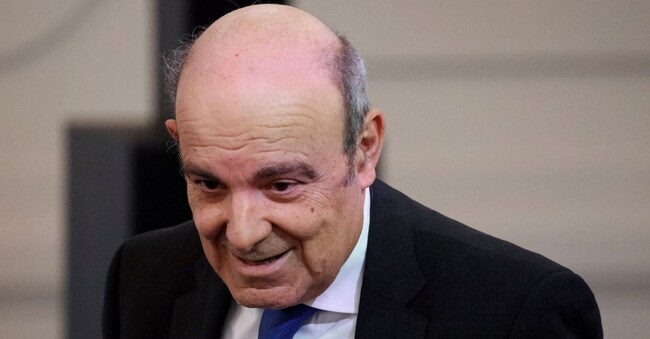
The road to the French-German 100 billion fighter jet seems uphill. And what makes the path of the Fcas (Future Combat Air System) programme and the ambitions of President Emmanuel Macron uncertain is precisely an 'internal' variable: Dassault Aviation (which lost 1.35% yesterday on the Paris Stock Exchange).
Announced with great pomp in 2017 by the tenant of the Elysée Palace and the then Chancellor Angela Merkel, and also espoused two years later by Spain, the project aims to replace all the current combat aircraft - the French Rafale jets and the Eurofighters of Germany and Spain - with sixth-generation fighters; not just planes, then, but an entire system of aircraft, both manned vehicles and unmanned drones, for combat and reconnaissance.
The Joint Project
The three partners have equal shares of 33% each and, according to the agreements, Dassault would have been at the helm of the jet and the defence division of Airbus, based in Germany, at the helm of the rest. But despite the big announcements, the programme never 'took off', suffering a series of stop-and-go's linked to the planning and design disputes that arose between the French manufacturer and the Airbus group, which represents German and Spanish interests.
Dassault Aviation, a subsidiary of the Dassault family, has always had an 'independent streak', backed up by a very strong influence in the French defence industrial landscape, since it has been the main supplier of the nation's fighter aircraft fleet since the 1950s. In the 1980s,' recalls the Financial Times in a lengthy analysis of the dossier, 'the contractor had abandoned an early transnational defence project, the Eurofighter Typhoon (later built by the UK, Italia, Germany and Spain) because it wanted a leading position in design and most of the production.
And today history is repeating itself: the company is determined to retain control over the fighter part of the Future Combat Air System, despite Airbus's firm opposition, forcing Macron into repeated talks with Chancellor Friedrich Merz to try to save the project from failure. A situation, this, which has brought attention back to the complicated relationship between the contractor and the French government. On the one hand, in fact, the République is Dassault's main customer: army purchases make up most of its revenue, all exports must be authorised, presidents are the main promoters abroad (just think of the 100 Rafale aircraft contract that Macron is trying to conclude with India); on the other hand, however, the company founded by Marcel Bloch (later Dassault) boasts an entirely national production, which is then the factor that guarantees it a real possibility of independence from any partner and a firm influence on the French state.

