
Fed opens a new era: maxi cut of half a point
The 'dots' indicate another 50 basis point reduction by the end of the year, and by one percentage point in 2025

3' min read
3' min read
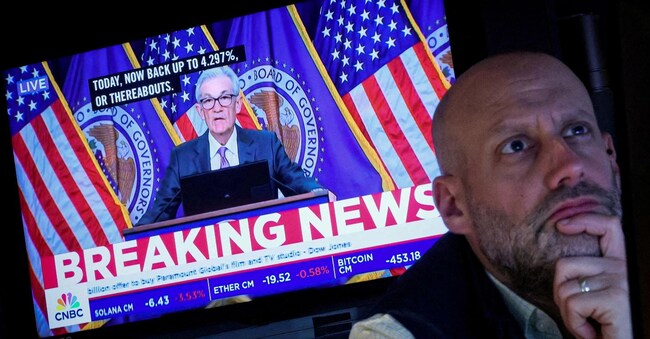
Half a percentage point. The Federal reserve, somewhat surprisingly, hascut rates by 50 basis points, instead of the planned 25 basis points, bringing Fed funds targets to 4.75-5%, from 5.25%-5.50%. "It is a sign of our confidence," explained Chairman Jerome Powell at a press conference, who added that it is not a victory statement on high inflation. The decision was taken by a majority: Michelle W. Bowman would have preferred a cut of only 25 basis points.
As a result, the Fed revised downwards all its forecasts for future rates: for the end of the year the median of the individual governors' indications points to 4.25-4.50%, corresponding to further reductions of 50 basis points. Another point may be cut next year.
Risks become balanced
.Underlying the decision is a different assessment of conditions in the US economy. The Fed noted the slowdown in new job creation, the statement said, while inflation 'has made further progress', although it remains elevated. Above all, the monetary policy committee (FOMC) has 'gained more confidence that inflation is moving sustainably toward the target'. The balance of risks is also now assessed to be 'roughly in balance', and monetary policy is no longer, again according to the statement, only committed to the inflation target of two per cent: it is now also 'supporting maximum employment'.
New rate forecast
.The immediate consequence of this new phase, which is more aggressive than anticipated, are the new forecasts expressed by the 'dots', the governors' individual indications. The median now points, for 2024, to 4.25-4.50%, corresponding to a cut of another 50 points; for 2025 to 3.25-3.5%, corresponding to a cut of another point; and for 2026 to 2.75%-3% (another 75 basis points), which should be the terminal point of this cycle, confirmed for 2027. Consistent with these projections, the long-term rate was raised slightly to 2.75%-3%. The Fed, Powell confirmed, will continue to make its decisions based on data and without following a predefined path.
The change, compared to June, is important: three months ago, the Fed envisaged raising rates to 5-5.25% at the end of the year, a total cut of only 25 basis points. The official cost of very short-term credit was then supposed to fall to 4%-4.25% at the end of 2025 and 3%-3.25% at the end of 2026.


