

Fedriga: ‘We must secure funding for the National Health Service’. Mattarella to the regions: ‘Implement the National Recovery and Resilience Plan’
The Chair of the Governors has called for a “pax on the right to healthcare” free from election slogans, whilst the Head of State has asked everyone to unite behind the quality of services

Key points
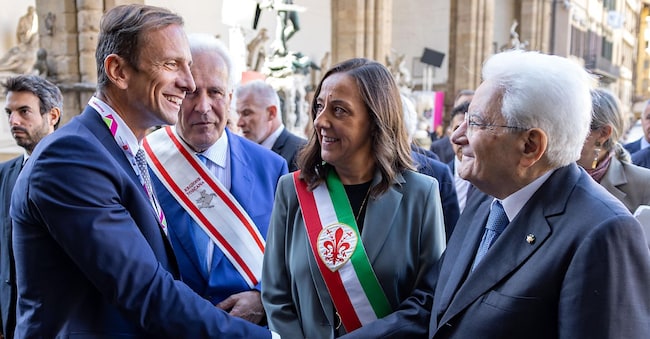
‘It is time to return to a pax based on the right to healthcare’ and ‘we cannot manage the health service out of electoral fear, but must do so in accordance with the principle of truth that underpins our relationship with the public, even when discussing the difficulties’. So said Massimiliano Fedriga, President of the Regions (and of Friuli Venezia Giulia), on the opening day of the Festival delle Regioni in Florence (with the slogan ‘The future has passed this way’), now in its fifth year, which, as always, was launched in the presence of the President of the Republic, Sergio Mattarella. ‘I would like to appeal to all political and institutional actors in this country,’ Fedriga emphasised, stressing that ‘health, one of the Republic’s greatest assets’, cannot be managed ‘through slogans and electoral fear’.
But what does it mean to tell citizens about one’s own difficulties? That ‘even changes are difficult and take time. Telling our citizens that everything will be resolved in a day is institutional irresponsibility; therefore, together we must fight to bring about the reforms that are necessary but which cannot exist within a framework fuelled solely by propaganda’, he warned in his opening remarks.
More resources in the budget
That said, there is no doubt that ‘our National Health Service needs the resources required to provide an adequate response: I hope that this will also be recognised in the forthcoming Budget Bill, but at the same time the regions must take responsibility for making the best possible use of those resources in order to improve services’, noted Fedriga, looking ahead to the imminent start of discussions on the 2027 budget. It was precisely on the subject of resources and the protection of the right to health – described as ‘non-negotiable’ – that Luca Antonini, Vice-President of the Constitutional Court, had focused in his speech on federalism, exactly 25 years after the reform of Title V.
A call to end ‘easy rankings’
Promoting health and accountability within each individual local authority “does not, however, mean focusing on simplistic rankings,” Fedriga went on to say, this time in his capacity as president of Agenas, “but rather looking at how each individual region is progressing, whilst also bearing in mind that our data collection criteria differ completely from one another. Thinking in terms of a competition between those in the yellow, red, green or blue categories means undermining the day-to-day work and once again running the risk of falling into propaganda rather than improving the service provided to citizens.”
Mattarella: Regions play a central role in the NRRP
The Head of State noted that ‘unity of purpose, fruitful collaboration and the pursuit of shared objectives – which I consistently observe when attending meetings of the Regions, Provinces and Municipalities – represent a fundamental asset for the Republic, one that nurtures the necessary trust of citizens in the institutions’. On this institutional occasion too, Sergio Mattarella focused on healthcare: “There is one area of absolute priority: what President Fedriga has described as ‘one of the Republic’s greatest assets’ and one of ‘the most valuable universal systems’: the National Health Service,” he stated.
This time, he emphasised the implementation of the National Recovery and Resilience Plan (PNRR), which, as the instalments disbursed by the EU draw to a close, still poses significant challenges for the implementation of the measures. “An important contribution to healthcare has come from the National Recovery and Resilience Plan,” he said. A plan that is “flexible, having undergone eight revisions to adapt it to changes and new requirements. Italia, with over 194 billion euros of which it has received 166 billion to date, has been the main European beneficiary,” recalled the President of the Republic, noting that 15.6 billion has been allocated to healthcare.
And “among the initiatives in the tenth and final tranche,” he listed, “are important health-related measures, including the establishment of 1,270 community care homes, 327 community hospitals, the creation of over 6,000 new intensive and semi-intensive care beds, the purchase of 3,200 large-scale medical devices, the provision of care to 566,000 people via telemedicine, and the updating of electronic health records with digital clinical documents. A set of measures which – as has been emphasised — proved necessary, at least in part, precisely during the pandemic, when we experienced the limitations of a healthcare system centred on large hospitals and general practitioners, whilst the absence of medium-sized healthcare facilities capable of bringing medical care closer to local communities, organised according to proximity criteria, was a significant drawback’.
Next, the President of the Republic issued the following warning: ‘Under the National Recovery and Resilience Plan (PNRR), our healthcare system – thanks also to the commitment of the Regions and the Autonomous Provinces – has been able to undertake a significant organisational overhaul aimed at promoting autonomy and decentralisation, in accordance with Article 5 of the Constitution,’ he began. The regions will now play a central role in ensuring that the innovations introduced are consolidated and that the changes made effectively improve the quality of the services provided. All regions, particularly those lagging behind appropriate standards, have a duty to comply.”

