The interview

‘Fewer cars: cities will now receive incentives and penalties based on their vehicle fleets’

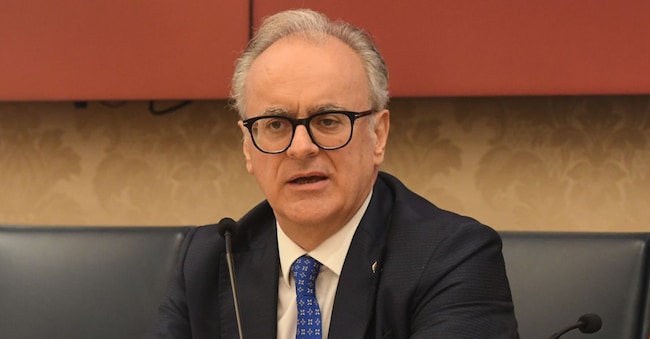
Nicola Zaccheo, Chair of ART, the Transport Authority: report to Parliament

Nicola Zaccheo  Imagoeconomica

4' min read

Translated by AI
Versione italiana

4' min read

Translated by AI
Versione italiana

“The number of licences has increased, but they are still insufficient. We need more taxis.” Nicola Zaccheo, chairman of the Transport Regulatory Authority (ART), draws on the findings of the new sector survey – previewed by *Il Sole 24 Ore* on this page – to announce the proposals that ART will put before the Government and Parliament: incentives and penalties for local authorities based on the number of white taxis available compared to a benchmark, connected taximeters, and a direct role for the Authority in regulating ride-hailing platforms.

Chair, is the increase in licences certified by Art in this latest survey sufficient to meet demand?

Loading...

The situation has improved compared with the past, but the number is still insufficient. In Rome, we see this every day: despite the additional licences, there is still a need to increase the quota. In our submission to the City Council, we had highlighted the need for over two thousand additional licences. We hope that local councils will ask us for further increases, but we have no means of forcing them to do so.

Does that mean the Authority needs new powers?

Regulation is in place and must safeguard the autonomy of local authorities. Our opinions are binding, and we can appeal to the Regional Administrative Court if the requirements are not met. The guidelines on taxi services have helped local councils to improve their regulations and fares, and dialogue has also improved significantly. However, the one area where we can do little remains the crucial one: the initiative to increase the number of taxis.

So how can we encourage local councils to take action?

One proposal that we will include in the report to the Government and Parliament by the end of the year is to introduce reward and penalty criteria based on a benchmark that we are currently calculating and which will be finalised shortly.

What tools should be used for rewards and penalties?

We could link this to the allocation of public funds: providing more funding if the number of taxis approaches this benchmark; otherwise, fewer resources if it deviates significantly from it. It will be up to the legislator to determine the specific measures to be taken.

A minimum number of taxis that is the same for everyone?

Loading...

No, we want to identify benchmark figures for groups of local authorities with similar characteristics. The ratio of taxis to residents alone is not enough: we need, for example, to take into account the area’s appeal to tourists, its proximity to major airports and the type of local authority. We are thinking of three or four categories, five at most, with the aim of covering around 80 per cent of market demand.

For example?

There are some areas that are extremely popular with tourists but have no licensed taxis; only private hire vehicles operate there. Passengers have no choice, and the fares vary.

How significant is the lack of data on the service?

This is one of the main problems. Obtaining information is complicated, and often the poor quality of the data prevents it from being analysed effectively. This is not always down to the local authorities: many do not have the appropriate tools to collect data from service providers and pass it on. In our survey, 182 out of 200 local authorities – 91 per cent – responded to a questionnaire comprising 140 indicators. This is a significant result, but action must also be taken to improve the tools available.

Let’s talk about taximeters – are you planning to take action on those as well?

Yes, this will be one of the proposals in the report. Modern taximeters allow journeys and routes to be monitored and provide information on journey duration and the fares charged. Some operators already have these systems in place. A municipal data collection platform – independent of the operators’ platforms – would enable information to be obtained directly from individual journeys. We also expect the taximeter to be selected by the local authority on a mandatory basis, to ensure it operates in a uniform and objective manner.

And what about the platforms?

We will call for a direct role in their regulation. We regard them as infrastructure, and they must guarantee fair and non-discriminatory access to operators. Platform-based services, such as Uber, must be given their rightful place in the market, particularly when they operate with taxi drivers who provide a public service. We are lagging behind other European countries in this respect, and swift action is needed.

Recently, some apps have been asking for the destination of the journey before allocating a taxi. Is this standard practice?

The destination can help to optimise the service, but it must not become a means of refusing a fare. So it’s fine, but only at a later stage, once the car has been allocated. Moreover, it could also be useful in another respect.

Which one?

It could encourage taxi-sharing, with benefits for both the passenger, who pays less, and the taxi driver. It is a service provided for under our regulations, but one that is still very rarely used.

Copyright reserved ©
Loading...

Brand connect

Loading...

Newsletter

Notizie e approfondimenti sugli avvenimenti politici, economici e finanziari.

Iscriviti