
'Iddu - The Last Godfather', ups and downs in the film on Matteo Messina Denaro
Weekend at the cinema with the feature film by Fabio Grassadonia and Antonio Piazza, presented in competition at this year's Venice Film Festival. Starring Elio Germano and Toni Servillo

3' min read
3' min read
It is certainly one of the most talked-about Italian films of recent months, 'Iddu - The Last Godfather', a new feature film by Fabio Grassadonia and Antonio Piazza, presented in competition at this year's Venice Film Festival.
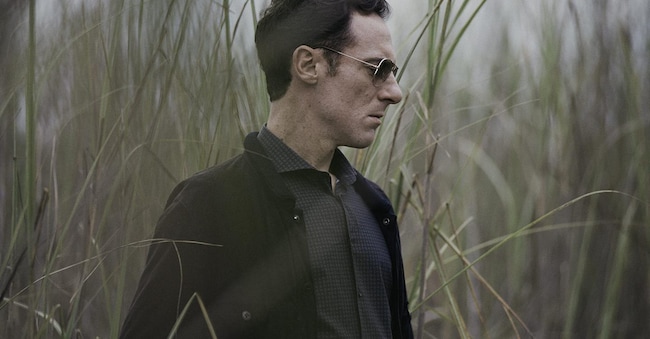
The reason why there has been so much talk about it is very simple: the subject takes its inspiration from the life of Matteo Messina Denaro, one of Cosa Nostra's most powerful bosses, who was arrested at the beginning of 2023 after a 30-year hiding period. Died eight months after his capture, in September last year, Messina Denaro was a mysterious figure, essentially invisible, and it is precisely this latter aspect that the two directors focus on, now in their third feature film after 'Salvo' (2013) and 'Sicilian Ghost Story' (2017).
However, there are two main characters in the film because, in addition to the notorious wanted man, the plot also focuses on Catello, a long-time politician who has lost practically everything after spending a few years in prison for mafia charges. When the Italian Secret Service asks him for help in capturing his godson Matteo, the last major mafia fugitive in circulation, Catello seizes the opportunity to get back into the game. A cunning man of a hundred masks, Catello initiates a unique and improbable exchange of letters with the fugitive, whose emotional void he tries to take advantage of. A gamble that with one of the world's most wanted criminals entails a certain risk.
It begins by mixing past and present, childhood and adulthood, of the character inspired by Messina Denaro, 'Iddu', a film with which Grassadonia and Piazza take up some of the themes and stylistic modes of their previous works.
More than a film with gangster overtones, 'Iddu' has moments - especially towards the conclusion - that verge on the western, both in its play on the sense of expectation and silences, and in the confrontation between the human figures on stage and their surroundings.

