Pulse

Fires: why a smartphone alert isn’t enough

From geolocated alerts to regional evacuation plans, there is a growing focus not only on the speed of alerts but also on public preparedness

by Silvia Martelli (Il Sole 24 Ore), Ana Somavilla (El Confidencial, Spain) and Mike Konstantopoulos (EFSYN, Greece)

Aggiungi Il Sole 24 Ore
ai preferiti su Google
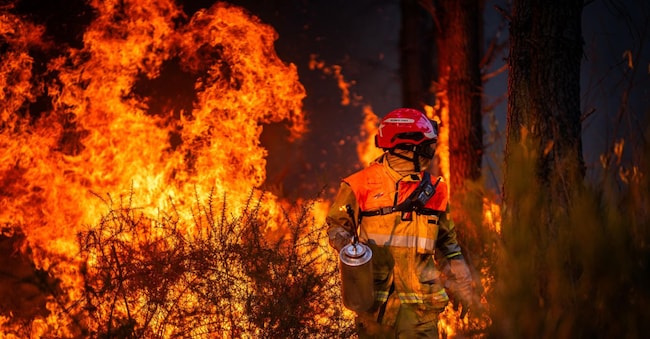
Un vigile del fuoco impegnato a circoscrivere un grave incendio boschivo nei pressi di Saumos, nel dipartimento della Gironda, in Francia, il 29 luglio 2026,  EPA/MAEL DUBIEZ

5' min read

Translated by AI
Versione italiana

5' min read

Translated by AI
Versione italiana

The fires that have struck several Mediterranean countries in recent weeks have refocused attention on an aspect of emergency management that goes beyond the capacity to put out the fires. Whilst technology now makes it possible to send an alert message to millions of mobile phones in a matter of seconds, a fundamental question remains: do those who receive that alert really know how to respond?

Knowing whether to evacuate or stay indoors is, in fact, only the first step. It is just as important to know the safest route, to know where the nearest assembly point is, and to understand what instructions to follow so as not to hinder the work of the emergency services. Communication has thus become an integral part of civil protection, just as much as aircraft or the teams working on the front line of firefighting.

Loading...

The recent emergencies have shown just how much of a difference this information can make. In the case of the fire in Los Gallardos, Andalusia, according to the regional authorities’ account, some of the victims reportedly strayed from the designated evacuation route, attempting to reach safety via alternative routes.

“It is essential to always follow the guidance issued by the relevant authorities,” notes Antonio Tortosa, president of the Spanish association Tecnifuego. Most members of the public, he explains, do not have access to the information and monitoring systems used by the Civil Protection Agency, the fire service and local authorities to assess how a fire is developing and identify areas at risk. It is precisely this availability of data that enables emergency response leaders to set priorities and define the areas to be evacuated. For this reason, Tortosa adds, fire management requires ‘smooth communication between the public and the authorities’.

Preparing citizens before an emergency

According to experts, the problem is not just about technology, but above all about the public’s preparedness. “Nobody tells you where to take your pets; many businesses and industrial estates have not drawn up emergency plans, and most accommodation providers do not supply this sort of information,” notes Antonio Novillo, deputy commander of the Alcorcón Fire Brigade in Spain and spokesperson for the Professional Firefighters’ Association (APTB).

According to Novillo, the training activities organised by the fire service and Civil Protection, including visits to schools, represent an important step but are not enough to ensure that the procedures are truly internalised. He believes that emergency education programmes tailored to the specific characteristics of individual areas are needed, so that members of the public already know how to react when an alert is issued.

The issue also concerns institutional organisation. In Spain, fire management is entrusted to a highly decentralised system, in which autonomous communities, provinces and local authorities exercise different powers. This model allows the response to be tailored to the characteristics of the local area but, at the same time, can complicate coordination when an emergency extends beyond administrative boundaries. The consequence, experts argue, is that prevention campaigns often focus on behaviours to be avoided – such as not throwing away cigarette ends or keeping woodland areas clean – whilst information on how to behave when a fire is already alight remains less developed.

The Italian model: planning and IT-Alert

Whilst maintaining a decentralised structure, Italia has established a coordinated system across the various levels of government. The Department of Civil Protection, the regions and local authorities share responsibility for managing forest fires, whilst each region is required by law to draw up its own Forest Fire Prevention Plan (AIB).

The AIB Plans identify the areas at greatest risk, set out evacuation procedures, establish communication channels during emergencies and govern coordination between the fire service, Civil Protection volunteers and local authorities. In the regions most at risk, such as Sardinia and Sicily, planning is further strengthened during the summer months through dedicated fire risk bulletins and regular alerts when weather conditions increase the likelihood of new fires. The aim is to ensure that members of the public are aware of the level of risk even before an emergency arises.

This system has been supplemented by IT-Alert, the national public alert service that sends geolocated notifications directly to mobile phones in areas affected by an emergency. As experts point out, this tool is one element of the prevention strategy, but it cannot replace a thorough knowledge of the local area and safety procedures.

Loading...

Greece and the 112 system

In recent years, Greece has also invested in improving communication with the public through the European 112 public alert system. Alerts are sent automatically to compatible mobile phones in the affected area, without the need for prior registration, and reach both residents and visitors who are physically in the at-risk zone. During the fire season, which in Greece generally runs from May to November, alerts are issued in both Greek and English, to ensure that foreign tourists can also understand them.

Alongside the standard system, there is also 112 GR-Alert, a service that allows registered users to receive notifications via text message, email or automated call relating to up to three selected locations, even when they are not physically there.

The challenge for tourists

This preparation also applies to those who are unfamiliar with the area. Tourists and visitors may find themselves in difficulty even if they are familiar with the general rules of conduct during an emergency. For this reason, Tortosa points out, one possible solution is to provide information as soon as they arrive at their accommodation.

According to Novillo, campsites are currently among the most advanced examples: as they are situated in natural areas, they inform guests about waste collection points and organise fire drills. The situation is more complex, however, in rural accommodation facilities, where the dissemination of information often depends on the initiative of individual managers.

As early as 2009, the European MIRTO project – developed by Italia, France, Greece and Croatia – had sought to reduce the risk to tourists through dedicated awareness-raising campaigns. More recently, Greece has developed mAiGreece, a digital assistant based on artificial intelligence that combines information services and emergency functions, enabling users to contact the Civil Protection Agency quickly by automatically transmitting their geographical location.

In some cases, embassies and consulates also issue warnings to their citizens during the fire season. Furthermore, local authorities step in directly to assist tourists, help them evacuate and find alternative accommodation when hotels or homes are threatened by fire, as happened during the 2017 Kos earthquake and the fires that struck Rhodes in 2023.

Incendi in Europa, da Bruxelles la regia dei soccorsi Ue

Prevention as an investment

Experts believe that raising public awareness remains one of the most effective ways of reducing the impact of forest fires. Information, education and drills enable members of the public to gain a better understanding of the risks in their local area, recognise dangerous behaviour and know how to react when an alert is issued. Tortosa emphasises that communication campaigns should be ongoing, accessible and aimed at different audiences, so that prevention becomes part of the collective culture and not merely a response to times of major emergency.

In this context, technology is an ally, but not a sufficient solution. Systems such as IT-Alert and the Greek 112 service speed up the dissemination of information, but their effectiveness depends on people’s ability to interpret the message correctly and translate it into safe behaviour. As Novillo puts it: ‘Preventing forest fires costs less than putting them out.’

*This article is part of the European collaborative journalism project “Pulse”

Copyright reserved ©
Loading...

Brand connect

Loading...

Newsletter

Notizie e approfondimenti sugli avvenimenti politici, economici e finanziari.

Iscriviti