
IRS, Leo: 'But what redditometer, our priority is to uncover the big evaders'
The Deputy Minister of Economy and Finance would like to erase from the universal vocabulary - or, at least, from that of Italian public debate - the word redditometro

3' min read
3' min read
"Our priority remains the discovery of the big evaders. Those who do not file tax returns and, at the same time, have an SUV as their car. Those who have contributed to the 15 billion in fraud uncovered by the Guardia di Finanza around the Ecobonus for real estate work. Who is organically part of organised crime and who is a simple bad citizen'.
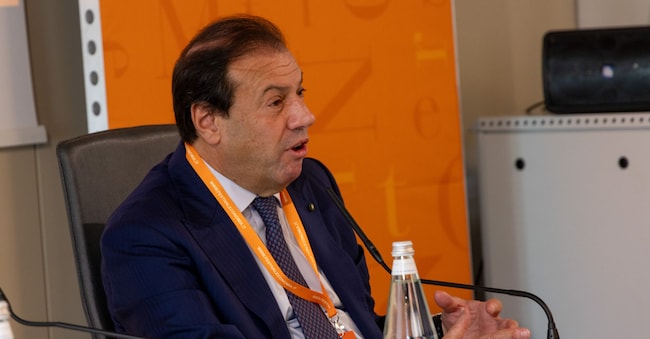
Maurizio Leo, Deputy Minister for the Economy and Finance, would like to erase from the universal vocabulary - or, at least, from that of the Italian public debate - the word 'redditometro' that has produced so many shocks within the Meloni government itself. "The redditometer," she says, "no longer exists since 2018. Then, in the government of the Five Stars and the League, Minister Giovanni Tria and Massimo Garavaglia eliminated the most invasive parts of the assessments. Giorgia Meloni did well, in the face of all the instrumentalisation, to revisit the measure we had prepared. As of now, however, there are already some new elements: if a person buys a luxury car, but his great-uncle has assets in excess of one million euro, there will be no problem. If he buys a million euro house, but has had significant income in the last two years, for example around 200,000 euro gross, there will be no problem'.
In the panel 'Tax reform: pay all to pay less' - moderated by Sole-24 Ore deputy editor Jean Marie Del Bo - Leo had as discussants Lilia Cavallari, president of the Parliamentary Budget Office, and Federico Maurizio D'Andrea, president of the supervisory body of the BPM bank. Leo described the tax reform as realistic: 'It is pointless,' he said, 'to have penalties between 120 per cent and 240 per cent, while the Western standard is around 60 per cent. Such abnormal penalties are irrational, they generate disputes and only feed the gigantic mass of uncollected revenue, which amounts to 1,200 billion'. There remains the issue of the non-application of the favour rei for the new administrative penalties: the prohibitive cost (2 billion) has prevented the extension of the principle beyond the criminal field.
The virtuous circuit hypothesised by the government - streamlining of the action to recover evasion (in the most optimistic assumptions estimated at between 80 and 100 billion euro per year), greater efficiency and productivity of the instruments adopted - has as its ultimate station the possibility of reducing the tax burden. The problem is to give a non-transitory and fragmentary structure to a framework that must be recomposed in a lasting and organic manner. 'For this reason,' concluded the president of the Parliamentary Budget Office, 'we need to build a mechanism that works, that is structured and structural, and that is consistent with European constraints. The path of public accounts is narrow. A seven-year budget plan must now be drawn up. Knowing that, in this timeframe, EU constraints require us, every year, to reduce the debt equivalent to half a point of GDP'.
The great complexity is, precisely, the synthesis between planning and emergency, between the anxiety to recover resources to finance parts of the reform (such as the lasting and not annual transformation of the drop in IRPEF rates) and the need to build a long-term path that is sustainable. Cavallari noted: 'I consider ex ante measures much more effective. Electronic invoicing, for example, has helped a lot to increase legality, measurability, effectiveness and transparency'. On this Leo intervened: 'Today our 200 databases are connected. Their interoperability is one of the best conditions for combating large-scale evasion, without which a fair, just, non-harassing tax system for ordinary citizens has no chance of being realised'.

