
Fishermen's protest: 'Already 30% of the coastline is restricted. No more protected areas, fishing dies'
Confcooperative-Fedagripesca: overcome the current model based on bans and involve fishermen in co-management in a logic of regenerative development

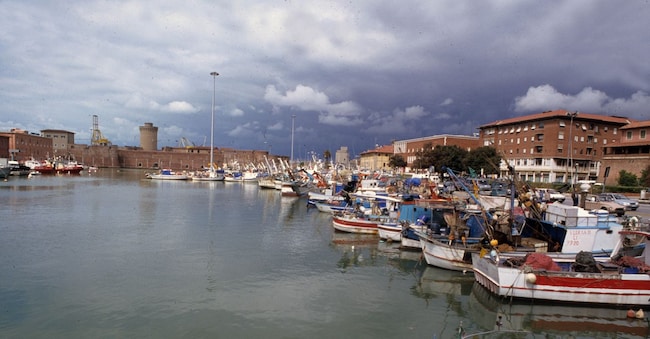
Protected Marine Areas must not be 'islands of prohibition' that risk stifling professional fishing but must evolve towards models of co-management and regenerative development. This is the position expressed by Confcooperative-Fedagripesca during the hearing at the 8th Commission (Environment) of the Chamber of Deputies on the bills concerning the Institution of the Marine Protected Area of the Gulf of Capo Zafferano and the reform of framework law 394/1991.
In the Mediterranean, 30-35% of coastal waters are restricted
"In an increasingly saturated Mediterranean in Italy," he explained to Confocooperative-Fedagripesca, "spatial pressure has exceeded the critical threshold: more than 30-35% of the coastal waters and continental shelf are now affected by constraints that limit or exclude fishing activity.
Moreover, this 'patchwork of restrictions' no longer consists only of Marine Protected Areas and biological protection zones, but includes energy and digital infrastructure corridors (cables and pipelines), persistent military easements, new Fisheries Restricted Areas (FRAs) and offshore wind farm projects.
The balance between environmental protection and economic survival has been compromised.
"This is what we define as the hoarding of the sea in a progressive and excessive subtraction of maritime space that risks compromising the balance between environmental protection and the economic survival of coastal communities," the organisation stressed. In the absence of maritime spatial planning," they added, "that integrates fishing as a primary actor, the sector risks progressive expulsion due to the physical lack of available areas.
Professional fishing is involved
This is the context for the debate on the Marine Protected Area of the Gulf of Capo Zafferano in Sicily - already affected by European constraints as a Special Area of Conservation (SAC) and by regional measures - which, according to Fedagripesca, 'can represent a strengthening of the protection of valuable habitats such as the Posidonia oceanica prairies and the coralligenous reef, fundamental for the reproduction and growth of the ichthyofauna of the southern Tyrrhenian Sea, but only on condition that local artisanal fishing is recognised as an active co-management subject'.


