
Fiumicino reinforces terminal T3, 250 million investment
With the inaugurated interventions, the capacity for arriving passengers increased by more than 30 per cent. The restyling of the facade covered an area equal to 6 football fields. 25 Italian companies involved
by Giorgio Pogliotti

3' min read
Key points
3' min read
With a total investment of more than EUR 250 million, the new Terminal 3 at Fiumicino airport was upgraded, increasing capacity for arriving passengers by more than 30 per cent, ensuring the area is fully operational for the Summer 2025 air season, which is currently underway.
The restyling of the façade to restore the original architectural values of visual permeability and natural light, was carried out to ensure the airport's operational continuity during the 4 years of the works, and covered an area distributed over three levels with a total of 41,000 square metres, comparable in size to 6 football pitches. With the involvement of more than 25 Italian companies, the regeneration of T3 at Leonardo Da Vinci airport involved 6 check-in islands with 150 new desks, bringing the total number of desks to 248, 60 of which can be used by passengers in an autonomous manner.
Loading...
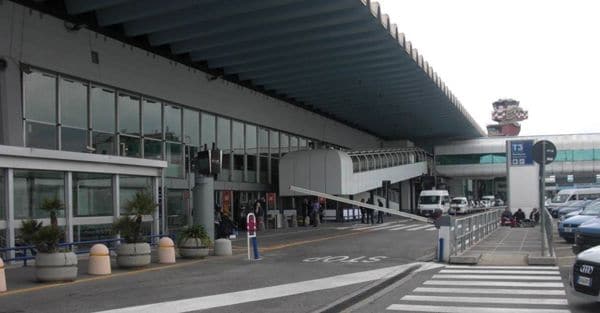
The works carried out were presented to Deputy Prime Minister and Minister of Transport Matteo Salvini during an inspection of the airport together with a delegation of Aeroporti di Roma management, led by CEO Marco Troncone and President Vincenzo Nunziata, and with the participation of ENAC President Pierluigi Di Palma, ITA Airways CEO Joerg Eberhardt and President Sandro Pappalardo, and Fiumicino Mayor Mario Baccini.
Baggage belts increased and security control area renovated
The number of baggage belts was increased from 9 to 14, with a doubling of the overall length (from around 400 metres to 800 metres), to ensure greater capacity and flexibility in baggage handling. The security control area for sensitive flights was renovated, equipped with 11 RX machines, and for transit flights, the border areas were upgraded. The building structure was strengthened and the facilities modernised, with seismic resistance enhanced by structural reinforcements and new fire-fighting systems, with more than 3,100 detectors, 88 smoke extractors and 15 new air handling units, and the lighting was renewed.
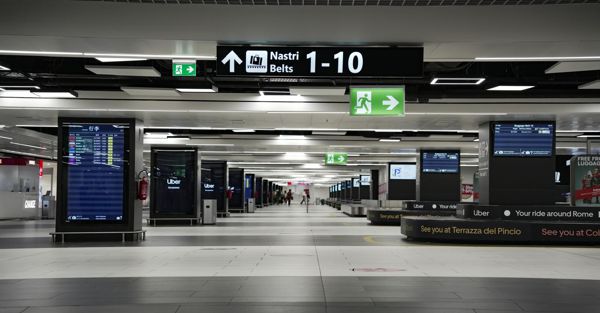
The airport, which has been operational since 1961, has been upgraded with a project designed and implemented by ADR Infrastrutture and ADR Ingegneria, subsidiaries of Aeroporti di Roma, a Mundys Group company, aimed at improving the operational efficiency and travel experience of the millions of passengers on non-Schengen flights that now transit the airport, in compliance with the highest standards of security and technological innovation.


Brand connect
Loading...
